



Updated October 16, 2026
How to Renew Your Visa in Japan: A Complete Step-by-Step Guide
Visa renewal in Japan is one of those things nobody thinks too much about until it's almost too late.
You're deep into your life here. You've got a job, an apartment, a routine. Then someone mentions your visa expires in two months and suddenly you're scrambling to figure out what to do.
This guide will walk you through exactly how to renew your visa in Japan, from when to start all the way to getting your new Residence Card in hand. It covers both the in-person and online methods, the documents you’ll need, how much it costs, and the changes with the new digital system in January 2026.
What Does "Renewing Your Visa" Actually Mean in Japan?
In Japan, your visa and your residence card are two different things. But people usually talk about them together.
The visa in your passport lets you enter Japan. But once you're living here, your actual proof of legal residency is your residence card, or zairyu card (在留カード). This card shows your visa type, your permitted activities, and your expiration date.
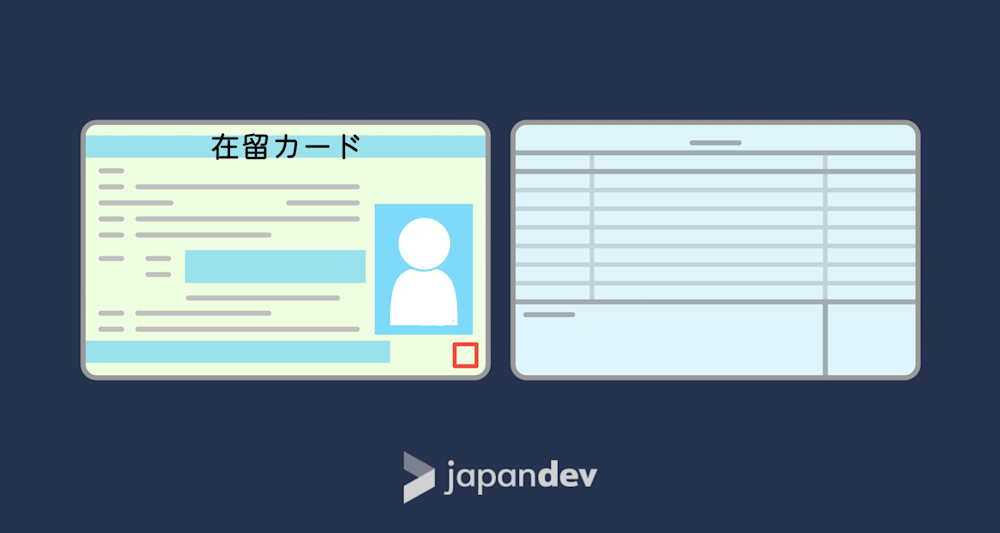
When people say "renew my visa in Japan," they typically mean renewing their residence status and getting a new zairyu card. That's what this guide covers. If you want an in-depth review of what your zairyu card is and what happens when it expires, check out our complete guide to the zairyu card.
How Soon Can You Renew Your Residence Card in Japan?
The official application window opens three months before your visa expires. That's the earliest immigration will accept a renewal application under normal circumstances.
But you can start gathering your documents much earlier than that, and you should. Tax certificates, employer letters, and company registration documents can each take a week or more to obtain. If you wait until the three-month mark to start collecting everything, you may find yourself rushing.
A good tip is to start preparing documents four to six months out, and submit your application once the three-month window opens.
What About Applying More Than Three Months Early?
In rare, documented emergency situations, such as extended overseas business travel or sudden hospitalization, immigration may accept an early application before the three-month window. You'd need to submit a written explanation, and approval is at the immigration officer's discretion.
For most people, though, the three-month window is the rule. Don't plan around the exception.
The Two-Month Grace Period: What It Is and What It Isn't
Once you submit your application before your expiration date, you receive a two-month grace time called the 特例期間 (tokurei kikan). During this time, you can legally stay and keep working in Japan even if your card's expiration date has passed.
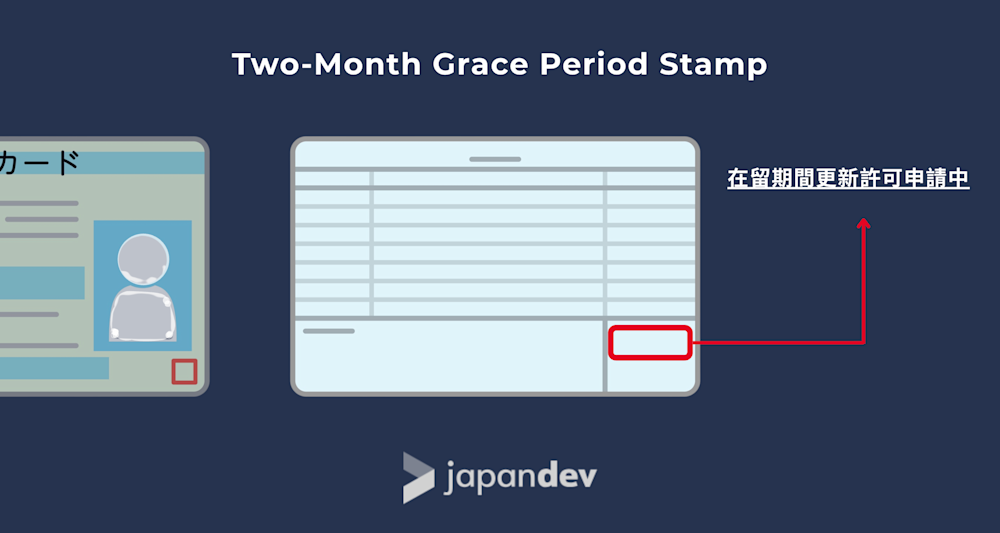
Your zairyu card will show your old expiration date during this period. That's fine. You're covered as long as you submitted before it expired. The immigration will place a stamp on the backside of your current zairyu card with 在留期間更新許可申請中 (Zairyū kikan kōshin kyoka shinseichū), Meaning: Application for extension of period of stay is in progress.
The grace period is not a free extension you can skip to. You must submit your application before your visa expires for the grace period to apply. Submit after it expires, and you're in a different situation entirely.
What Documents Do You Need to Renew Your Visa?
The required documents depend on your visa type, but most people working in Japan need the following:
Core Documents (Almost Everyone Needs These)
Passport (valid for at least six months)
Current zairyu card (residence card)
Completed application form for extension of period of stay
One passport-sized photo, taken within the last six months (4.5 cm × 3.5 cm (approximately 1.77 x 1.38 inches)
Resident taxation certificate (住民税課税証明書 jūminzei kazei shōmeisho) from your ward office.
Tax payment certificate (住民税納税証明書 jūminzei nōzeishōmeisho) from your ward office
Certificate of employment from your company
Employer-Related Documents for Work Visas
Your company's registration certificate (登記事項証明書 toukijikoushoumeisho)
Your company's financial documents (balance sheet, profit and loss statement)
Your employment contract
A letter from your company supporting your application
Your salary statement or pay slips
Extra Documents by Visa Type
Some visa types have additional requirements:
Visa Type |
Extra Documents You May Need |
Engineer/Specialist |
Certificate of educational background or work experience |
Spouse Visa |
Photos of you and your spouse, marriage certificate, spouse's income proof |
Student Visa |
Enrollment certificate, attendance record |
Dependent Visa |
Proof of relationship, sponsor's income documents |
Highly Skilled Professional |
Points calculation sheet, relevant certificates |
When not sure, call the local immigration office or check the Immigration Services Agency website for the specific visa category that applies to you.
Getting Your Tax Certificates
Your tax certificates come from your local ward office (区役所, kuyakushoo). You'll need last year's certificate at minimum. Some offices let you request these online, but most require you to visit in person or send a written request.
Give yourself at least a week to collect these. Some ward offices have shorter hours or specific counters for certificate requests.
Option 1: How to Renew Your Visa In Person
In-person renewals are the more straightforward option. You go to the immigration office, hand over your documents, and wait for a letter. No accounts to create, no scanning issues, no mailing your card.
Step 1: Find Your Nearest Immigration Office
Go to the immigration office that covers your area. For example, in Tokyo, most people go to the Shinagawa office. But be careful, as Shinagawa has long lines and a somewhat intense atmosphere. If you're in the Tokyo area but can get to the Tachikawa office, people say the wait times are shorter there.
In other major cities:
Osaka: Osaka Regional Immigration Services Bureau
Nagoya: Nagoya Regional Immigration Services Bureau
Fukuoka: Fukuoka Regional Immigration Services Bureau
Check the Immigration Services Agency website to find the office for your prefecture.
Step 2: Prepare and Bring All Your Documents
Bring everything in one organized folder. Missing even one document can send you back home to come again another day. Some offices have copy machines on-site, but don't count on it. Even better, have a PDF file on your device with all the documents, in case you need to print something again.
Step 3: Submit at the Counter
Take a number when you arrive and wait to be called. When your number comes up, hand your complete document set to the officer. They'll review it and, if everything is in order, hand you a small postcard.
Write your name and mailing address on that postcard. This is the card they'll use to notify you about the decision.
You'll also receive a receipt confirming you've submitted your application. Keep this somewhere safe. It proves you're in the grace period, and you will need to take it when picking up the new card.
Step 4: Wait for the Notification Letter
Immigration will mail a notification to the address you wrote on the postcard. This letter tells you either:
Your renewal is approved. Come pick up your new card.
They need more information or want to interview you.
Your application was denied.
Most straightforward renewals get a decision within two to four weeks. More complex cases can take longer. If you get a letter requesting more information or an interview, respond quickly. These letters often come with deadlines, and missing them can result in rejection.
Step 5: Go Pick Up Your New Card
When your approval letter arrives, head back to the immigration office. Bring:
Your passport
Your old zairyu card
The notification letter
A 6,000 yen revenue stamp (収入印紙, shunyu inshi)
Buy the revenue stamp inside or near the immigration office. Most major offices have a counter selling them. Some convenience stores near immigration offices sell them too. Or plan ahead and purchase the stamp at any Japan Post office.
The immigration officer will punch a hole in your old card to invalidate it, then issue your new one on the spot. You walk out with your updated residence card in hand.
Option 2: How to Renew Your Residence Card Online in Japan
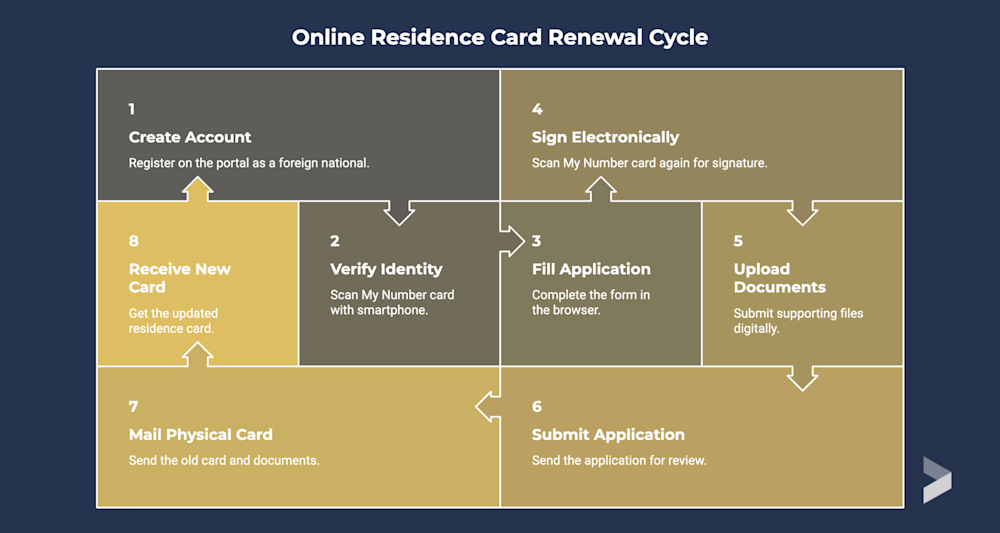
Japan's online renewal system got a significant update in January 2026. The old system required a card reader, software installation, browser extensions, and a lot of patience. The new portal runs in a regular browser and uses your smartphone to scan your My Number card. No need for a separate card reader.
The official portal: https://www.rasens-immi.moj.go.jp/rasens-u/
What You Need Before You Start
A My Number card (マイナンバーカード) with an embedded chip and photo
Your smartphone (for NFC scanning of your My Number card)
Both My Number card PIN codes (you set these when you got the card)
Your supporting documents saved as digital files
A reliable internet connection
A note on the PIN codes: your My Number card has two separate passwords, one for login and one for signing. People often forget one or both. If you've forgotten them, you can reset them at your local city hall.
You do not need a card reader. You do not need to install any software. You do not need to merge documents into a single PDF.
Do You Need a My Number Card for the Online System?
Yes. The online renewal system requires a My Number card with a chip. A My Number notification letter or a paper copy does not work.
If you don't have a My Number card yet, you'll need to apply for one at your local city hall. It takes a few weeks to arrive, so factor that in if you're planning to go the online route.
The Online Application Process
First, I highly recommend that you complete the application on a computer rather than relying completely on your smartphone, as the online system is mainly for desktop use.
Step 1: Create an account on the portal.
Go to the portal and register as a new user. Select the option for foreign nationals.
Step 2: Register your right to apply.
This is the step that confuses a lot of people. Before you can submit an application, you need to go through a one-time identity verification step. You scan your My Number card using the MynaPortal app on your smartphone.
Your phone doesn't need to be physically connected to your computer. The two devices communicate wirelessly. Your computer screen displays a QR code, and you scan it with the MynaPortal app to link your phone's card reader to the browser session. Then hold your phone flat against your My Number card to read the chip.
If the scan doesn't work right away, try repositioning your phone. It sometimes takes a few attempts.
Step 3: Fill out your application form in the browser.
Select your application type (extension of period of stay). Fill out all the required fields. You'll need your personal information, passport details, employer details, and residential address.
Step 4: Scan your My Number card again.
This second scan acts as your electronic signature on the application. You'll need your signing PIN here.
Step 5: Upload your supporting documents.
Upload your documents one by one. No need to combine them into a single PDF.
Step 6: Submit.
After, you'll receive a confirmation and your application will move into 審査中 (shinsa-chuu), meaning "under review."
After You Submit Online:
Here's where online renewal differs from in-person. Once immigration reviews and approves your application, they'll send you an email asking you to mail in your old physical zairyu card along with:
- A renewal fee of ¥10,000 to ¥65,000, depending on your period of stay (full cost breakdown below)
- A few other documents specified in the email
- A return envelope (more on this below)
You'll also get a separate email with a payment link. It shows your exact fee, based on the period of stay immigration granted you. Pay it by the day before you receive your new card.
Since October 1, 2026, all online residence permit residence permit applications can be done at a convenience store or via bank payments, including online banking. Do note that online applications don't accept revenue stamps, credit cards, or QR code payments.
On top of the application fee, you’ll also need to cover payment processing costs of ¥330 (for stays under 3 years) or ¥550 (for 3-5+ year stays).
In the meantime, you'll carry a color copy of your zairyu card with your application number written on the back, plus your passport, until your new card arrives. Immigration specifically instructs you to do this.
Use a Letterpack (レターパック) envelope, available at post offices and some convenience stores, to mail your card. Include a second Letterpack addressed back to yourself inside. You can track both envelopes online, so you'll know the moment they receive your card and the moment they send the new one back. The round trip typically takes about a week after they process your mailed documents.
Real Timeline: What to Expect
Here's what a smooth online renewal looked like for one person in early 2026:
Date |
What Happened |
February 7 |
Submitted application online |
February 8 |
Application moved to review (審査中) |
February 13 |
Approval email received; mailed zairyu card same day |
February 25 |
Email confirming new card issued |
February 27 |
New card arrived in the mail |
Total time: 20 days from submission to new card in hand.
Online vs. In-Person: Which Is Better for You?
Neither option is clearly better for everyone. It depends on where you live, what documents you have, and how comfortable you feel with digital systems.
Feature |
In Person |
Online |
My Number card required? |
No |
Yes |
Need to visit immigration office? |
Yes, twice |
No |
Need to mail your zairyu card? |
No |
Yes |
Carry passport while waiting? |
No |
Yes |
Processing time |
2-4 weeks |
~3 weeks |
Choose in-person if:
You don't have a My Number card
You feel more confident handing over documents directly
You live close to an immigration office
This is your first renewal
Choose online if:
You have a My Number card with both PINs
The immigration office is far from you or hard to get to
You want to avoid taking a full day off work
You're comfortable with online forms and document uploads
One thing to keep in mind: the online system is still relatively new. A small number of people have run into technical issues during busy periods. If you hit a problem and your grace period is running short, going in person is the safer backup.
How Much Does It Cost to Renew Your Visa in Japan?
The renewal fee depends on the period of stay immigration grants you and how you apply.
In-person renewal fees vary between ¥10,000 (for 3 months or less) and ¥75,000 (5+ years). Online renewals cost ¥10,000 to ¥65,000 for the same timeframes.
Previously, every residence renewal cost a flat ¥6,000 in person or ¥5,500 online, which was paid via revenue stamps (収入印紙, shunyu inshi).
You don't pay anything when you submit your application. Payment only happens after immigration approves it.
- In-person applicants pay with revenue stamps (収入印紙, shunyu inshi) when they go to pick up their card. The postcard immigration sends you shows the exact amount.
- Online applicants pay by convenience store or bank payment through the payment link email they get after approval, before their new card arrives, plus a small payment processing transaction fee.
If you're applying in person, buy your revenue stamps before you go. Shops inside immigration offices have limited stock, and convenience stores usually only have ¥200 stamps.
Large post offices and Legal Affairs Bureaus (法務局, hōmukyoku) are the most reliable places to buy revenue stamps in Japan, since they usually carry higher denominations. Smaller post offices may not stock ¥50,000 stamps and up, so call ahead if you need them. Stamps are cash only.
Beyond the renewal fee itself, budget a small amount for:
- Tax certificates from your ward office (usually a few hundred yen per document)
- Transportation to the immigration office if applying in person
- Letterpack envelopes if applying online (around ¥600 each)
2026 Visa Renewal and Change of Status Fees
The same fees apply whether you're renewing your current status or changing to a new one. Immigration sets your fee by the period of stay you actually get, not the one you ask for.
Here's the fee structure, based on the period of stay you're granted as of October 2026:
Period of stay granted |
In person |
Online* |
|---|---|---|
3 months or less |
¥10,000 |
¥10,000 |
Over 3 months, up to 6 months |
¥18,000 |
¥15,000 |
Over 6 months, less than 1 year |
¥25,000 |
¥21,000 |
1 year |
¥33,000 |
¥27,000 |
Over 1 year, less than 3 years |
¥48,000 |
¥42,000 |
3 years or more, less than 5 years |
¥64,000 |
¥56,000 |
5 years or more |
¥75,000 |
¥65,000 |
*Plus a transaction fee of ¥330 for periods under 3 years, or ¥550 for 3 years or more.
If immigration received your application by September 30, 2026, you pay the old fee, even if your approval comes later.
Reductions are available in cases of financial hardship. The online system doesn't handle reductions, so apply in person if you need one. If you're close to your renewal window, check the Immigration Services Agency website for the latest fee information before you apply.
Permanent Residence Fee
Permanent residence is a separate application from a residence visa renewal. The fee is ¥200,000, whereas it was ¥10,000 previously.
You can only apply at an immigration office counter and pay with revenue stamps once immigration approves your application. Immigration asks you to buy two ¥100,000 stamps rather than a mix of smaller ones.
If you're in financial hardship, you may qualify for a reduction to ¥20,000. This only applies to spouses or children of Japanese nationals, permanent residents, or special permanent residents.
Common Problems and How to Avoid Them
Missing or wrong documents is the most common issue. Double-check the specific list for your visa type. An officer might send you home for a single missing page.
Forgetting your My Number card PINs will stop you cold during the online application. If you're not sure you remember both, reset them at your city hall before you start.
Not responding to letters from immigration is a serious mistake. Sometimes immigration wants more information or an interview. These letters come with strict deadlines. Missing a deadline can result in rejection, sometimes even if your original application was solid.
Leaving Japan while your application is under review is risky. If you leave during the grace period without special permission, your status may be affected. Check with immigration office before booking any international travel after submitting your renewal.
Waiting until the last minute creates all these problems at once. Start three months out, and you give yourself time to fix anything that comes up.
What If You Need to Change Your Visa Type?
Visa renewal covers extending the same residence status you already have. If your situation has changed, such as switching jobs to a different industry, getting married, or moving toward permanent residency, you may need to apply for a change of status instead.
Our guide on changing your status of residence in Japan walks through that process. And if you're thinking longer-term, read up on how to get permanent residence in Japan to understand the path ahead.
If you're an employer helping a team member through visa renewal, our guide to visa applications in Japan for employers and applicants covers what your company needs to prepare.
Frequently Asked Questions
Can I apply for someone else online? Yes. You can submit an online application on behalf of a spouse or dependent. You'll need their My Number card and both of their PINs to complete the identity verification steps.
What do I carry while waiting for my new card after an online renewal? Carry a color copy of your zairyu card with your application number written on the back, plus your passport. Immigration instructs you to do exactly this, so it's the official procedure.
Can I work during the grace period? Yes. The two-month grace period lets you continue your permitted activities, including work, while your application is under review.
What happens if my visa renewal is rejected? You'll receive a written notice. You generally have a short window to appeal or make arrangements. In this situation, consult an immigration lawyer as soon as possible.
Does online renewal work for all visa types? The online system covers most common visa types, including work visas and spouse visas. Some less common statuses may still require in-person application. Check the portal's guidance for your specific status.
Do I need to speak Japanese to apply? The forms and the online portal are in Japanese. If you're not confident reading Japanese, bring someone who can help, or hire an immigration lawyer or administrative scrivener (行政書士, gyosei shoshi) to assist.
Final Thoughts
Renewing your visa in Japan takes preparation, but it's manageable once you know what to expect.
Start three months before your expiration date. Collect your documents early. Pick the application method that fits your situation. Online if you have your My Number card ready, in person if you prefer to hand things over directly. Pay attention to any letters from immigration and respond fast.
Do all that, and you'll have your new residence card in hand with time to spare.
Looking to find a tech job in Japan that sponsors visas from the start? Browse English-friendly developer jobs in Japan on Japan Dev and find a company that handles the process with you, not just for you.


Hasan Ali
Born and raised in Libya, Hasan spent the last 6 years exploring Japanese culture while living in Nagano and Aichi. His journey began at a high school in the town of Karuizawa, followed by a Bachelor of Business in Nagoya. Professionally, He is an SEO and content specialist with over 3 years of experience crafting digital strategies. When not working, He is trying to catch up on his goal of visiting every single prefecture in Japan.
- Delivery Manager, LINK Ecosystem
- Moneytree
- Remote
- ¥8M ~ ¥10M
- Software Engineer – Open Position (Robotics / Backend, C++)
- Mujin
- Tokyo
- ¥8M ~ ¥15M
- Senior Software Engineer, Satellite Operations System Development...
- Axelspace
- Tokyo
- ¥6M ~ ¥9M
- Senior DevOps Engineer - Build Systems & CI
- Mujin
- Tokyo
- ¥10M ~ ¥13M




Latest Tech Jobs 🇯🇵
Explore the top developer jobs in Japan for foreigners
- Delivery Manager, LINK Ecosystem
- Moneytree
- Remote
- ¥8M ~ ¥10M
- Software Engineer – Open Position (Robotics / Backend, C++)
- Mujin
- Tokyo
- ¥8M ~ ¥15M
- Senior Software Engineer, Satellite Operations System Development...
- Axelspace
- Tokyo
- ¥6M ~ ¥9M
- Senior DevOps Engineer - Build Systems & CI
- Mujin
- Tokyo
- ¥10M ~ ¥13M
- Senior Product Engineer (Partner Product Development Department)
- Money Forward
- Tokyo
- ¥6.9M ~ ¥10M
- Senior Software Engineer
- MeetsMore
- Tokyo
- ¥7.5M ~ ¥10M
- Senior Backend Engineer
- Tokenz
- Tokyo
- Senior Accounting Engineer / 財務データ基盤エンジニア
- KOMODO
- Tokyo
- Tech Lead Engineer (Voice/Speech)
- Geniee
- Tokyo
- ¥7M ~ ¥16M





Get Job Alerts
Sign up for our newsletter to get hand-picked tech jobs in Japan – straight to your inbox.

© 2026 Japan Dev. All rights reserved.
Proudly built in Tokyo.


Curated with 💙 in Tokyo
All our data is gathered from publicly available sources or contributed by users