



Updated March 27, 2026
Living and Working Remotely from Kamakura
The remote work fantasy.
Something I used to romanticize.
I imagined opening a laptop from a cabin in the woods.
Or on a lake.
Or even better, on the beach.
Which is basically what I ended up doing.
I mean, I don’t actually code on the beach. The thought of sand getting anywhere near my keyboard sparks anxiety.
But aside from sand, I do live a good five-minute walk from the ocean. And for the past year, I’ve been working remotely in Kamakura, just over an hour from central Tokyo.
It’s a slow-paced yet vibrant coastal town, commonly recognized for its history, temples, and creative energy.
And before landing a full remote role as a software engineer in Japan, the thought of living here might have remained a dream.
But now, after a year in Kamakura, I find myself wondering why I didn't move sooner.
Because if you’re questioning whether it’s possible to build a tech career in Japan outside of central Tokyo, at least from my experience, it totally is.
However, it does require understanding the trade-offs.
In this article: 📝
- Why I Chose Kamakura Instead of Staying in Tokyo
- Moving Out of Tokyo to Kamakura
- Is Kamakura a nice place to live?
- Working Remotely in Kamakura as a Tech Professional
- Is It Expensive to Live in Kamakura?
- The Real Risk Factor: Living By The Coast
- Should You Move to Kamakura? Final Thoughts
- Closing Notes
Why I Chose Kamakura Instead of Staying in Tokyo
Why Not Tokyo?
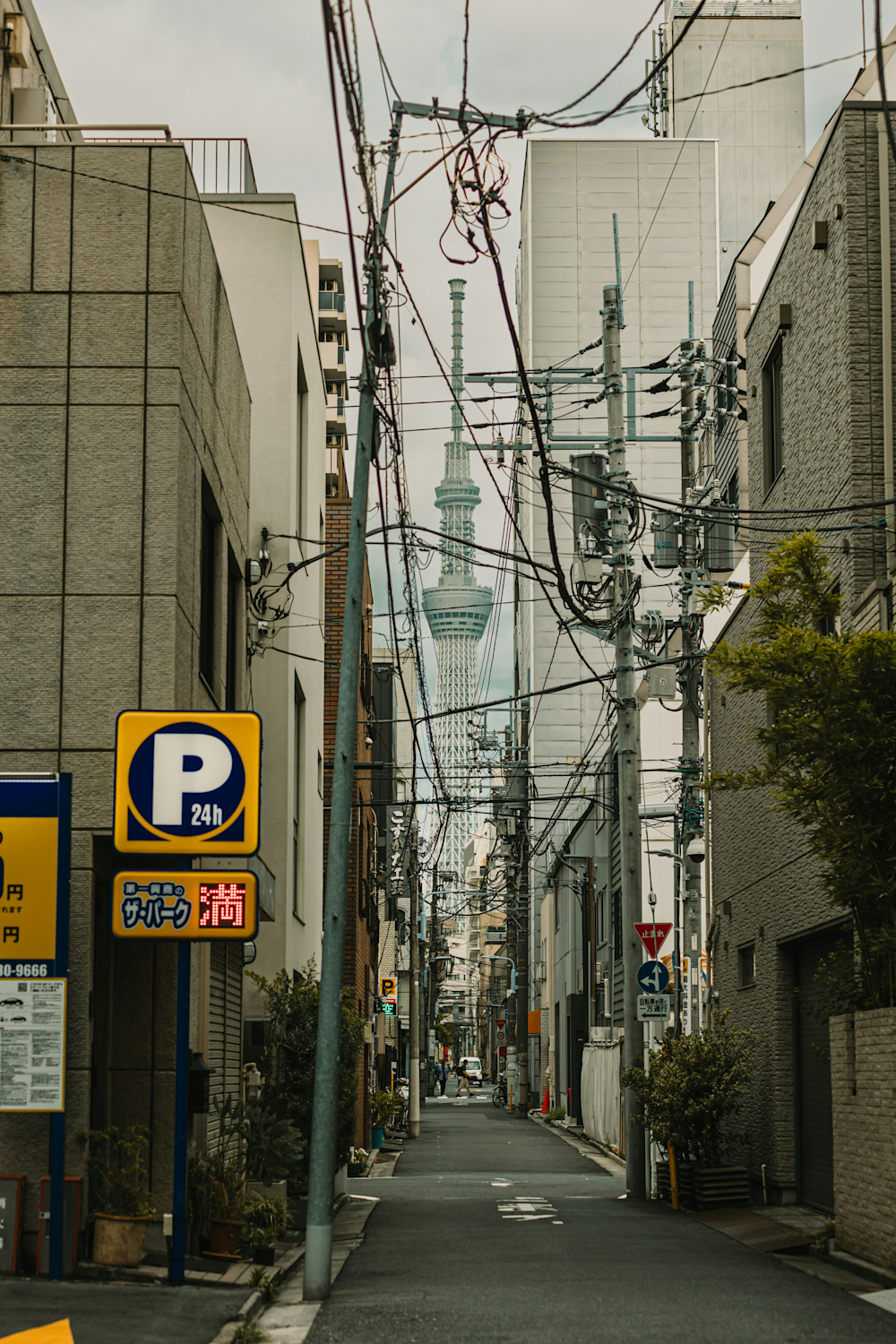
For most of my seven years of living in Japan, I was in Tokyo.
Which, at the time, made perfect sense.
There are boundless opportunities for literally everything.
Job opportunities, things to do, and generous childcare financial aid.
It was an ideal location for an expat transitioning into tech while entering fatherhood.
But the tipping point ironically came once I became a parent. Around this time, I landed my first fully remote software engineering role.
My wife and I were living in a small retro neighborhood in Shinagawa. Essentially, the borderline of the city center.
The house was modest in terms of Japanese living conditions.
Two multipurpose rooms, which functioned as a kitchen, dining room, bedroom, both of our offices, and nursery, depending on the hour.
And all things considered, it was bigger than most places in our area for a reasonable price.
However, I can recall the night I opened a window. I wanted to get some fresh air for my son.
And immediately, the room filled with the stench of cigarette smoke from an alley down the way.
His daycare was also along a major highway and directly next to a gas station. Coming from the States with much stricter childcare zoning laws, these were the types of things that didn’t sit well with me.
Additionally, now fully remote, I was spending more time at home than ever before.
I was grateful I wasn’t joining the morning rush on the Yamanote Line. But with my wife also working hybrid, some days the house felt smaller than it already was.
Every morning after daycare drop-off, I’d pull out a table over my son’s play area and set up my work station. This was after pushing aside toys, mattresses, and other miscellaneous baby goods.
Between sprints, I’d step outside for fresh air. But the sky was always blocked by telephone wires and tall grey concrete apartment complexes.
Eventually, we realized it was just time to move.
We first sought other areas in Tokyo with bigger homes and less density. But of the districts we liked, we could never afford them. Or it would have meant downsizing from a small house to an even smaller house.
And the three times we did find a place we liked, all were bought before we could even finish the house tour. The Tokyo housing market is viciously competitive.
So then we started to think, what if we left Tokyo?
For years, we stayed in Tokyo because work demanded it. But now in a fully remote role, it opened up a wider range of possibilities with less geographical constraints.
Why Not the Countryside?
However, I still had occasional all-hands meetings and special events that required physically going into Tokyo.
Likewise, my wife held a hybrid role mandating a Tokyo commute at least twice a week.
So moving somewhere without relative accessibility to and from the city was out of the question.
But scouting areas in neighboring prefectures brought up options closer to nature.
And raising our son with more natural outdoor activities was definitely a plus.
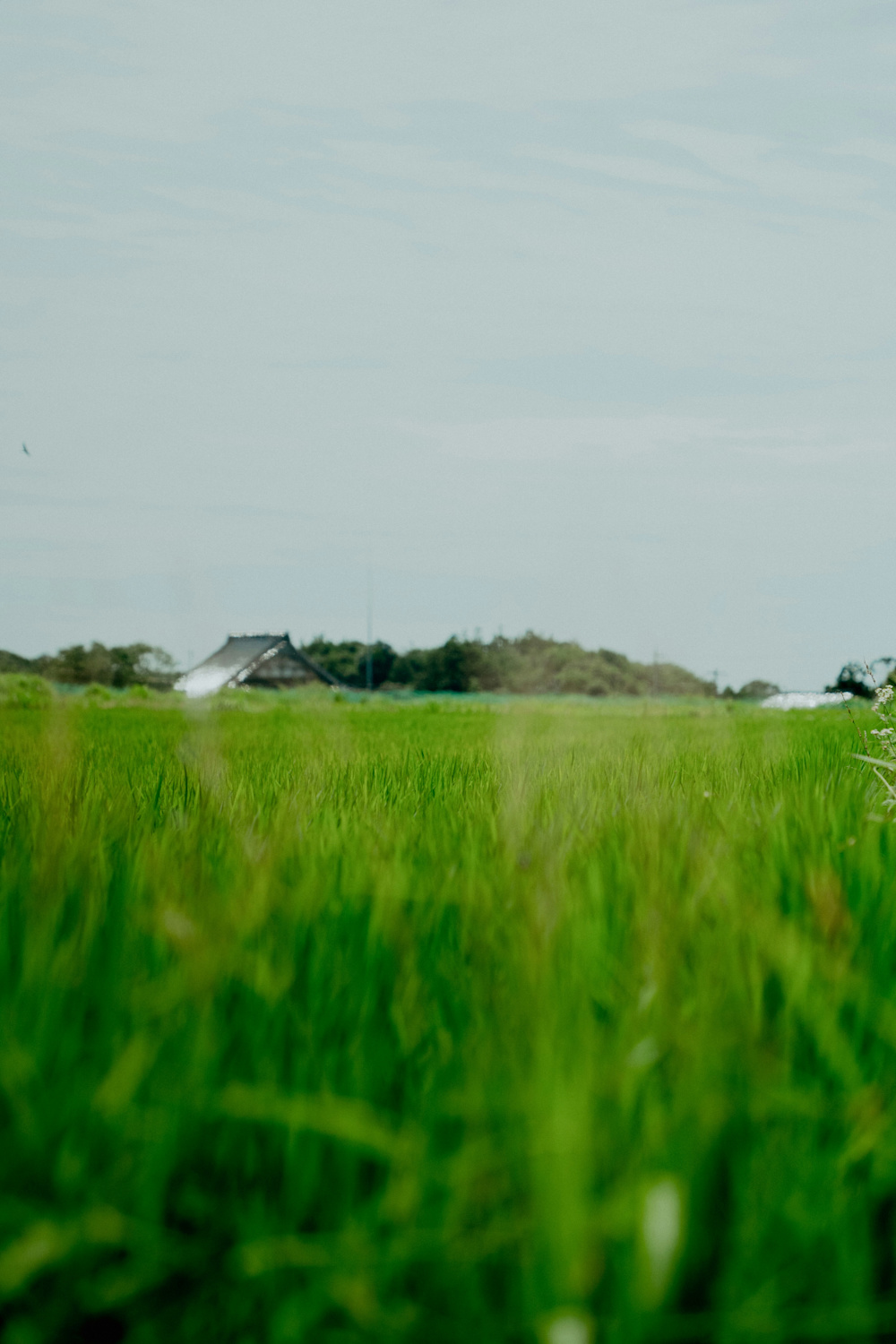
However, an important condition was not to move to the rural countryside.
I’d lived in rural Chiba before working in tech. And although the pace of life was much slower, there were some things I wasn’t willing to go back to.
For starters, neither my wife nor I have a Japanese driver’s license. And living in the countryside without one can be quite difficult.
At my old place in Chiba, both the grocery store and train station were a thirty-minute walk. Equally, hospitals and healthcare facilities were just as far.
Also, living in a small town may sound like a reclusive hermit’s paradise, but there was actually less privacy than in the city.
Everyone knew who everyone was.
And everyone knew I was the one foreigner from America, which was usually harmless. But during the early days of the COVID pandemic, I became more aware of how visible I was.
Later on, I’d find myself regularly finding escape by commuting over an hour to the city for peace of mind on the weekends.
In a big city like Tokyo, keeping to yourself is effortless, while in the countryside, your presence is constant.
And so, we wanted something slower than Tokyo. But not entirely off the grid.
Moving Out of Tokyo to Kamakura
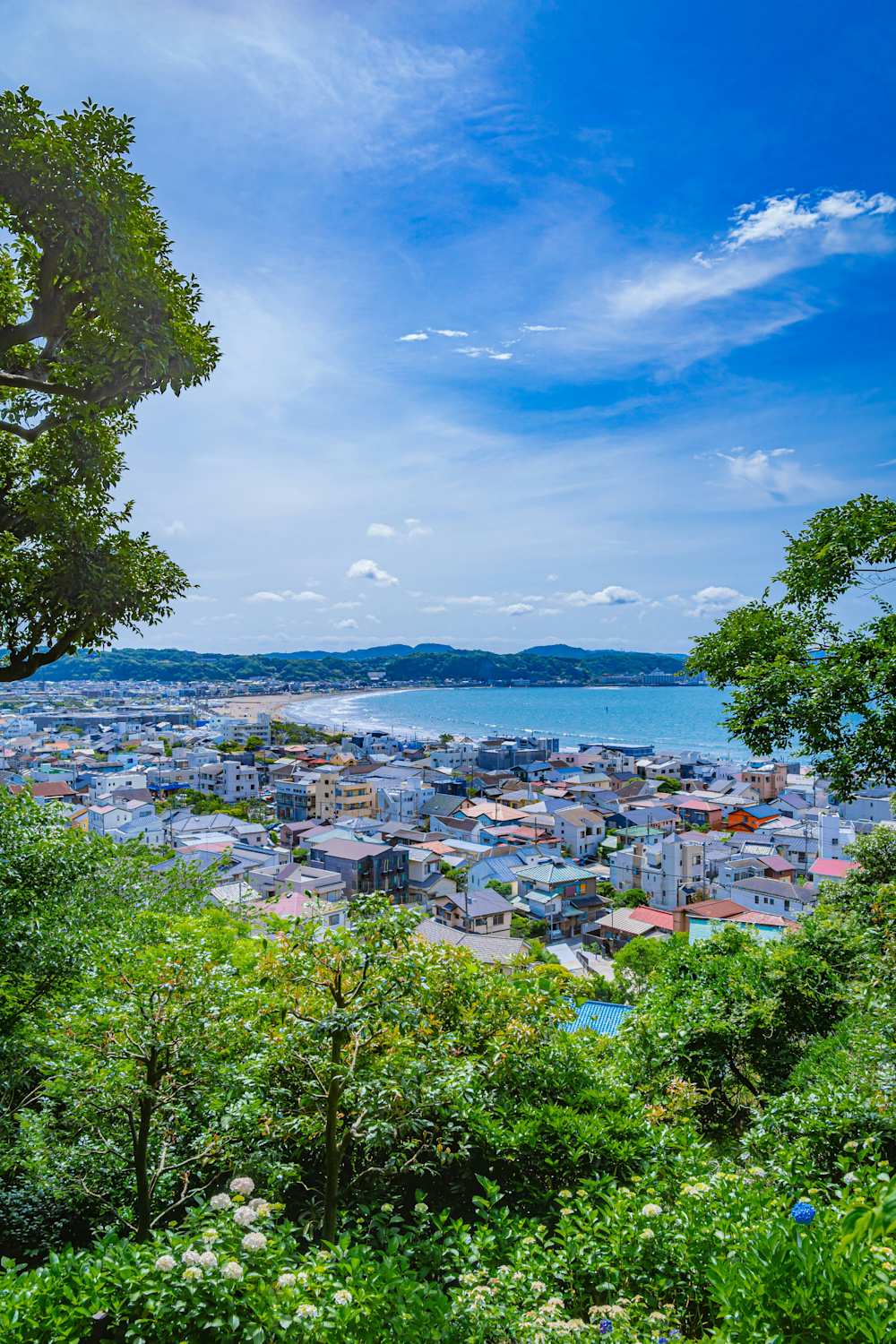
Enter Kamakura.
Mountains, ocean, rivers, and lots of greenery are built into the city landscape. One train ride off the Yokosuka line goes directly to Tokyo Station. Another train ride on the Shonan Shinjuku goes directly to Shibuya or Shinjuku. All within a little over an hour.
Both trains also pass straight through Yokohama, which takes around thirty minutes.
It's also a prime tourist destination so the city is accustomed to international visitors and residents. Although slower and less densely populated than Tokyo, foreigners are a common occurrence.
For my family, Kamakura felt like a happy medium between the two extremes of fast-paced Tokyo and the distant inaka.
Is Kamakura a nice place to live?
Daily Life
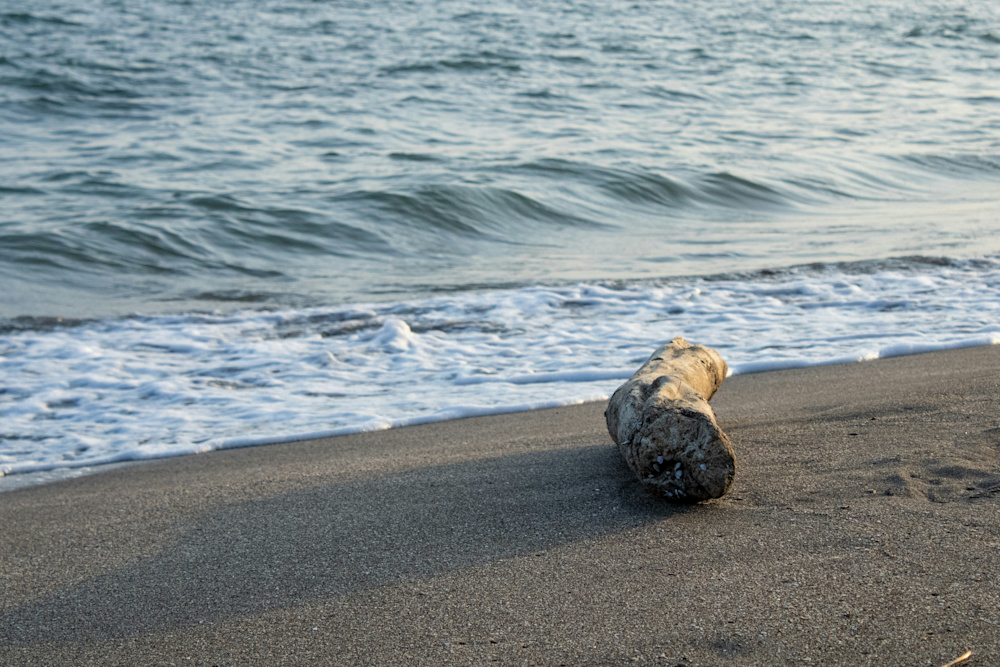
My days are much simpler here.
Daycare drop-off, work, ocean reset, and quiet nights where you can actually see stars.
The city is walkable and easy to get around on foot or by bike.
And while our neighbors own cars, we’ve done fine without one.
There’s also a heavy emphasis on sustainability pushed by the government.
Grocery stores, farmers’ markets, restaurants, cafes, and retailers are locally sourced small businesses. And mostly everything is clustered around the station.
As more young families relocate from Tokyo, family services have expanded.
There’s also a healthy expat community in Kamakura. Enough so that international daycare options aren’t rare.
It's easier to make friends and talk with folks in the community than in Tokyo.
People in Kamakura have a much more easygoing and laidback demeanor. Which is exactly what you’d expect from a beach town.
Historic Preservation Shapes Daily Life
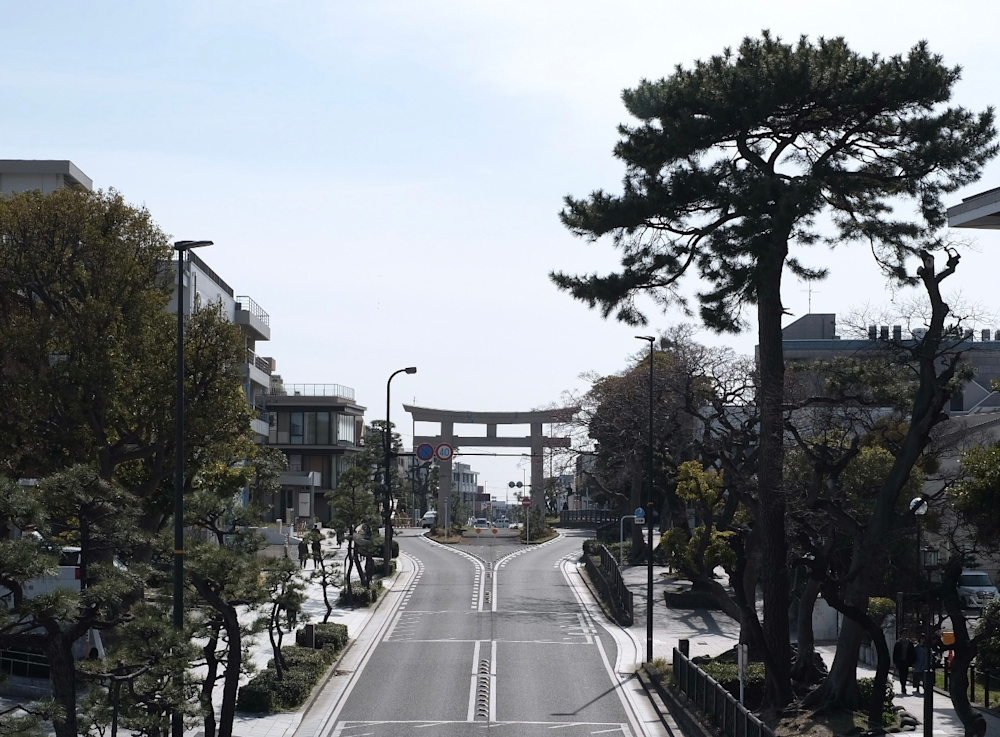
Image of Wakamiya Oji Street taken by the author.
The reason Kamakura feels so different from Tokyo isn’t accidental.
A lot of Kamakura’s uniqueness and beauty comes from intentional laws orchestrated by the government.
Kamakura’s history created zoning and preservation rules that directly affect how it feels to live here.
There’s an abundance of shrines and temples accompanying the rich scenery of nature.
Strict preservation laws protect forested hillsides, sacred grounds and scenic views. High-rise buildings are restricted, and development is tightly controlled in many neighborhoods.
For this reason, you’ll notice places like Wakamiya Oji Street. It goes from Tsurugaoka Hachimangu Shrine all the way to the beach. And between the two points, there aren’t clusters of telephone wires or any buildings over 15 meters.
When we were looking at houses, I remember feeling like the sky was endless on this particular street.
Coming from Shinagawa, this is what essentially sealed the deal for me.
Tourist Reality
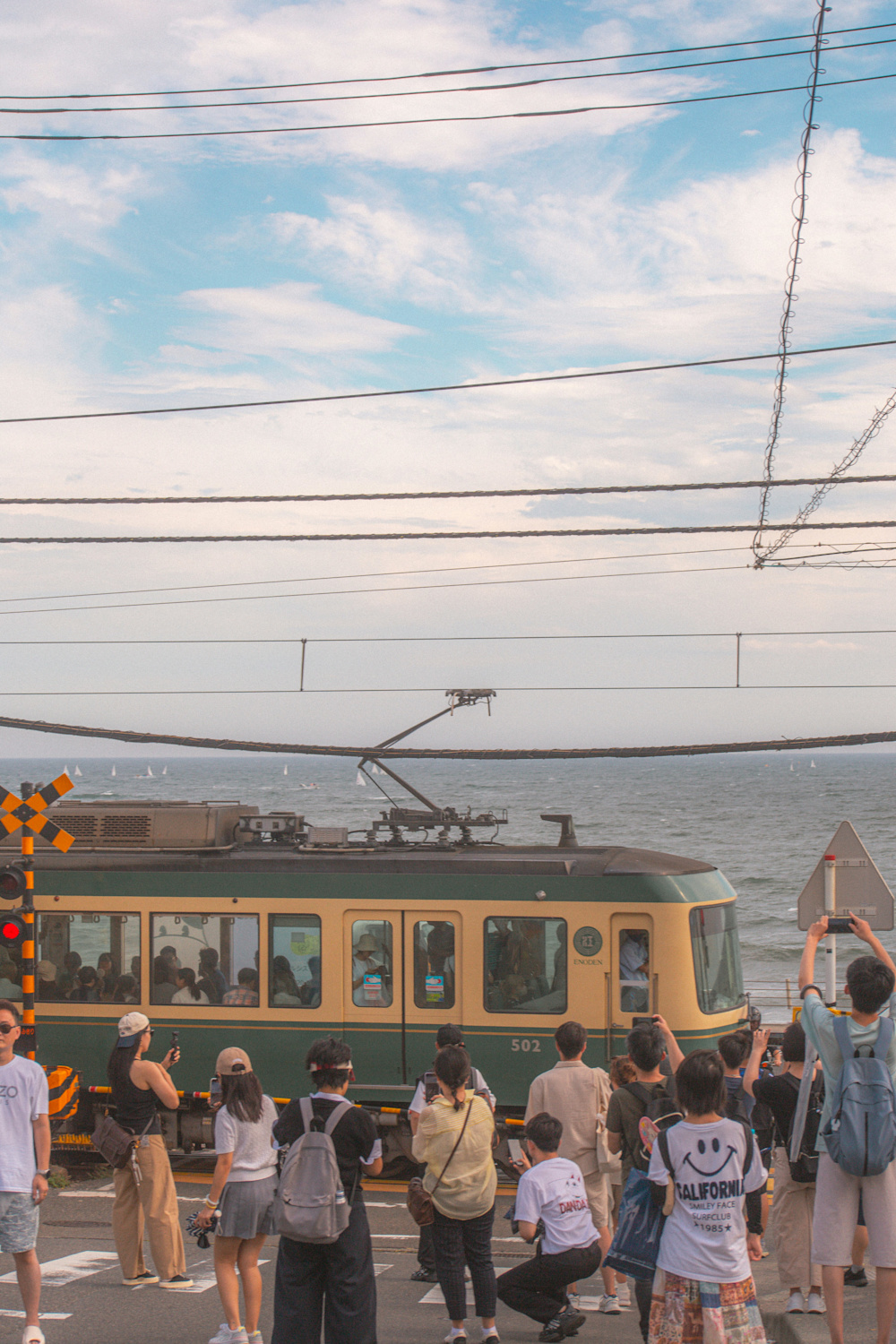
Of course, living in Kamakura isn’t always the quiet beach town people imagine.
For better or for worse, tourism is a main source of Kamakura’s economic success.
And if you go anywhere near tourist traps on a weekend, you’re jumping into a moshpit.
The town’s local train, the Enoden, is famous for its charm and classic cable car aesthetic. But mornings and afternoons, especially on holidays, can feel like Tokyo rush hour.
Cherry blossoms, summer beaches, autumn leaves, and New Year shrine visits equate to tourism as a year-round thing.
Despite the chaos, there are streets and neighborhoods hidden in plain sight, tucked away from it all.
Our neighborhood is a fifteen-minute walk from Kamakura station and the craziness. Yet the only time I ever encounter crowds is when I go to the station to leave Kamakura.
After living here for a while, it’s easier to pick up on local insights. Knowing where to go and where to stay away at all costs becomes common knowledge.
Working Remotely in Kamakura as a Tech Professional
Career Trade-Offs
So what does Kamakura mean in relation to a tech career?
It’ll really depend on where you are experience-wise.
If you’re in a position where you already have a remote job, or you’re at least mid-level, you should be fine.
Recruiters and Tokyo companies are generally okay with Kamakura’s accessibility and proximity.
Salary also remains unaffected, excluding commuter expenses. But as most modern tech companies cover transportation, this can be less of a concern.
Productivity and Focus
Not all of the lifestyle improvements came from moving cities alone.
Upgrading our home played a big role too.
With my own dedicated office space, I can jump right into the day. No more expending energy playing Tetris with furniture before jumping into Slack threads. Going back to Tokyo, my workspace used to appear and disappear depending on the time of day.
But one thing that definitely came from the move to Kamakura is the beach
Being able to walk five minutes to the ocean has been the biggest game changer for my productivity and focus.
An ocean reset where I can go for runs or long walks has been instrumental in helping me clear my mind between sprints and difficult tasks.
And with less noise and fewer street lamps like in the city, my sleep has improved significantly.
I’m not magically more productive by any means. But these minor changes have added up to major lifestyle enhancements now, looking back.
Tech Events and Networking
That said, a big trade-off since moving to Kamakura would be not being able to attend any tech events.
Before the COVID pandemic, there was hype around Kamakura becoming the new “Silicon Valley” of Japan and even a hackathon in a temple.
Today, at least in 2026, it doesn’t seem to be trending that way anymore.
Since living here, I haven’t caught word of any major tech events or meetups out this way, with Yokohama as the exception.
And the majority are still held in Tokyo after hours to accommodate working individuals.
But now living in Kamakura, it becomes a big commitment when networking can mean coming home after midnight.
Fortunately, since I’m not actively searching for work or connections, it’s not a big deal.
But if I were earlier in my career or unemployed, it would be difficult to take advantage of Tokyo’s thriving tech scene.
Is It Expensive to Live in Kamakura?
Rent and Space
As homeowners in Kamakura, we’re paying similar expenses to our monthly rent in Shinagawa.
But we’ve gone from a 1LDK to a 3LDK.
Two floors to three floors.
Now with an added driveway, outdoor patio, and balconies on each floor.
Do keep in mind, housing and rent prices in relation to Tokyo will heavily vary based on district comparison.
For our case, it averages out to roughly the same financially as our old neighborhood in Shinagawa. But weighing out the additional space among everything else, it was more than enough to convince us.
Daily Costs
Food pricing is also comparable to Tokyo, with some exceptions.
Restaurants catering to tourists are priced higher. But again, once you live here, you’ll know the local spots that make more sense.
Not to mention the number of farms selling vegetables randomly around the neighborhood. Sometimes, fresh seasonal produce can be even cheaper than grocery stores.
Utilities, however, have been noticeably more expensive in Kamakura, especially in the summer season.
Since Kamakura is more humid than Tokyo, dehumidifiers are essential to reduce mold.
For us, this means running them 24 hours a day on all three floors for three months straight.
Which ended up nearly doubling the costs of what we spent on summer utility bills in contrast to Tokyo.
Hidden Costs
And probably the last thing to consider is more based on how remote your role is.
For example, things like if you work in-person, or even hybrid with more days on site.
If your job doesn’t cover commuter expenses or has a set budget, you’ll need to factor in the daily 2,000 yen train fare. This would also only be if you live around Kamakura station.
Anywhere further might mean an additional bus or ride on the Enoden line. This would require more time and expenses to factor.
And while a two-hour roundtrip commute isn’t particularly out of the question, it could become rough.
To a point where the beach dream could slowly become overshadowed by a commuter-driven reality.
It’s also worth mentioning that child care subsidies were better in Tokyo. When my son was born and needed support for in-person nannies and full-time daycare, Shinagawa covered almost everything. Although Kamakura provides support and financial stipends, it doesn’t compare to the types of things we’d get in Tokyo.
The Real Risk Factor: Living By The Coast
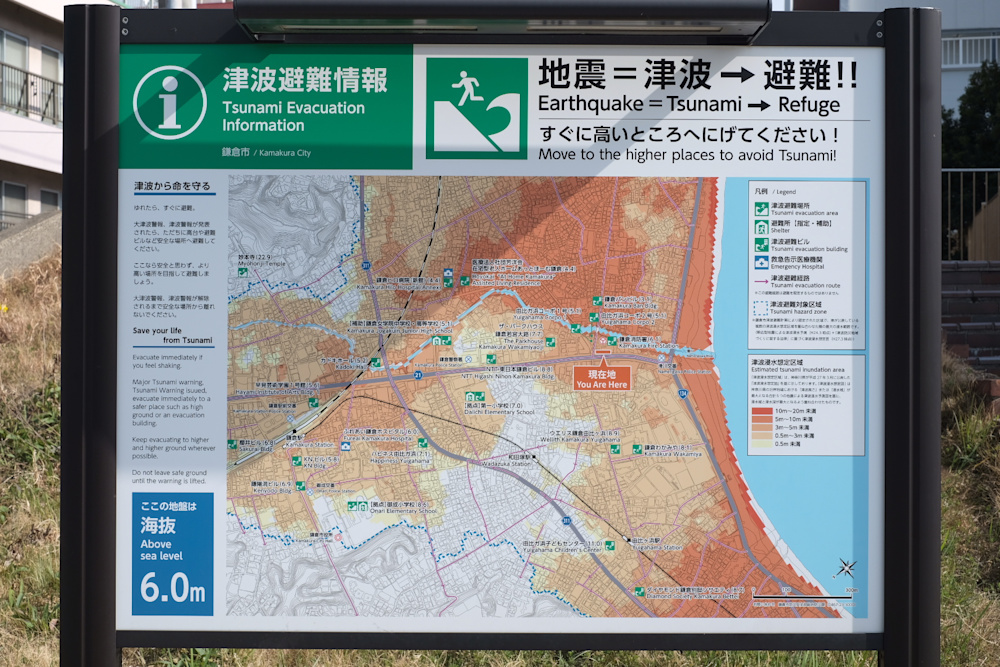
Image of a local tsunami hazard map taken by the author.
This is something I’m sure a lot of you were already thinking.
With closeness to the beach comes the reality of tsunamis.
With beautiful mountain ranges and cliffs come daunting landslides.
And if you're the type of person who feels uneasy about natural disasters, this could be a dealbreaker.
With a five-minute beach walk, clearly, my house is in the tsunami zone.
And yes, within this last year of living here, we have already experienced an evacuation alert.
I was in the middle of debugging an issue when neighborhood sirens started blaring.
Dropping work and rushing my son in stifling summer heat to an evacuation center was rough. And camping out with a toddler all day until the alert was lifted wasn’t easy either.
Fortunately, nothing happened, but it was a stark wake-up call that this is the real trade-off of the Kamakura dream.
Should You Move to Kamakura? Final Thoughts
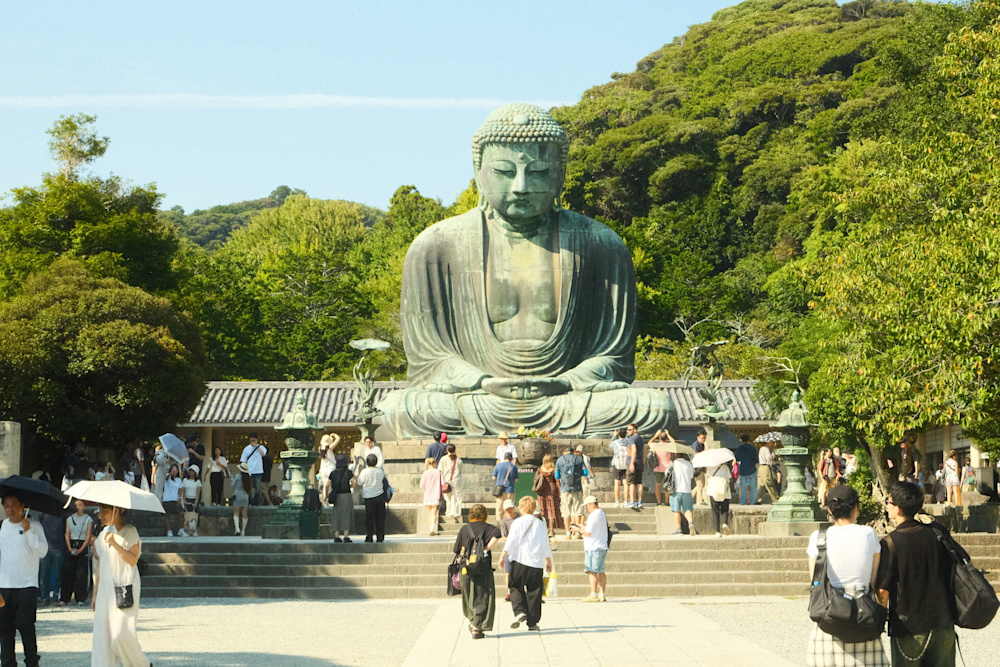
Lastly, the biggest change from Tokyo to Kamakura has been the psychological shift.
With things closing up promptly at sunset around 6:00pm, there are a lot fewer opportunities for late-night outings.
With a community centered around small businesses, sustainability, and handmade, artisanal boutiques, I take more time and consideration towards the purchases I make.
With easier access to nature, I have more freedom to mentally and spiritually detox.
And while I had many more acquaintances in Tokyo, I’ve been able to narrow down my circle to only a few meaningful relationships now in Kamakura.
For most of my time in Japan, I relied on the hustle and bustle of Tokyo to push me forward.
And Kamakura didn’t entirely replace Tokyo. It just gave me room to participate from a distance.
That being said, moving here isn’t for everyone.
Who It’s Right For
Good fit:
Remote engineers
Mid-career to Senior professionals
Individuals or families who value environmental reset
Not Ideal:
Early 20s devs needing exposure
People who thrive on nightlife
Founders who rely on a constant in-person network
People uncomfortable with natural disaster risks
In the end, Kamakura works best for people who want a slower life without completely disconnecting from Tokyo.
Closing Notes
Now that I’ve come close to fulfilling my remote work fantasy, I’ve realized a few things.
Living in Kamakura hasn’t magically solved every problem.
Like everywhere, nowhere is perfect.
But what it has given me is space.
Space to think.
Space to focus. Space to live a little slower.
But if you’re wondering whether your tech career in Japan has to be tied to the center of Tokyo forever, it doesn’t. At least in my experience.
Sometimes the best version of that remote work fantasy isn’t leaving the city entirely.
It’s just finding a place with enough room to breathe.


Garrett Omi
Garrett is a yonsei (4th generation Japanese American) originally from the San Francisco Bay Area. Currently, he works as a software engineer and resides in Kamakura with his wife and son. Outside of coding and writing, you’ll most likely find him on the beach or at home roasting coffee.
- Senior Data Engineer - MIDAS Data Platform, Digital Bank
- Money Forward
- Tokyo
- ¥6.5M ~ ¥11M
- Client Delivery Lead
- Kraken Technologies
- Tokyo
- Senior Client Delivery Lead
- Kraken Technologies
- Tokyo
- Software Developer
- Limina
- Tokyo
- Client-Facing Solution Architect
- Visual Alpha
- Tokyo
- ¥7M ~ ¥11M




Latest Tech Jobs 🇯🇵
Explore the top developer jobs in Japan for foreigners
- Senior Data Engineer - MIDAS Data Platform, Digital Bank
- Money Forward
- Tokyo
- ¥6.5M ~ ¥11M
- Client Delivery Lead
- Kraken Technologies
- Tokyo
- Senior Client Delivery Lead
- Kraken Technologies
- Tokyo
- Software Developer
- Limina
- Tokyo
- Client-Facing Solution Architect
- Visual Alpha
- Tokyo
- ¥7M ~ ¥11M
- Senior Full-Stack Software Engineer
- Visual Alpha
- Tokyo
- ¥5M ~ ¥9M
- Senior Software Engineer (WES & Fleet Management)
- Mujin
- Tokyo
- ¥8M ~ ¥15M
- Full Stack Engineer (Applications for Robots in Home Environments...
- AI Robot Association (AIRoA)
- Tokyo
- Lead System Integration Robotics Engineer - Logistic Division
- Telexistence
- Tokyo
- Robotics Software Engineer - Motion Planning
- Telexistence
- Tokyo



Get Job Alerts
Sign up for our newsletter to get hand-picked tech jobs in Japan – straight to your inbox.

© 2026 Japan Dev. All rights reserved.
Proudly built in Tokyo.


Curated with 💙 in Tokyo by Eric Turner
All our data is gathered from publicly available sources or contributed by users