



Updated August 22, 2024
Point Cards in Japan, Demystified
If you’ve been shopping in Japan, there’s a good chance you’ve heard of the term "Pointo kaado" (ポイントカード).
This common concept, meaning Point Card, is a big part of commercial life in Japan. At nearly every checkout counter of a big chain store, they’ll ask you if you have one.
They’re sort of like loyalty cards, but way better – you’ll actually want to use these due to their many benefits.
So, do you get a point card from every store? Do Japanese people carry around multiple cards when shopping at the mall? I’ll clarify all of these questions and explain which cards are the most popular and worth getting.
So, if you want to save a pretty penny and find out how point card systems work in Japan, let’s dive right in.
Explaining Point Cards: What Is a Point Card in Japan?
Point Cards work similarly to loyalty or cash-back systems. These physical cards are usually tied to a specific store or a group of stores under the same corporate umbrella, allowing you to earn points or other rewards based on your spending using the card.
There are two main types of point cards in Japan: original point cards and common point cards.
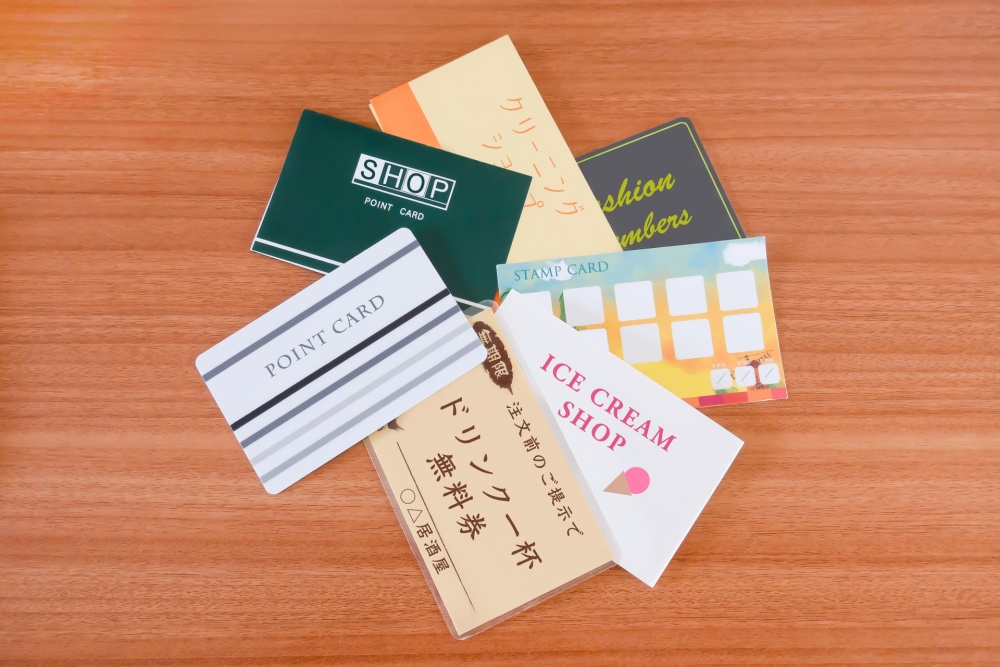
Original Point Cards can be used exclusively at a single store or chain of stores. These are usually for local, smaller stores like your local dry cleaner, bakery, or coffee shop.
The point redemption rates tend to be higher with original point cards, meaning you get more in return quicker. However, since you only earn points when shopping at a specific store, it makes sense to carry the point cards of the few stores you shop at the most regularly.
Another benefit of original point cards is that you may be able to receive unique services such as coupons or rank systems.
Common point cards, on the other hand, allow you to shop at multiple stores with the same card, which means fewer cards to carry around.
If you’re unsure whether you’ll shop enough times at a specific store to warrant an original point card, going with a common point card makes much more sense. As you can collect points at multiple stores, you’re sure to get something out of the point card one way or the other.
Speaking of which, what exactly do you get out of these point cards? Let’s take a look at some common benefits.
The Usual Benefits of Point Cards
In most cases, point cards do exactly as the name suggests – they accumulate points.
For instance, you get one point for every 100 yen you spend. These points accumulate over time and can be redeemed for rewards. This is basically how the points work, although the point-earning structure and the rewards change depending on the card.
In fact, as I’ll explain in a bit, some of the point cards even allow you to earn points when spending your accumulated points. This is, of course, more common with common point cards than original ones.
During certain campaign periods, the points you earn through the point card may be doubled or tripled, encouraging you to spend more. You can utilize these campaigns to earn more points by putting your big purchases on hold and buying everything during this time to maximize your earnings.
Another benefit of point cards is receiving gift cards or vouchers. Some companies offer vouchers for your accumulated points, allowing you to spend your points at even more stores.
On top of that, some point cards aren’t limited to just shopping. Some stores also allow you to book an Airbnb and even airplane tickets using your accumulated points.
Lastly, while not so common, some point cards also give you the option to exchange for electronic money using your points, which is like getting money back!
Of course, before you start accumulating points, you need to learn how to get a point card in Japan. So, let’s check it out.
How To Get a Point Card in Japan?
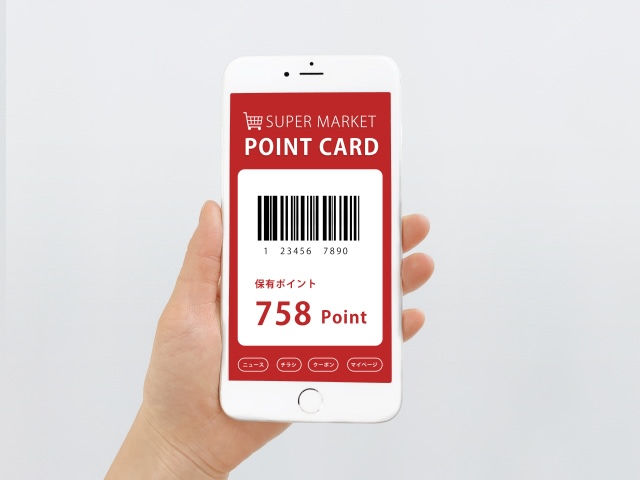
Whether it’s a common or an original one, getting a point card is generally fairly easy. After all, these are promotional tools that are mutually beneficial, and companies want you to use them.
So, most of the time, all you need to do is head over to the nearest store where you want to get a point card. They’ll give you a form to fill out, and you can get your card in no time.
Alternatively, most point cards today also have online application forms you can fill out, so you might not even need to leave the house.
If you’re applying physically through a store but aren’t proficient in Japanese, here’s a handy phrase: ポイントカードを作りたいです (Pointo kaado wo tsukuritai desu.), which means “I’d like to apply for a point card.” If you think your Japanese is rough, my posts on the best Japanese learning tools and Japanese language schools might be of help.
Usually, after you fill out the form, they’ll give you the card right away. If you apply online, however, you’ll have to wait for a few days for your card to arrive by post (unless they have a digital point card app).
The Most Popular Japanese Point Cards
Now that you know the basics about point cards, let’s talk about some of the most popular point cards in Japan you might want to check out.
There are way too many point cards out there, but the ones I’ll introduce below are the most versatile and can get you the best bang for your buck.
We recommend starting with one or two that you can use in multiple stores, or just get a card from the store you use the most often and go from there.
Let’s start with our first recommendation.
Rakuten Point Card
If you’re looking for an all-rounder, look no further. The corporate giant’s business extends into every aspect of life, from banking to online shopping, media and electronics, and Rakuten’s point card system has partnerships with over 700 stores throughout the country.
This versatility is why the Rakuten Card will probably be your most used point card in Japan.
Not only can you use it in Rakuten’s stores, but you can also use your Rakuten Card at chain stores like McDonald’s, Family Mart, Sukiya, and many others.
The conversion rate here is 100 to 1, meaning you earn 1 point for every 100 yen spent. The redemption rate, on the other hand, is 1 to 1, so each of your points can be redeemed as 1 yen. Keep in mind, however, that you need to spend your points within one year as they expire.
If you use Rakuten Pay, Rakuten Market, or Rakuten Mobile, you get extra benefits too. There’s no card issuance fee or annual fee, and you can easily manage and view your points through a mobile app.
Lastly, Rakuten also allows you to earn points while spending them, so you end up getting more than the 100 to 1 ratio in the long run!
T-Point Card
Another great option you can use in multiple stores is the T-Point Card, which is mostly used for shopping at Family Mart, but its benefits extend beyond the convenience store.
T-Point Card may be one of the most popular point cards in Japan, along with the Rakuten Card, because you can use it at Yoshinoya, Tsutaya, ENEOS, Family Mart, and their many other partner shops.
The redemption rate here depends on the store you shop at, but in most stores, it’s 100 to 1 or 200 to 1, which means you get one point for every 100 or 200 yen you spend. Once you accumulate enough points, you can use them with a redemption rate of 1 to 1, meaning each point is worth 1 yen.
Stores like Welcia and Maruetsu also run special campaigns that let users earn double points or redeem their points at a higher redemption rate, so definitely be on the lookout for those.
Keep in mind that as of April 2024, the T-Point Card has integrated with the V points system, which increased the card’s use cases even further. There’s no application fee for the card, and you can even apply online.
d-Point Card
d-Point Card is issued by the telecommunication company NTT Docomo. So, if you have a phone plan with the company, you’ll be glad to know that you can use your earned points to pay your phone bills!
However, this isn’t the sole benefit of the d-Point Card. Even if you don’t have a phone plan with Docomo, you still get plenty of benefits and rewards, and the card is accepted by hundreds of stores across Japan.
Getting the physical card is free, and the best part is that your points roll over to the next year before expiring, saving you from losing unused points. The card is most notably accepted at the Lawson’s Konbini stores but is also accepted by a wide variety of partner shops, and of course, Docomo stores.
d-Point Card has a rank system, meaning the higher your rank goes, the more benefits you get. Because of this, we recommend getting the “d Card GOLD“ as it maximizes the points you earn by 1-2%.
The conversion rate for earning points is once again 100 or 200 to 1 depending on the store, meaning every 100 or 200 yen you spend gets you one point. The redemption rate is 1 to 1, so each point can be spent as one yen.
To sign up, all you need to do is use the website or download the app.
Ponta Card
If you’re a frequent Lawson customer, another great point card is the Ponta Card. Once again, there’s no issuance fee or annual fee, even with the Ponta Premium Plus card, which has a credit card functionality.
You can use the Ponta Card at Lawson’s and Lawson Store 100’s, but it can also be used with Recruit, allowing you to use the card at over 200 different stores, including Takashimaya, AU, and Doutor.
The way you earn points is based on a 100 to 1 conversion rate, so you earn a point for every 100 yen spent. When spending, you redeem points with a rate of 1 to 1, meaning each point is worth one yen.
Ponta card also gets you tons of special discounts at Lawson stores, allowing you to get your shopping done for much cheaper.
Keep in mind that the card also gets you points when eating at KFC restaurants, buying Japan Airlines tickets, getting refueled at Shell stations, and shopping at their many other partner stores.
Make sure to spend your accumulated points timely, as they expire one year after your last card use.
Nanaco Point Card
If you’re a frequent customer of 7-Eleven stores, Nanaco Point Card might be the best point card option.
For one, none of the tiers, including the Seven Card Plus, which has credit functionality, have any issuance or annual fees if you use the mobile version. The physical card, however, does come with a small fee.
Regardless of what type of Nanaco card you have, all customers get 5% off at Ario and Ito-Yokado stores on the 8th, 18th, and 28th day of the month. Customers can also earn four times the points they’d usually receive during this time.
What’s more, the Nanaco Point Card has a senior option available to those over 60 called the “Senior Nanaco” Point Card. This card provides 5% discounts at 7-Eleven and Ito-Yokado stores on the 15th and 25th of every month!
However, by far the best option is the Seven Card Plus with credit functionality. This works like a prepaid credit card or an electronic cash card, so it serves a double purpose in your wallet. A great thing about this one is that it earns you 2 points for 200 yen instead of one, which is the case for the other Nanaco Point card types.
Once again, the point redemption rate here is 1 to 1, meaning each of your points is worth one yen. You can earn points at over 200 businesses across Japan, the most notable of which include Denny’s, Coco Ichibanya, and McDonald’s. You can even exchange your points for ANA miles or digital money for making payments!
Just keep in mind that the point accumulation and expiration system operates in a cycle, starting from April to March of the following year. Points earned in one cycle will expire at the end of March in the following year after the cycle in which you earned the points. So for example, in a point accumulation cycle of April 2025 to March 2026, if you earned a point in August 2025 then the point will expire at the end of March 2027. But if you earned a point in January 2026, the point will still expire in March 2027.
Waon Point Card
Even if you’re not familiar with the name Waon, you may have heard of the AEON Group, which is a large corporation in Japan that operates in multiple industries, such as food, fashion, groceries, and household items.
The best part about the Waon Point card is that your points are valid for two years instead of the usual one. What’s more, customers earn double points on the 5th, 15th, and 25th of each month, which is pretty generous compared to other cards’ offers.
Waon Card is accepted by a wide variety of stores, including Mini Stop, My Basket, and MaxValu.
Unlike the other cards on our list, the Waon Point Card is exclusively a prepaid cash card, so you will need to buy a prepaid amount in advance to start using it.
Luckily, the card has a free mobile version if you sign up on the app, available on iOS and Android. This isn’t an app specifically for the Point Card but for all AEON services like AEON Pay and Mobile Waon, so if you’re already a customer of these services, the Waon Point Card is a no-brainer.
Keep in mind that there’s a small issuance fee for the physical card.
The conversion rate with the Waon Point card is once again 200 to 1, which means every 200 yen you spend gets you one point. When spending your points, each one of them is worth one yen.
JRE Point Card
Offered by East Japan Railway Company, the JRE Point Card is another great point card for JR East customers.
JRE Point Card is free with no annual fees, so it’s a risk-free investment, especially if you travel a lot. While the main way you earn points is by buying JRE East tickets, you can also earn points by shopping.
You can check out the full list of participating stores, which also includes a map to help you locate a store near you.
In addition to the stores on the list, the JRE Point card also allows you to earn points from your Suica payments. In fact, you can even combine your points earned with the JRE Point card with your Suica and View Card points.
The greatest advantage of the JRE Card is its credit functionality, so you can use it as a prepaid electronic cash card. You can get 3.5% cashback when shopping at JRE Card-affiliated stores in addition to earning points, which can really add up and make a difference if you use Suica or buy train tickets frequently.
Keep in mind that if you use Suica, you can also get a 1.5% cashback on your Socia Mobile payments, which is all the more reason to snag yourself a JRE Point Card right away.
Choosing The Right Point Card For You

Now that you have a good look at some of your best point card options in Japan, let’s talk about a few points to consider when picking the best card for you.
In general, there are three main points you want to consider:
The redemption rate: While most cards offer a similar redemption rate of 1 to 1, some offer better rates if you’re a customer of a certain service, so be on the lookout for it.
Ease of earning points: Of course, you want a card that’s accepted by the stores in your area, so check the affiliated stores before applying.
Having multiple ways to use points: This might be the most important, as getting a card where you can use the points to pay certain bills or buy groceries may be the most impactful in your day-to-day life.
In addition to these, going with a card that has an app where you can easily view your points is a big plus, as well as having the ability to get a digital card where you don’t need to carry a physical card to get the benefits.
Conclusion: So, How Many Point Cards Should I Get?
As I conclude this guide to Japan’s abundant world of point cards, I’d like to answer one final question – how many point cards should I get?
Should you get all of them? Certainly not. If you want to maximize the impact of the card on your spending, you need one or two cards that you can use frequently and accumulate enough points to amount to something.
So, at first, try to maximize your point earnings and go for a few cards that you think will be used the most. Once you start building the habit of using them, you can choose to get a point card from every establishment you frequently visit, but limiting yourself at first can be good, especially to avoid carrying too many cards around.
This is it for Point cards in Japan, but if you want to learn more about shopping in Japan, my post on Japan’s top online resale marketplaces may pique your interest.


Japan Dev Team
This post was written by our Japan Dev editorial team.
- Software Developer
- Limina
- Tokyo
- Client-Facing Solution Architect
- Visual Alpha
- Tokyo
- ¥7M ~ ¥11M
- Senior Full-Stack Software Engineer
- Visual Alpha
- Tokyo
- ¥5M ~ ¥9M
- Senior Software Engineer (WES & Fleet Management)
- Mujin
- Tokyo
- ¥8M ~ ¥15M
- Full Stack Engineer (Applications for Robots in Home Environments...
- AI Robot Association (AIRoA)
- Tokyo




Latest Tech Jobs 🇯🇵
Explore the top developer jobs in Japan for foreigners
- Software Developer
- Limina
- Tokyo
- Client-Facing Solution Architect
- Visual Alpha
- Tokyo
- ¥7M ~ ¥11M
- Senior Full-Stack Software Engineer
- Visual Alpha
- Tokyo
- ¥5M ~ ¥9M
- Senior Software Engineer (WES & Fleet Management)
- Mujin
- Tokyo
- ¥8M ~ ¥15M
- Full Stack Engineer (Applications for Robots in Home Environments...
- AI Robot Association (AIRoA)
- Tokyo
- Lead System Integration Robotics Engineer - Logistic Division
- Telexistence
- Tokyo
- Robotics Software Engineer - Motion Planning
- Telexistence
- Tokyo
- Lead Mechanical Design Engineer
- Telexistence
- Tokyo
- Computer Vision Engineer (Object Detection & 3D Pose Estimation)
- Mujin
- Tokyo
- ¥8M ~ ¥13M
- AI Engineer (AI Agent Platform Development), ERP
- Money Forward
- Tokyo
- ¥7M ~ ¥11M


Get Job Alerts
Sign up for our newsletter to get hand-picked tech jobs in Japan – straight to your inbox.

© 2026 Japan Dev. All rights reserved.
Proudly built in Tokyo.


Curated with 💙 in Tokyo by Eric Turner
All our data is gathered from publicly available sources or contributed by users