



Updated August 3, 2026
Shaken in Japan: The Complete Guide to Cost, Deadlines, and Passing Your Car Inspection
Own a car in Japan? Then shaken (車検) is coming for your wallet whether you like it or not.
It's the mandatory inspection every road-legal vehicle needs, and it catches a lot of foreign drivers off guard. Miss the deadline, misread the bill, or walk into the wrong shop, and you could pay double what you should.
In this guide, we will break down what you need to know about shaken as a foreign driver in Japan.
In this article: 📝
- What Is Shaken and Why Is It Compulsory?
- How to Check Your Shaken Expiry Date
- The Real Cost of Shaken
- Where to Get Your Shaken Done: 4 Options
- User Shaken Guide
- Required Paperwork Checklist
- What Happens If Your Shaken Expires?
- How to Lower Your Shaken Bill
- Frequently Asked Questions About Shaken in Japan
- Don't Let Shaken Catch You Off Guard
Before you get behind the wheel at all, it helps to understand the rules of the road here. Our guide to getting a driver's license in Japan is a good place to start if you're still working on that step.
What Is Shaken and Why Is It Compulsory?
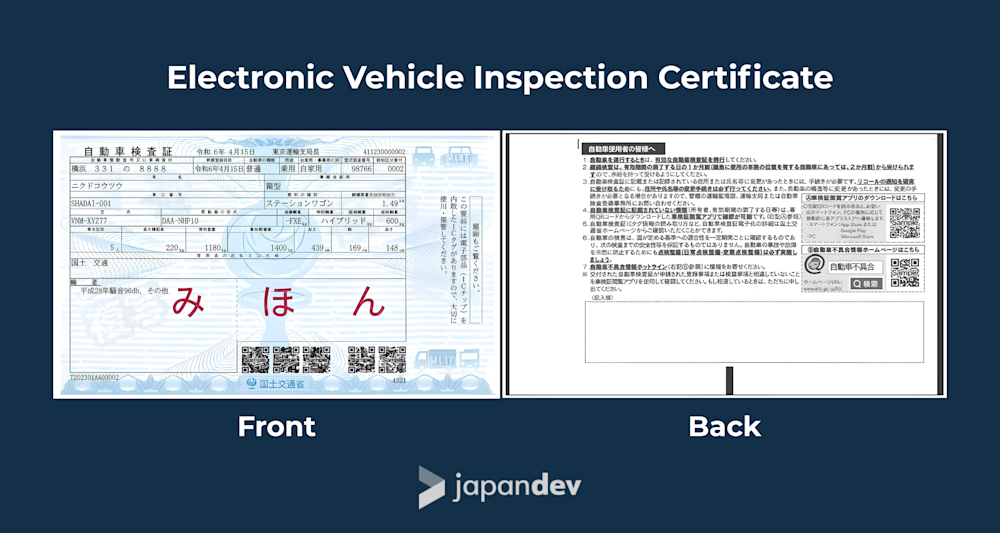
Shaken is short for Jidōsha Kensa Tōrokuseido (自動車検査登録制度), Japan's official vehicle inspection and registration system. In plain English, it's a mandatory safety and emissions check for nearly every car and motorcycle on the road.
The system dates back to 1951, and it hasn't gone away since. Japan built shaken around three goals: keep unsafe cars off the road, keep emissions in check, and collect the mandatory insurance and taxes tied to your vehicle.
You can't legally drive in Japan without a valid shaken certificate. There are no exceptions for foreign residents, tourists, long-term visa holders, or anyone else with a car registered here.
The inspection confirms three things. Your car is mechanically safe. Your car meets emissions standards. Your car carries no illegal modifications.
That last point trips people up the most. Aftermarket parts, lowered suspension, or a swapped engine can all fail you if they don't meet the standard your car was originally certified under.
How Shaken Differs for Kei Cars, Standard Cars, and Motorcycles
Not every vehicle follows the same shaken. Here's the breakdown:
New standard cars: First shaken happens 3 years after initial registration. Every 2 years after that.
-
New kei cars (yellow plates): Same 3-year first inspection, then every 2 years. Fees run lower across the board compared to standard cars.
Kei cars are capped at 660cc and have specific size limits. That's why tax and insurance rates come in lower.
Used cars: Follow the same 2-year cycle as any standard car, regardless of when you bought it.
Motorcycles over 250cc: Also need shaken, on the same 2-year cycle.
Motorcycles 250cc and under: No shaken required, though you still pay annual road tax.
Buying a used car doesn't reset the shaken cycle in your favor. If the car you buy has 8 months left on it’s shaken, that's what you get. Always ask the seller how much time remains before you sign anything.
How to Check Your Shaken Expiry Date
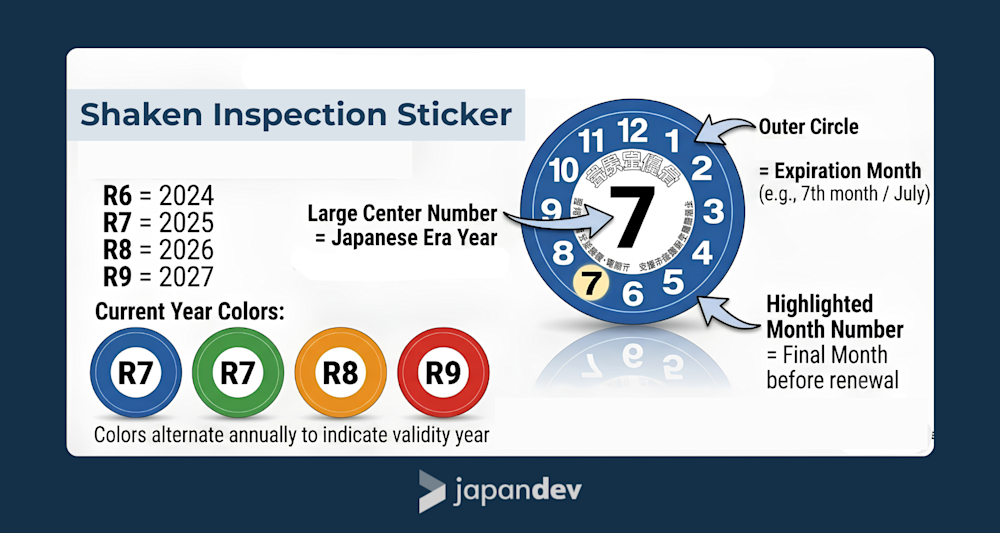
Missing your shaken deadline means an expired car sitting in your driveway, and a real legal problem, the moment you drive it. Here's how to stay ahead of it.
Check the windshield sticker. Every car has a small square sticker on the front windshield, near the rearview mirror. It shows the year and month your shaken expires, using the Japanese era system. If you see 令和8年3月, that reads Reiwa 8, March, or March 2026 on the Western calendar.
Check the Shakensho. This is your Vehicle Inspection Certificate (検証), a folded paper document. Japanese law says it must stay in the glove box at all times. It lists your expiry date in full, along with your car's registration number, weight, and engine details.
Convert the era year if you're unsure. Reiwa started in 2019. To convert, subtract 1 from the Reiwa year and add 2018. Reiwa 8 becomes 2026. Keep that math handy, since era years trip up almost every new arrival. For example, to convert Reiwa 12 to a Western year, you subtract 1 from 12 to get 11, and then add 2018, which gives you the year 2029.
Set a digital reminder. Don't rely on memory alone. Add the expiry month to your phone calendar the day you get your new shaken sticker, and set a reminder at least 3 months out.
As of April 2025, you can complete your shaken up to 2 months before it expires without losing any days off your next cycle. That's double the old 1-month window, and it gives you far more room to book an appointment before the fiscal year-end rush.
If your address on the Shakensho doesn't match your current residence, sort that out before your appointment. The address on file needs to match your Juminhyo, or resident registration, so keep this updated any time you move.
To do that, visit your local ward office to update your resident record (Juminhyo) and get an official copy.
Next, submit a parking space use certificate to your local police station to obtain a new Parking Certificate (Shako Shomei).
Finally, take your updated Juminhyo, Parking Certificate, current Shakensho, and personal seal (Inkan) to the Land Transport Bureau to officially update your car's address.
Note that if you have moved to a new prefecture, you must bring the vehicle along to exchange your license plates.
The Real Cost of Shaken
Shaken bills confuse almost everyone the first time. That's because you're paying for two different things at once, bundled into a single invoice.
Mandatory Legal Fees, Fixed by Law
These fees don't change no matter which shop, dealership, or government office does your inspection. Everyone pays them, and they cover more than the safety check alone.
Fee |
What It Covers |
Typical Cost (2 years) |
Jibaiseki (自賠責保険) |
Compulsory liability insurance |
¥17,000 - ¥21,000 |
Weight Tax (重量税) |
Tax based on your car's weight |
¥13,000 - ¥50,000+ |
Inspection Stamp Fee |
Government processing fee |
¥1,800 - ¥2,300 |
Jibaiseki is not the same as your regular car insurance. It's a bare-minimum liability policy that covers injury to other people, and it falls far short of full coverage. Keep a separate voluntary insurance policy on top of it.
The weight tax scales with your car's weight class, and it drops if your car qualifies for an eco discount. Hybrids, EVs, and newer fuel-efficient models often pay less here.
Service Fees and Part Replacements, Set by the Provider
This is where the real price difference between shops shows up. A shop's labor charge, inspection prep work, and any parts they replace can range from ¥15,000 at a bare-bones garage to well over ¥100,000 at a dealership.
Shops flag plenty of extra items during a shaken check. Some are required by the standard. Others aren't.
Worn brake pads, bald tires, or a cracked windshield will fail you outright, so budget for those if your car is due. An older battery or a routine fluid flush often won't fail you, even if a shop suggests replacing them anyway.
Ask for an itemized quote before you agree to anything. If a shop can't explain in plain terms why a part needs replacing, get a second opinion or ask to see the worn part yourself if you trust your own judgment.
Kei Car vs Standard Car
Your plate color makes a real difference to your total bill. Here's a rough comparison for a typical kei car versus a mid-size standard sedan, using shop service fees on the lower end.
Category |
Kei Car (Yellow Plate) |
Standard Car (1.0–1.5t) |
Jibaiseki |
~¥17,000 |
~¥20,000 |
Weight Tax |
~¥13,000 |
~¥33,000 |
Stamp Fee |
~¥1,800 |
~¥2,200 |
Statutory Total |
~¥32,000 |
~¥55,000 |
Independent Shop Service Fee |
¥15,000–¥40,000 |
¥20,000–¥60,000 |
Rough Total (Independent Shop) |
¥47,000–¥72,000 |
¥75,000–¥115,000 |
These numbers move around based on your car's exact weight, age, and eco rating, so treat them as a starting point rather than a quote. Ask your shop for exact figures once they know your vehicle.
Are Extra Tests Optional, and How Do You Know If Your Car Needs Them?
Some providers push add-ons that go beyond the legal minimum, like undercoating treatments, extended maintenance packages, or premium fluid brands. None of these are required to pass shaken.
A good rule of thumb: if a recommendation isn't tied to a specific failed test result, treat it as optional. Ask the shop to show you the exact standard your car failed to meet before you agree to any repair.
If your car has low mileage and you've kept up with basic maintenance, you'll likely walk away without needing much beyond the statutory fees and a small service charge.
Where to Get Your Shaken Done: 4 Options
You've got four real choices for where to take your car. Each one trades price against convenience differently, so match the option to your situation.
Provider |
Price Range |
Best For |
Dealership |
¥100,000–¥200,000+ |
Newer cars still under warranty |
Auto supply chains (Autobacs, Yellow Hat, Holiday Shaken) |
¥50,000–¥90,000 |
Balance of price and convenience |
Local gas stations |
¥40,000–¥80,000 |
Quick, no-frills service |
User Shaken (DIY) |
Statutory fees only |
Confident drivers who speak some Japanese |
Authorized Brand Dealerships
Dealerships know your exact make and model inside out, and they use genuine manufacturer parts for every repair. You pay a real premium for that expertise, sometimes double or triple what an independent shop charges for the same work.
They're also more likely to recommend extra maintenance beyond what shaken requires. That's not always a bad thing if your car needs the work, but it's worth a second opinion before you say yes.
Dealerships make the most sense for cars still under manufacturer warranty. Also, for owners who want one relationship handling every part of their car's upkeep.
Auto Supply Chains and Specialized Garages
Chains like Autobacs, Yellow Hat, and Holiday Shaken hit a sweet spot for most foreign drivers. They're fast, transparent about pricing upfront, and the staff has hands-on experience across a wide range of makes and models.
Many locations post fixed shaken packages online before you even book, which makes comparing prices across a few shops easy. Turnaround at these chains often runs same-day or next-day, faster than most dealerships.
Local Gas Stations
Gas stations that offer shaken services can be convenient if there’s one near your home or workplace. Pricing lands close to the auto supply chain range at most locations.
The tradeoff is equipment. Smaller stations sometimes lack the advanced diagnostic tools a dealership or specialist garage has on hand, so more complex issues might get referred elsewhere anyway.
User Shaken, the DIY Option
User Shaken is the cheapest option by a wide margin, since you only pay the statutory fees plus a small testing charge. But it takes more time, more confidence, and comfort in Japanese government offices without much hand-holding.
We'll walk through the process next, step by step.
Explaining a mechanical problem in your second language adds real stress to an already confusing process. If Japanese still feels like a barrier at the counter, hire an English-speaking person or bring a bilingual friend along for the appointment. This can save you a lot of frustration no matter which provider you choose.
User Shaken Guide
Doing your own shaken means driving straight to your local Land Transport Bureau and running the inspection yourself. It's the closest thing to a cheat code for cutting your bill down to the legal minimum.
Before You Go: Booking and Prep
Start with a pre-check if you're not fully confident in your car's condition. Many inspection centers have a "Yobiken" shop nearby that runs a quick test beforehand, then tells you exactly what to fix before your real appointment.
Book your slot online through the government's reservation system a few weeks ahead, especially near fiscal year-end in March, when demand spikes hard.
Gather your documents the night before. Missing paperwork is the single most common reason first-timers get turned away at the counter.
What Happens in the Inspection Lane
Once you arrive, you'll pay your fees at the window first: the weight tax, jibaiseki, and stamp fee, all before your car enters the inspection lane.
Then you drive through a series of testing stations, each one checking a different part of your car:
Headlight beam test. A machine measures your headlight alignment and brightness against the legal standard.
Speedometer accuracy check. Staff verify your speedometer reads within an accepted margin of your actual speed.
Brake performance test. Rollers under your tires measure how hard your brakes grip when you press the pedal.
Exhaust emissions probe. A sensor placed in your tailpipe checks CO and HC emission levels against the standard.
Undercarriage inspection. An inspector or machine shakes your suspension components and checks underneath for leaks, rust, or loose parts.
Pass every station, and you walk out with your updated Shakensho and a fresh windshield sticker on the spot, often within an hour or two total.
Common Reasons Cars Fail, and How to Avoid Them
Most first-time failures come down to small, fixable issues rather than major mechanical problems. Knowing the usual suspects ahead of time saves you a second trip.
Headlights out of alignment. Easy to adjust at home with basic tools, or ask a shop to check before your appointment.
Worn tire tread. Anything below 1.6mm depth fails automatically. Check your tread wear indicators before you book.
Windshield chips or cracks. Even small cracks in the driver's line of sight can fail you.
Leaking fluids. Oil or coolant leaks visible from underneath the car get flagged every time.
Aftermarket exhaust without a catalyzer. Modified exhaust systems need to keep emissions equipment intact to pass.
If you fail one item, you can fix it and retest the same day in most cases, or come back within a short window without paying the full fee again. Budget half a day for your first attempt regardless of outcome.
Staff at most centers are used to helping first-timers, including foreign drivers. There's no shame in asking questions at the counter, and many locations have English pamphlets that explain the process step by step.
Required Paperwork Checklist
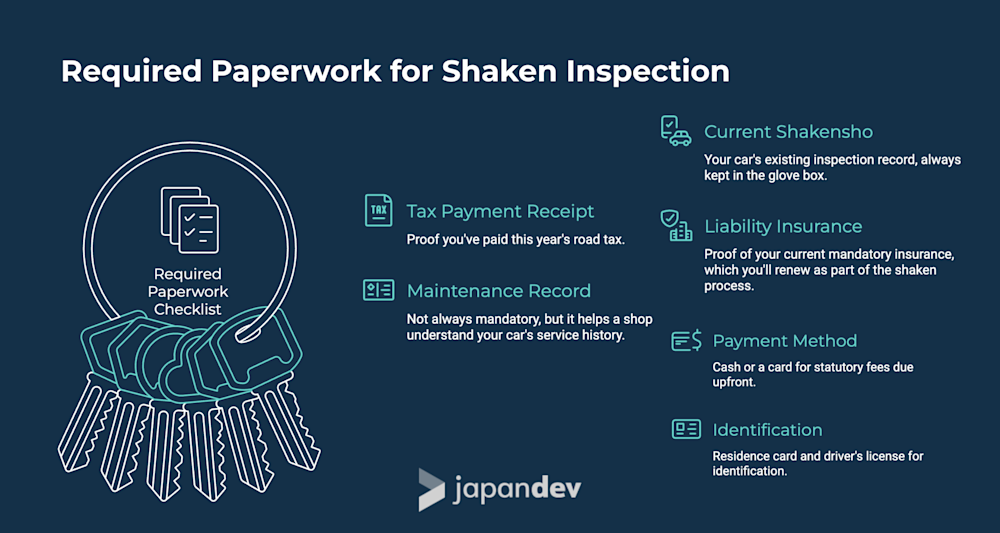
Show up without the right documents, and you'll get turned away regardless of your car's condition. Bring these to every shaken appointment, whether you use a shop or go the DIY route.
Current Shakensho (Vehicle Inspection Certificate): Your car's existing inspection record, always kept in the glove box.
Certificate of Compulsory Liability Insurance (Jibaiseki): Proof of your current mandatory insurance, which you'll renew as part of the shaken process.
Automobile Tax Payment Receipt (Jidōshazei Nōzei Shōmeisho): Proof you've paid this year's road tax. Many drivers can confirm this digitally now if they pay via bank transfer, so a paper copy isn't always required.
Maintenance record booklet: Not always mandatory, but it helps a shop understand your car's service history if you have one.
Cash or a card: Statutory fees are due upfront, and some still prefer cash.
Residence card and driver's license: For identification, especially at government inspection centers.
Keep digital photos of these documents on your phone as a backup. Losing a paper certificate the week of your appointment is a headache nobody needs.
What Happens If Your Shaken Expires?
Driving on expired shaken, known as shaken-gire, is not a small mistake. Japan treats it as a serious traffic violation, not a paperwork slip-up.
If you get caught, you're looking at heavy penalty points on your license, an on-the-spot fine, and potential suspension of your license depending on the circumstances. Repeat offenses carry steeper penalties.
Your mandatory insurance also becomes invalid the moment your shaken lapses. That means you're driving with zero coverage, and any accident becomes your full financial responsibility.
If your car's shaken has already expired and you need to move it to a shop, don't just drive it and hope for the best. Visit your local city hall and apply for a temporary permit, sometimes called a Karyu plate, which lets you legally transport the vehicle a short distance for repairs or inspection.
The Karyu plate process takes one visit and a small fee, and it's far safer than risking a stop with an expired sticker on your windshield.
Set a reminder well before your expiry date. It's the easiest way to avoid this entire mess, and it costs you nothing but planning ahead.
For more on the rules you'll need to follow once you're on the road, check out our guide to traffic rules in Japan.
How to Lower Your Shaken Bill
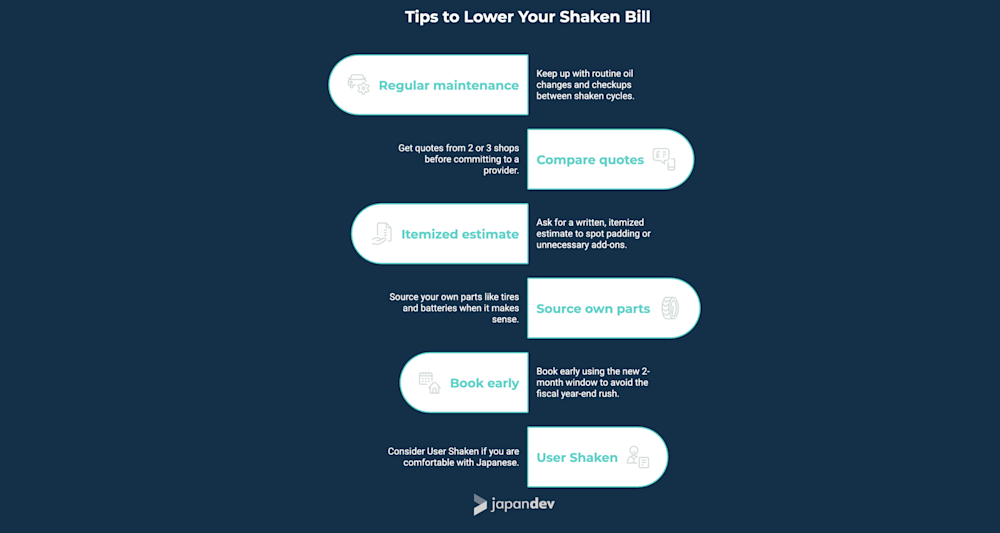
A few habits can shave real money off your total cost, without cutting corners on safety.
Keep up with regular maintenance between shaken cycles. Cars that get routine oil changes and checkups rarely surprise you with expensive repairs at inspection time.
Get quotes from 2 or 3 shops before committing. Prices for the same car can vary by tens of thousands of yen between providers.
Ask for a written, itemized estimate. This makes it easy to spot padding or unnecessary add-ons before you approve any work.
Source your own parts when it makes sense. Tires and batteries often cost less at a specialty shop than through a dealership markup.
Book early using the new 2-month window. Avoiding the fiscal year-end rush means better appointment slots and less pressure to accept the first quote you get.
Consider User Shaken if you're comfortable with Japanese. It remains the single biggest lever for cutting your total cost.
Small habits add up over years of car ownership. A little planning around each shaken cycle can save you the price of a nice vacation.
Frequently Asked Questions About Shaken in Japan
How long does shaken last?
New cars get 3 years before their first inspection. Every shaken after that, for any car type, lasts 2 years.
Can I do my shaken entirely in English?
Most dealerships and government inspection centers operate in Japanese only, though some larger chains and English-friendly garages in major cities can walk you through the process. If Japanese isn't strong yet, bring a bilingual friend or choose a shop known for supporting foreign customers.
Do motorcycles need shaken?
Motorcycles over 250cc need shaken on the same 2-year cycle as cars. Smaller motorcycles skip shaken entirely, though owners still pay annual road tax.
Can I get shaken done outside the prefecture where my car is registered?
Yes. You can take your car to a shop or inspection center anywhere in Japan, regardless of where your license plate is registered. Just make sure your documents and address match your current Juminhyo.
What if I just bought a used car? Does it already have valid shaken?
Sometimes. Check the remaining time on the seller's Shakensho before you buy, since a car sold with only a few months left on shaken will cost you a full renewal soon after purchase. Factor that into your negotiation.
Is User Shaken realistic for someone with limited Japanese?
It's tougher, but doable with preparation. Many inspection centers have staff used to guiding first-timers, and printed guides exist with enough visual cues to follow along. If you're not confident, start with a Yobiken pre-check shop that can walk you through what to expect.
Don't Let Shaken Catch You Off Guard
Shaken is expensive, but it doesn't have to be a mystery. Check your windshield sticker or Shakensho now, so you know exactly when your next inspection is due.
Compare a couple of providers before you commit, since prices can vary by tens of thousands of yen for the same car. And if you're comfortable with some Japanese, User Shaken remains the single best way to keep costs down.
Owning a car is one small piece of building a life here. Understanding costs like these matters just as much as landing the right job when you're budgeting for life in Japan as a foreign resident.


Hasan Ali
Born and raised in Libya, Hasan spent the last 6 years exploring Japanese culture while living in Nagano and Aichi. His journey began at a high school in the town of Karuizawa, followed by a Bachelor of Business in Nagoya. Professionally, He is an SEO and content specialist with over 3 years of experience crafting digital strategies. When not working, He is trying to catch up on his goal of visiting every single prefecture in Japan.
- Robotics Data Engineer
- Omakase Robotics
- Tokyo
- Full Stack Engineer
- Omakase.ai
- Tokyo
- Machine Learning Manager, App SW
- Wayve AI
- Tokyo
- Principal Application Software Engineer
- Wayve AI
- Tokyo
- C++ Developer
- Rapyuta Robotics
- Tokyo




Latest Tech Jobs 🇯🇵
Explore the top developer jobs in Japan for foreigners
- Robotics Data Engineer
- Omakase Robotics
- Tokyo
- Full Stack Engineer
- Omakase.ai
- Tokyo
- Machine Learning Manager, App SW
- Wayve AI
- Tokyo
- Principal Application Software Engineer
- Wayve AI
- Tokyo
- C++ Developer
- Rapyuta Robotics
- Tokyo
- Software Engineer (Robotics Control Systems)
- Rapyuta Robotics
- Tokyo
- Global Remote Sensing Sales Engineer
- Axelspace
- Tokyo
- ¥6M ~ ¥8.5M
- Satellite System Integration Test Engineer
- Axelspace
- Tokyo
- Senior Product Engineer (Full Stack)
- Blued
- Tokyo
- ¥8M ~ ¥13M
- Senior Software Engineer
- Blued
- Tokyo
- ¥8M ~ ¥13M


Get Job Alerts
Sign up for our newsletter to get hand-picked tech jobs in Japan – straight to your inbox.

© 2026 Japan Dev. All rights reserved.
Proudly built in Tokyo.


Curated with 💙 in Tokyo
All our data is gathered from publicly available sources or contributed by users