



Updated August 27, 2024
Japanese Wedding Attire for Guests
As a foreigner, attending a Japanese wedding for the first time can be intimidating, especially if you don’t understand Japanese wedding attire.
Every culture does weddings differently. And even if you’re told it’s a modern one, you might still feel uncertain about what to expect and what to wear, which is completely normal for first-time attendees.
In this post, we’re demystifying Japanese wedding attire for guests. I’ll explain what to wear and what not to wear, and talk about some wedding-related Japanese customs so you don’t accidentally seem rude.
Let’s first look at what Japanese weddings are like.
In this article: 📝
What Are Japanese Weddings Like?
The very first thing to know about Japanese weddings is that there are two common types: Shinto weddings and Western or White weddings. The latter are also called civil weddings and are getting quite popular, but let’s start with the traditional ones first.
Shinto Weddings
As you’d expect, Shinto weddings are traditional wedding ceremonies held according to religious Shinto traditions. The wedding ceremony, called Shinzenshiki (神前式), is held at a Shinto Shrine, and the marriage is officiated by a Shinto priest.
At Shinto weddings, the bride and groom dress up in traditional kimonos, which I covered in detail in my post on traditional Japanese attire.
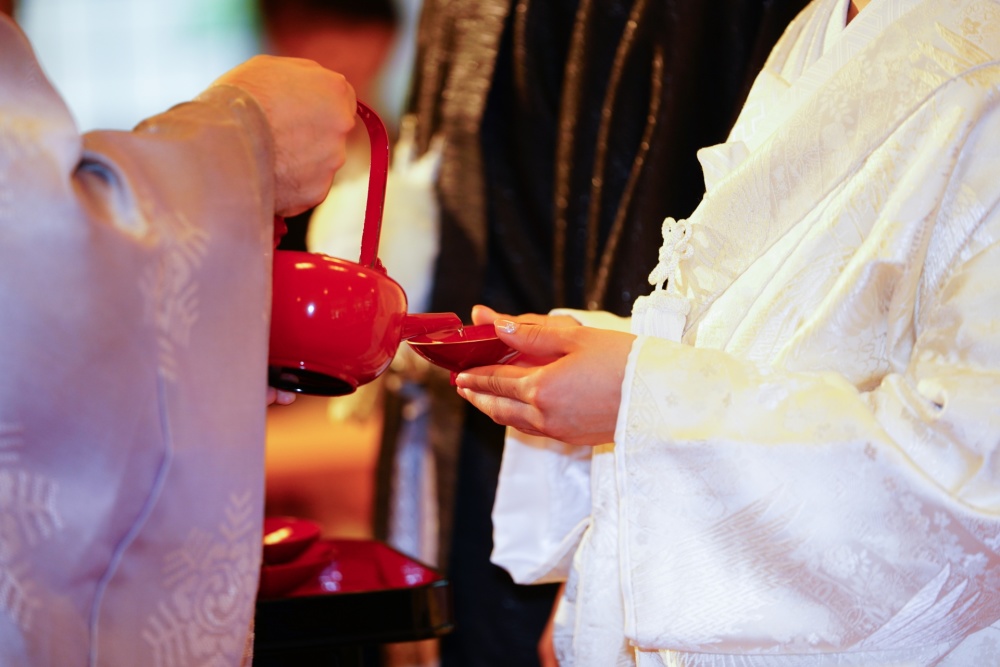
They perform a ritual called “Sansankudo (三々九度)”, which is a sake-drinking ceremony. In this ritual, the bride and groom each drink three sips from three sake cups and present a branch called Tamagushi to the Shinto gods.
According to the Shinto religion, the three cups are for the past, the present, and the future. They represent gratitude for the ancestors, the commitment between the married couple, and the happy future the couple will have together, respectively.
Sometimes, even the bride and groom's parents may sip from the cups to further strengthen the bond created between the couple in the presence of the gods.
While close family can attend the Shinzenshiki service, other guests are usually invited to the “hiroen”, a wedding reception typically held at a hotel or a wedding venue, often with a Shinto priest present.
Western/White Wedding
A “white” wedding, on the other hand, is a Westernized approach to marriage ceremonies and is largely influenced by Christian church weddings.
While there are some Western style wedding ceremonies conducted by registered marriage officiants, such as a pastor, it’s rarely done for religious reasons. It’s becoming more common to see a white wedding ceremony called a “Jinsenshiki” or a civil wedding.
The bride and groom may choose to have their guests as witnesses to their marriage, and a pastor or priest may or may not be present. The couple may also choose to perform the Sansankudo ritual at a civil wedding, so it’s very flexible.
As it’s a modern approach to a wedding ceremony, the bride and groom wear the usual white wedding dress and tuxedo combo.
Nowadays, this Western approach to weddings is more popular than traditional Shinto weddings in Japan, even among non-Christians.
While Japan doesn’t legally recognize same-sex marriage as of yet, LGBTQI+ couples have begun holding wedding ceremonies and receptions in recent years. These are usually Western-style weddings and range from casual gatherings to large-scale events, just like any other white wedding.
Now that you have a basic understanding of Japanese weddings, let's discuss appropriate guest attire.
Know The Rules: What Do You Wear To a Wedding Ceremony As A Guest?
If you’re invited to a Japanese wedding, the most important thing to know is that your attire can’t be flashy. As long as this is the main rule you follow, especially if it’s a modern-style wedding, you’ll be fine.
Remember, Japanese weddings generally require dressing much more formally and conservatively compared to weddings in the Western world.
Another rule of thumb is to dress smart. Dressing sloppily or in everyday outfits is considered disrespectful to the hosts. Formal wear is the rule, and we’ll discuss the specifics of what men and women can and cannot wear in more detail below.
One more rule that applies to all guests is that you shouldn't wear white under any circumstances. This might be a universal rule, but it’s good to reiterate.
If you’re attending a truly traditional wedding, however, toning things down even further is recommended to play it safe. Besides, it’s easy to dress plainly and still look good in formal clothes like simple suits and dresses.
With these tips in mind, let’s now see some specific attire recommendations for women and men attending Japanese weddings.
Japanese Wedding Attire For Women
Let’s begin with women’s wedding attire. As women have more choices in terms of clothing items, there are more rules around them.
Modern Japanese Wedding Guest Attire For Women: The Dress
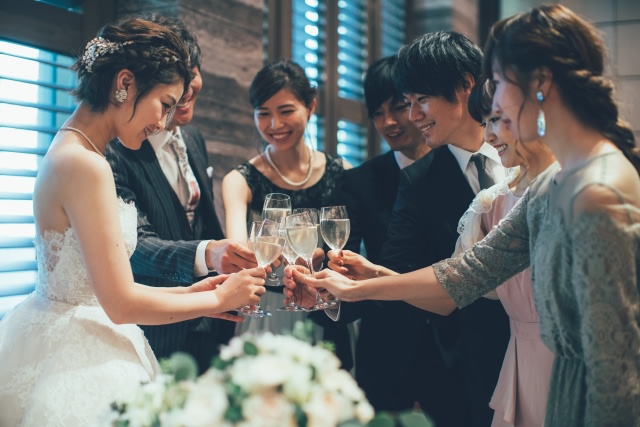
When attending a modern Japanese wedding, female guests may choose to wear a dress or a pantsuit.
Remember that anything too flashy or white is a no-go. Avoid anything that can even be considered white – off-white, egg-shell, or champagne aren’t the kind of nuances you want to defend here.
While avoiding the color white, there’s something to be said about avoiding black as well, or rather, too much of it. As black resembles death and mourning, you don’t want to look too goth. A simple black dress is perfectly fine, but you’ll need to brighten it up with your accessories or a colorful shawl.
Speaking of which, if you don’t have anything that covers your shoulders, a shawl or scarf may be necessary. As I said, Japanese weddings are quite conservative, and showing shoulders and cleavage is considered “too flashy” for weddings.
For the same reasons, wearing a dress that’s too short may also be unwise. The goal is to not take any attention away from the bride and the groom, so keep these considerations in mind.
The Traditional Japanese Wedding Guest Attire For Women: The Kimono
If the wedding you’re invited to is a bit more traditional, you might want to dress traditionally. While formal Western clothes will work at most weddings regardless of whether they’re traditional or not, as a foreigner, you might not want to stick out like a sore thumb.
If you’re in doubt, why not go for a kimono? Getting dressed up in a kimono is so much fun, and it’s considered formal wear (we’re not talking about casual or summer kimonos, of course).
Usually, especially if it’s a traditional wedding, the bride and groom may already have a kimono-dressing service available for the wedding you can use, but you can also go for a kimono-dressing service nearby.
Bringing your own kimono is an option too, of course. As long as it’s function-appropriate, which you can find out more about in my post on kimonos, it’ll work.
However, this is a bit trickier as there are many types of kimonos, each with a different purpose. So, the one you have may not be suitable for a wedding, but for a different social occasion. Even the relatives of the couple getting married wear different types of kimonos.
As this is a tricky subject for a foreigner, I recommend either consulting a Japanese friend or going to a kimono rental shop where they’ll help you and even dress you.
Shoes, Accessories, and The Rest: Complementing Your Outfit
After deciding what to wear, you should complete the look. This shouldn’t be too hard as the rule is, once again, to not be flashy.
First things first, no sneakers or boots are allowed – these are casual clothes and don’t invoke a celebratory spirit. Women can wear high heels, but nothing that shows your toes or heels. It’s good to note that round toe heels are more commonly worn at Japanese weddings, as a pointed toe heels can come off as too trendy or strong. You can also choose to wear skin-colored pantyhose with your dress.
As for jewelry, once again, avoid big and flashy accessories. This means no huge earrings, no big, sparkly necklaces…you get the idea.
Instead of sparking stones, why not go for pearls instead? These are a hit at weddings due to their simple elegance.
If you wear hats often, I recommend leaving them at home. In Japanese customs, it’s rude to wear one inside or when having meals.
Similarly, if you’re feeling like royalty and want to wear a fascinator or similar headpiece, this likely isn’t the place for these, either.
Finally, I recommend a smaller bag for ladies. A clutch can work well when carrying your essentials like cards and phone, but if you want to bring a bag with you, you can check it in at the entrance along with your jackets and coats.
Japanese Wedding Attire For Men
Men’s wedding guest attire is quite simple to nail.
For the longest time, the wedding attire for men was a simple black suit with a white tie. However, as I mentioned, most weddings are quite modern nowadays. So, you’ll see men wearing other dark-colored suits as well.
Avoid wearing a black tie, as this can create a mourning “funeral-ish” look that’s far from celebratory. Nowadays, men wear ties in colors other than white with dark blue or gray suits.
The suit should be formal, so go for the darker colors rather than the lighter ones. The shirt you wear should also be plain: a simple white shirt has never failed anyone.
As for your socks and shoes, going for formal dress shoes is a must. You should not be showing ankles, so wear long black socks or dark navy ones if those go better with your suit.
What To Bring To a Japanese Wedding: Customs and Traditions
Now that we covered what to wear as a guest at a Japanese wedding, you’re almost ready, but not before we explain some wedding-related Japanese customs first.
First things first, as you know, gift giving at weddings is a tradition that’s practiced in many cultures around the globe. You might be relieved to hear that this is quite simple in Japan.
Gift-Giving Etiquette at Japanese Weddings
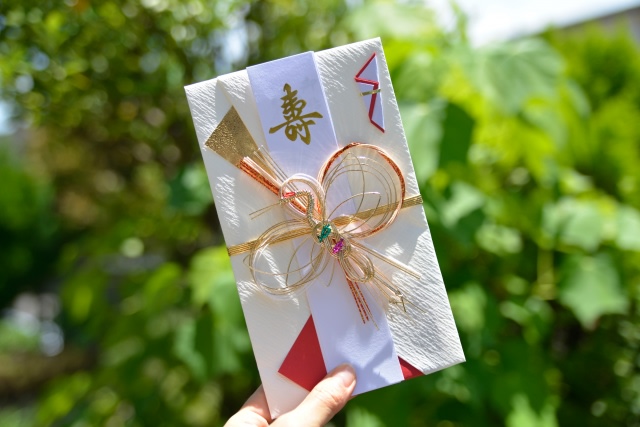
At a Japanese wedding, all you need to do is give money to the newlywed couple. This is called “Goshugi”. You simply put some money in a special envelope for wedding celebrations called “shugibukuro” and hand it to the receptionist when you arrive at the wedding venue.
There are still a few rules here, though.
First off, you need to put an auspicious monetary number in the envelope. These are lucky numbers according to Japanese numerology. In the context of a wedding, any number that’s divisible by two is considered unlucky as it symbolizes “separation.”
Also, get an envelope that’s specifically used at weddings. There are other special envelopes sold for occasions such as funerals, and you don’t want to mistake these. The red, bright and colorful envelopes are for auspicious occasions, and the plain black and white envelopes are generally for condolence money, but always ask a store worker if in doubt!
Luckily, they’re easy to find, as you can usually find them at convenience stores.
As for the amount of money, keep in mind that you’ll have to part ways with at least 30,000 precious yen here. If you’re at a socially higher rank than the married couple or are related to them, prepare to splurge more (50,000-100,000 yen).
The last thing you want to keep in mind is that the bills you’re gifting should be in pristine condition. I’m talking about fresh banknotes here. It’s customary to go to the bank and ask the clerk for new bills; if you tell them it’s for a wedding, they’ll understand.
Keep in mind that if you can’t make it to the wedding, you can still gift money. If this is the case, giving slightly under the amount I suggested should be fine.
Bringing a Plus One To Japanese Weddings
Another point of confusion for foreigners invited to a wedding in Japan may be regarding bringing a plus one.
When invited to a wedding, you may be told that you can bring a plus one. However, don’t be surprised if this isn’t the case, and don’t just assume you can bring your partner even if you’re married.
In Japan, wedding invitations often don’t include a plus one. If the married couple only knows one of you, they just might invite you alone. You may see many people alone without their partners at weddings.
If you’re asked to bring a date, however, make sure to bring either two envelopes or hand one envelope with gift money for two in it. The wedding hosts have tons of bills piled up because of the big party they just threw!
Conclusion: So, What Do You Wear To a Japanese Wedding?
Before we go, let’s briefly go over what we’ve covered here today.
Dressing formally at Japanese weddings is the rule for both women and men. Men can wear suits with dark colors, and colorful ties have been popular lately as well.
For women, a dress that isn’t too revealing or a kimono should do the trick. Don’t go heavy on the accessories, don’t wear open shoes, and you’re golden.
Finally, don’t forget to bring your gift money and leave your partner at home unless you’re specifically told to bring a plus one.
Now you know all the essentials about attending a Japanese wedding, but if you want to get married yourself, check out my guide where I explain all you need to know about getting married in Japan.


Japan Dev Team
This post was written by our Japan Dev editorial team.
- Full Stack Engineer, Tech Lead Track
- KATIX
- Tokyo
- ¥5M ~ ¥8M
- Engineering Team Lead, Management Track
- KATIX
- Tokyo
- ¥7M ~ ¥9M
- Senior Backend Engineer - Full Cycle Retail Robotics Engineering
- Telexistence
- Tokyo
- Reliability Engineer, Market Data
- Two Sigma
- Tokyo
- FullStack Engineer (Satellite Opearation Planning)
- Synspective
- Tokyo




Latest Tech Jobs 🇯🇵
Explore the top developer jobs in Japan for foreigners
- Full Stack Engineer, Tech Lead Track
- KATIX
- Tokyo
- ¥5M ~ ¥8M
- Engineering Team Lead, Management Track
- KATIX
- Tokyo
- ¥7M ~ ¥9M
- Senior Backend Engineer - Full Cycle Retail Robotics Engineering
- Telexistence
- Tokyo
- Reliability Engineer, Market Data
- Two Sigma
- Tokyo
- FullStack Engineer (Satellite Opearation Planning)
- Synspective
- Tokyo
- Senior Software Engineer - Engage Studio
- Treasure AI
- Tokyo
- Customer Reliability Engineer
- Treasure AI
- Tokyo
- VP of Robotics System Engineering, Humanoid Team
- Telexistence
- Tokyo
- Senior Backend Engineer, Automated Reasoning (Rust)
- Noeon Research
- Tokyo
- ¥14M ~ ¥17M
- Product Manager (BizStack Platform)
- MODE
- Tokyo
- ¥8M ~ ¥9M



Get Job Alerts
Sign up for our newsletter to get hand-picked tech jobs in Japan – straight to your inbox.

© 2026 Japan Dev. All rights reserved.
Proudly built in Tokyo.


Curated with 💙 in Tokyo
All our data is gathered from publicly available sources or contributed by users