



Updated December 10, 2025
Luggage Storage in Tokyo: Our Recommendations
Traveling is fun... until you start feeling the burn from carrying those heavy suitcases around.
It’s unavoidable to some extent, but you don't want to get stuck carrying heavy bags around town if you can avoid it.
The good news is that in Japan, you don’t have to let your luggage weigh you down, thanks to luggage storage services that are quite common in the country.
Here, you’ll find luggage storage services at hotels, train stations, and airports — and they’re affordable too.
So, let’s explore all of your options in terms of luggage storage services and spots in one of the most popular travel destinations in Japan, Tokyo. I’ll provide you with a list of our top recommendations and practical tips for luggage storage. I’ll also tell you how to use a locker in Japanese stations and how much they cost, so let’s get to it.
In this article: 📝
Airport Storage Options: Luggage Storage Tokyo Narita Airport, Haneda Airport
If you’re traveling to Japan, chances are you’ll be arriving and leaving on a plane, which makes the airports the perfect places to store luggage. Luckily, both Tokyo’s Haneda (HND) and Narita (NRT) airports have luggage storage counters where you can leave your luggage.
I already talked about shipping your luggage to the airport in another post, but if you’re in the city for a day or two and don’t want to carry a suitcase, leaving your bag at the airport from the get-go is also an option.
This is especially a great idea if you have excess baggage or are making a stop in Tokyo while traveling. You can take your essentials with you in a small backpack, leave your luggage at the airport, and explore Tokyo to your heart’s content.
Airport Luggage Storage Counters
Whether you’re traveling to Tokyo through the smaller Haneda Airport or the larger but farther out Narita Airport, you can easily store your baggage by handing it over at a luggage storage counter.
The temporary luggage storage services are available in all terminals of both airports, allowing you to leave your luggage for up to thirty days.
Haneda Airport Luggage Storage Counters
In terms of staffed luggage storage counter, here are your options at Haneda Airport, separated by terminals, starting from Terminal 1:
Airport Temporary Baggage Storage Counter 1: Open between 8 am and 7:30 pm, allows storage for up to 14 days, located in Terminal 1, Basement Floor 1 South
JAL Baggage Service Counter: Open between 8:30 am and 8 pm, allows storage for up to 30 days, located in Terminal 1, First floor
Sagawa Baggage Service Counter: Open between 7:30 am and 8 pm, maximum storage period not specified, located in Terminal 1, First-floor Arrival lobby
As for Terminal 2, you have:
Airport Temporary Baggage Storage Counter 2: Open between 8 am and 7:30 pm, allows storage for up to 14 days, located in Terminal 2, Basement Floor 1 North
Sagawa Baggage Service Counter: Open between 7:00 am and 8 pm, maximum storage period not specified, located in Terminal 2, First-floor Domestic Terminal Arrival lobby
YAMATO Transport Service Counter: Open between 6:00 am and 11:00 pm, maximum storage period not specified, located in Terminal 2, Third floor International Departure Lobby
And finally, in Terminal 3:
Airport Temporary Baggage Storage Counter 3: Open 24/7, allows storage for up to 14 days, located in Terminal 3, Second floor
Airport Temporary Baggage Storage Counter 4: Open between 8 am and 5 pm, allows storage for up to 14 days, located in Terminal 3, Third floor
In addition to these, if you have export or import goods with you that you need to store at the airport, there’s also a Bonded Baggage Custody counter on the second floor of Terminal 3. This counter is also open 24 hours.
Among the options I provided above, airport-operated ones cost about the same, but JAL, Sagawa, and YAMATO can cost a bit more as they offer longer storage periods or other services like baggage transportation.
Luggage Storage Tokyo Narita Airport: Staffed Luggage Storage Counters
Despite being larger, Narita Airport has fewer staffed luggage storage counters compared to Haneda Airport, most of which are operated by the well-known baggage storage and transportation service JAL, and are quite affordable.
Let’s provide an overview of the options available, starting with Terminal 1:
JAL Baggage Service Counter: Open between 6:30 am and one hour after the last international flight of the day arrives, allows storage for up to 30 days, located in Terminal 1, North Wing First floor
JAL Baggage Service Counter: Open between 7:00 am and 9 pm, allows storage for up to 30 days, located in Terminal 1, North Wing, Fourth floor
JAL Baggage Service Counter: Open between 6:30 am and one hour after the last international flight of the day arrives, allows storage for up to 30 days, located in Terminal 1, South Wing First floor
JAL Baggage Service Counter: Open between 7:00 am and 9 pm, allows storage for up to 30 days, located in Terminal 1, South Wing, Fourth floor
In Terminal 2:
JAL Baggage Service Counter: Open between 6:30 am and one hour after the last international flight of the day arrives, allows storage for up to 30 days, located in Terminal 2, Center First floor
JAL Baggage Service Counter: Open between 7:00 am and 9 pm, allows storage for up to 30 days, located in Terminal 2, Center Third floor
Narita International Airport Promotion Foundation Baggage Storage Counter: Open between 6:30 am and 10 pm, operated by the NPF, maximum storage period not stated, located in Terminal 2, Center Third floor
All that said, you should keep in mind that leaving your luggage at a storage service doesn’t automatically insure you against theft or the loss of your items. While they are more convenient as they have a person working at the counter and a company branding to trust, there are no lock systems for your luggage at these counters. So there is still a possibility of theft and it’s not recommended to leave your valuables in your luggage.
This brings us to our other alternative, the lockers, which you can also find at both Haneda and Narita International Airports.
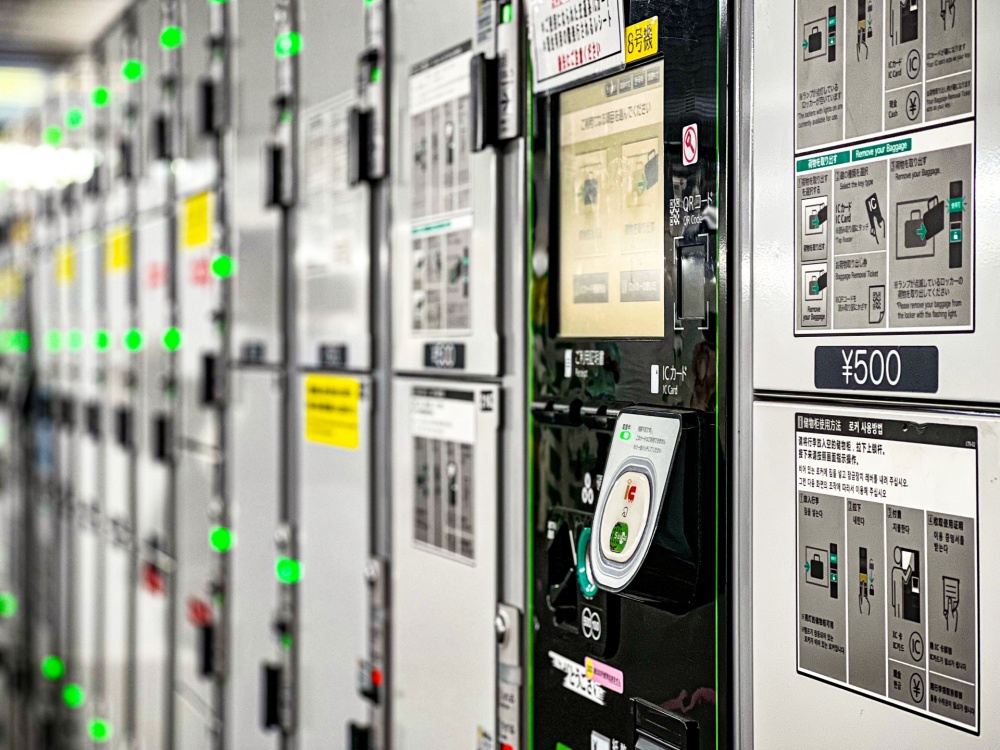
Lockers for Airport Luggage Storage
The baggage counters are nice and all, but as I said, they don’t necessarily provide better protection. If you need to store your luggage for only a few days, you can also try a locker.
These lockers are available in both airports but only allow storage for a shorter period of time compared to the staffed luggage storage counters.
At Haneda Airport, lockers are conveniently located right outside the arrival and departure gates in all three terminals. The ones located in the first two terminals allow for a maximum of three days of storage, while the one in Terminal 3 allows up to seven days of storage.
Narita Airport has lockers in eight different locations throughout its three terminals. These notably allow for longer storage times.
Here’s a list to see where they’re located in each terminal, starting with Terminal 1:
Central building, Fourth Floor (Departures)
North Wing, Fourth Floor (Departures)
South Wing, Fourth Floor (Departures)
Central Building, First Floor (Arrivals)
Central Building, Basement First Floor
In Terminal 2:
Main Building, Third Floor (Departures)
Main Building, Basement First Floor
And finally, in Terminal 3 of Narita Airport, there’s another coin-operated locker station, located on the 2nd floor. If you have bulky or oversized items, this is the one to pick because it’s the only location with extra-large baggage lockers. However, it has a time limit of five days.
All of the other locations have coin-operated lockers in small, medium, and large sizes, all of which are easy to operate via a touchscreen. These also allow you to store your luggage for eight days.
You can learn more about the lockers and the pricing structures on the official Narita Airport website.
Train Station Storage Options: Luggage Storage Tokyo Station
If you’re traveling within Japan, you may need to store your luggage somewhere in the city. The most convenient option for this is the train station, located right in the heart of the city.
Luggage Storage Counters: Tokyo Bag Storage, Made Convenient
If you’re in Tokyo’s central station or in any other big station in the country, you can easily find a luggage storage desk. These are operated by either one of the two well-known storage and transportation companies in Japan, Sagawa and Yamato Transport.
In Tokyo Station, you’ll find a Sagawa desk near the Nihonbashi exit, where you can leave your stuff before exiting the station. This desk is open between 7 am and 9 pm.
Another option at Tokyo Station is the Yamato Transport desk located near the Marunouchi North Exit. You can drop off or retrieve your luggage between 8:30 am and 8 pm.
Keep in mind that both companies also offer transportation services to and from hotels, Airbnb, and other locations. You can even send your stuff directly to your destination to travel lightly, which is a common practice in Japan.
Coin-Operated Lockers at Train Stations
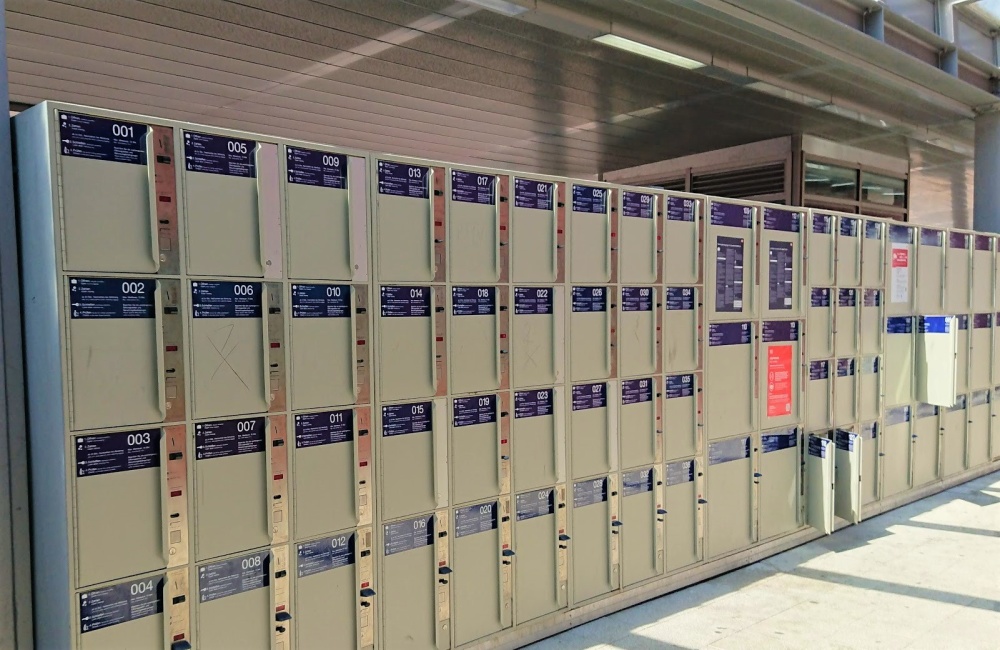
At train stations throughout Japan, you’ll find coin-operated storage lockers in multiple locations. They’re quite common despite posing a public safety risk, which is something Japan is very proactive about, as I discussed extensively in my post “Japan’s missing trashcans.”
Still, due to the prominent place lockers have in day-to-day life in Japan, you can find them easily located both outside and inside the stations all over Tokyo. In fact, so many lockers are available that you can usually find an empty one fairly easily.
Luckily, most lockers located in stations in the central Tokyo area are electronic and accept digital payments, and you can even select a language option most of the time.
Keep in mind that the lockers at train stations come in small, medium, and large sizes, but might not fit your oversized items, like sports equipment.
For reference, a large suitcase can usually fit in a large sized locker, and you can even share a small or medium locker with a friend if all you have are backpacks.
The only downside is that these lockers offer shorter storage times, usually up to three days. That said, you may still be able to retrieve your items at a fee if you leave them for longer, which isn’t recommended but can be helpful for unavoidable cases.
Locker Safety Guide: How Do You Use a Locker in Japan Station
Using a locker in Japan requires learning a few safety tricks, the first of which is taking a picture of your locker after locking it. Most of the time, there will be too many lockers to remember exactly where you put your items, and the photo can help you relocate them.
Also, if you forget to lock your locker, don’t panic. This is common, and someone who takes the “unlocked” locker will hand the stuff inside to the desk nearby. This is also what you should do if you find someone else’s stuff in an unlocked locker.
Plus, if you forgot to take a picture of your locker and don’t remember which one it is, the staff can help you locate it. Just show them your key or a receipt of payment, and they may be able to find it easily!
Lastly, don’t forget that some stations close at certain hours, so be mindful of closing and opening hours if you’re leaving your stuff in a locker located inside a station.
How Much Does a Locker Cost in Japan?
Throughout the article, we’ve discussed several locker spots for storing luggage, but we haven’t mentioned the prices yet. This is mainly because the prices change over time, and the information becomes outdated, but we can still give an estimate.
Overall, the prices are fairly reasonable. For instance, at the airports, you’re looking at about 350-400 yen for a small locker, and a large one costs no more than 600 yen in most of the locker banks.
The locker prices are even more affordable at the train stations. A small locker usually costs no more than 300 yen and offers a larger space than an “airport small” would. The largest ones here are priced at 800 yen. However, these can store multiple people’s baggage at the same time and can be a cheap storage option for families or groups.
Luggage Storage Tokyo Shinjuku, Shibuya, Akihabara, and More: Storage Locations in The City
If you’ve made it into the city but don’t have anywhere to store your bags, another option is to locate a luggage storage location. Throughout Tokyo, there are many locations where you can drop your luggage, most of which are operated by Radical Storage.
This is by far the most convenient choice, as you can simply locate the closest location to you on the map on their website, and drop your bags off in minutes. The reason they have so many locations is because most are partner stores, some of which are even open 24/7.
If, for some reason, Radical Storage isn’t available to you, you can also drop off your bags at one of the three independent locations of Sagawa Transport. These aren’t partner shops but dedicated service centers and can be found in Shinjuku, Asakusa, and Skytree.
The service centers in Asakusa and Skytree don’t open before 9 am. If you arrive earlier, I recommend going to the one in Shinjuku as it opens at 6 am and closes at 11 pm. Keep in mind that the weight limit for storage is 30 kg and 200 cm at all Sagawa Transport locations.
Finding Coin Lockers Online
Tracking down an available coin locker used to mean wandering around stations hoping to spot one that wasn't full. Thankfully, several apps and websites now let you check locker availability in real-time, saving you the hassle of dragging your bags around.
Let’s see the most popular websites first.
SPACER
SPACER is a handy mobile app (available in English) that helps you locate coin lockers throughout Japan's major cities and train stations. The app shows you where lockers are located, and you can simply reserve or book through the app and unlock your storage by using your phone as the key.
It's particularly useful if you're hopping between neighborhoods in Tokyo and need to find storage on the go. The interface is clean and straightforward, making it easy to book a locker on a map view. You can also pay via multiple digital payment methods like credit cards, PayPay, Suica, etc.
The only downside is that SPACER currently doesn’t cover a large area, but they do offer refrigerated lockers in addition to regular temperature ones.
Coin Locker Navi (コインロッカーなび)
Coin Locker Navi is a Japanese-language website that maintains an extensive database of coin locker locations across Japan. While the site offers real-time availability updates for some lockers, not all support this feature, so it’s best to check their availability in person. It's incredibly comprehensive when it comes to showing you exactly where lockers are situated within stations and how many units each location has, though.
The site includes helpful details like locker sizes, pricing, and proximity to specific station exits. If you can navigate a bit of Japanese (or use a translation tool), this is one of the most thorough resources out there for planning ahead and knowing your options before you arrive at a station.
Locker Concierge (ロッカーコンシェルジュ)
Locker Concierge is a service by Fuji Electric that focuses on smart lockers with advanced features. These lockers can be reserved and accessed through a dedicated system, and they're increasingly popping up in stations and commercial facilities.
The service is primarily in Japanese, but the lockers themselves are relatively intuitive to use. Available in select locations, Locker Concierge don’t offer in-advance booking, but you can always check the lockers’ availability through their website.
Multiecube (マルチエキューブ)
Multiecube operates a network of modern coin lockers with a searchable website (available in Japanese, English, Chinese, Taiwanese, and Korean) that lets you find their locations throughout Tokyo and other major cities. Their lockers tend to be newer and well-maintained, often found in shopping centers and major transit hubs.
The website includes a map-based search function that makes it easy to spot Multiecube locations wherever you go. You can check for availability and reserve lockers through the site, and even book a delivery service to have your stored luggage shipped to an address of your choice.
Multiecube’s locations are more likely to have available lockers since they're not as well-known as the traditional JR station lockers.
Apps For Luggage Storage
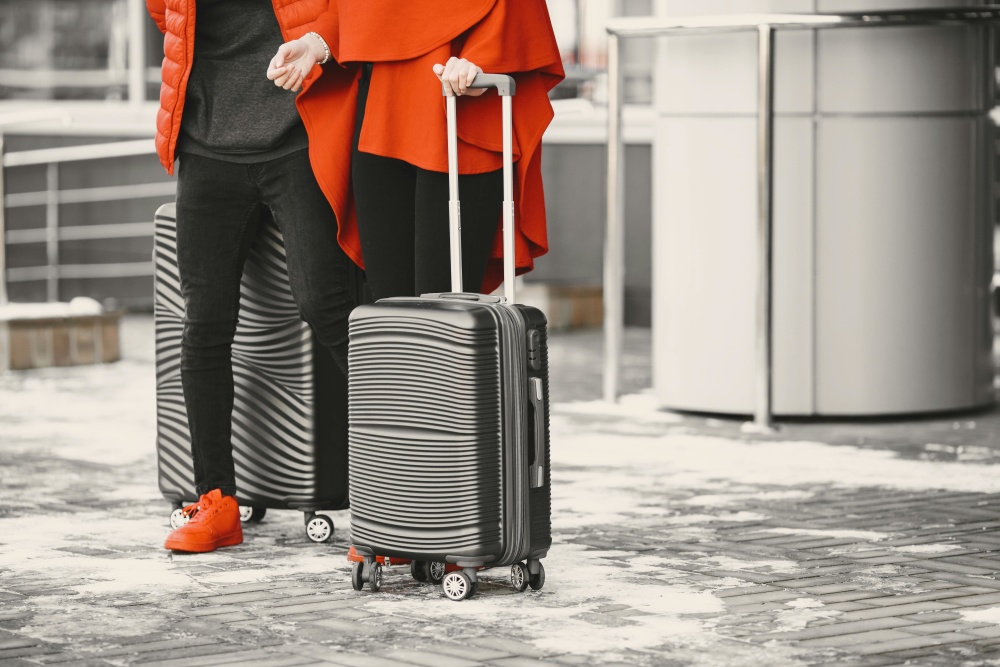
As you might expect, there are various apps nowadays where you can find luggage storage locations, and the most commonly used one is called Ecbo Cloak.
Ecbo is a service you can get through the app or the web page, and it allows you to easily reserve a luggage storage spot close to you. The app works with many shops and stores so you’ll always find an Ecbo Cloak point near you.
Basically, you pick a date and time on the app, go to the spot you picked, and the staff will take in your luggage after taking a picture of it. This is, of course, to ensure that everything’s handed back to you exactly as you delivered them.
Ecbo isn’t limited to Tokyo, as it’s a nationwide solution. The service has over 1,000 locations throughout Japan, and the best part is that they accept any size of baggage just fine, even if oversized.
Upon Ecbo’s release, other similar apps have also popped up. For instance, Bounce is a close second to Ecbo in terms of service spots, with over 90 in Tokyo. Stasher and Vertoe are also new services, but the former only has one service location in the city, while the latter only has four.
Still, they may be close to your location, so it’s worth checking out all four apps to get the best price possible.
Closing Thoughts: Luggage Storage Tokyo
At the end of our guide to luggage storage in Tokyo, I’d like to leave you with a brief overview of what we’ve covered.
In general, you can store your luggage in Tokyo via an app, at a coin-operated or electronic locker, or at a luggage storage service desk/center. The apps are useful in the city, allowing you to drop off your bags at a nearby location.
Lockers and luggage storage desks, on the other hand, can be found at airports and train stations. Train stations offer larger lockers for almost the same price, which is something to keep in mind for those traveling with bigger suitcases.
In any case, storing your luggage will cost you at least 300 yen a day in a small locker, but expect to pay at least 350-600 yen in most cases.
Lastly, another option besides the app when you’re in the city is the service points of a transport/storage company like Sagawa or Yamato.
This is it for our luggage storage in Tokyo guide, but if you’d like to learn more about traveling in Japan, check out my Haneda vs Narita Airport post and my guide to Uber and ridesharing apps in Japan after this.


Japan Dev Team
This post was written by our Japan Dev editorial team.
- Senior Software Engineer
- Blued
- Tokyo
- ¥9M ~ ¥13M
- Full Stack Engineer, Tech Lead Track
- KATIX
- Tokyo
- ¥5M ~ ¥8M
- Engineering Team Lead, Management Track
- KATIX
- Tokyo
- ¥7M ~ ¥9M
- Senior Backend Engineer - Full Cycle Retail Robotics Engineering
- Telexistence
- Tokyo
- Robotics Operations & Field Deployment Engineer
- Kanaria Tech
- Tokyo




Latest Tech Jobs 🇯🇵
Explore the top developer jobs in Japan for foreigners
- Senior Software Engineer
- Blued
- Tokyo
- ¥9M ~ ¥13M
- Full Stack Engineer, Tech Lead Track
- KATIX
- Tokyo
- ¥5M ~ ¥8M
- Engineering Team Lead, Management Track
- KATIX
- Tokyo
- ¥7M ~ ¥9M
- Senior Backend Engineer - Full Cycle Retail Robotics Engineering
- Telexistence
- Tokyo
- Robotics Operations & Field Deployment Engineer
- Kanaria Tech
- Tokyo
- Reliability Engineer, Market Data
- Two Sigma
- Tokyo
- FullStack Engineer (Satellite Opearation Planning)
- Synspective
- Tokyo
- Senior Software Engineer - Engage Studio
- Treasure AI
- Tokyo
- Customer Reliability Engineer
- Treasure AI
- Tokyo
- VP of Robotics System Engineering, Humanoid Team
- Telexistence
- Tokyo



Get Job Alerts
Sign up for our newsletter to get hand-picked tech jobs in Japan – straight to your inbox.

© 2026 Japan Dev. All rights reserved.
Proudly built in Tokyo.


Curated with 💙 in Tokyo
All our data is gathered from publicly available sources or contributed by users