



Updated December 9, 2025
Study in Japan on a MEXT scholarship: What to know and how to apply
There are many ways to get yourself to Japan. But if you are looking to get a degree, the MEXT scholarship could be a good way to jumpstart your career in Japan.
I was considering English-teaching programs like JET after college, but I was also thinking about graduate school. My professors at the time told me to pick between my field of study or Japanese language learning.
If I was going into my field of study, then my Japanese didn’t have to be perfect. If I was going to focus on improving my language skills, then I didn’t need to do research. But I wanted to do both.
That’s where the MEXT scholarship came in. I could get a scholarship that would pay my tuition and a monthly stipend to study at a Japanese university. Since I wanted to get a job in Japan, it would also look good on my resume.
So what is the scholarship and what are the requirements? I’ll explain the system, requirements, and application steps, and give a few pieces of advice from my own experience.
The MEXT scholarship isn’t right for everyone. But if you get the chance, it is a wonderful experience to learn more about Japan and further your career.
In this article: 📝
1. What is the MEXT scholarship?
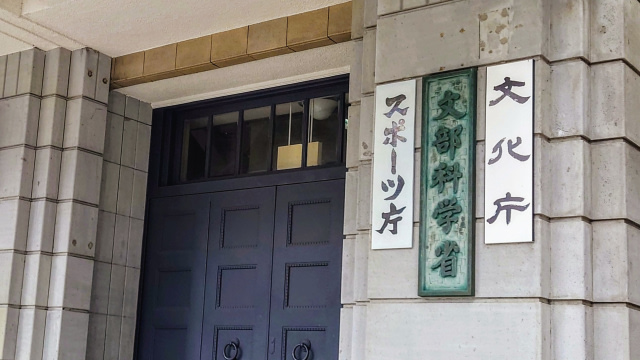
“MEXT” is an abbreviation for Japan’s Ministry of Education, Culture, Sports, Science and Technology. In Japanese, it’s called the monbukagakusho (文部科学省), or monkasho for short. The MEXT scholarship is granted to students who would like to study at Japanese universities.
There are seven types of scholarships in total. The two types I will mainly cover here are undergraduate and research student (graduate programs).
Undergraduate Program
The undergraduate program is for degree-seeking international students to study at Japan’s national public universities. Fields of study are divided into social sciences and humanities and natural sciences. You cannot study art or music.
Social sciences and humanities category “A” includes law, literature, history, politics, pedagogy, sociology, and Japanese language, and other subjects besides category “B”: business administration, economics, accounting, finance, etc.
Natural sciences is divided into three categories. Category “A” is mathematics, physics, chemistry, different types of engineering (mechanical, chemical, civil, maritime,etc), and biotechnology. Category “B” is agricultural studies like agricultural chemistry, veterinary medicine, forestry, food science, fisheries, disciplines such as nursing, hygienics, and pharmacy, and biology. The last category is medicine and dentistry.
The period of the scholarship is five years, including one year of preparatory education in Japanese language. Social science majors will take the preparatory course at Tokyo University of Foreign Studies and natural science majors at Osaka University.
Research Student Program
The research student program is for international students who want to enroll in graduate courses (masters or doctorate) at a Japanese university. It is granted to both “regular” students who have enrolled in programs, and “non-regular” students who are preparing to enter such courses. (I was the latter my first year.)
For regular students, the period of the scholarship is the length of your program. For master’s, you are generally given two years, and three years for doctoral. For non-regular students, you are given two years, but you can extend the period if you are accepted into your program. (This was what I did.) You can also extend your scholarship if you are advancing from masters to a doctoral program.
You have to apply for the field of study that you majored in previously or a related one. It must currently be offered at a Japanese university. Traditional Japanese arts or specialized technical training are outside the scope of study.
If you wish to study medicine, dentistry, or welfare, you must get certified by the Ministry of Health, Labor and Welfare before doing clinicals.

2. What expenses does the MEXT scholarship cover?
As part of the scholarship, the MEXT covers the following costs:
Education fees
Under the scholarship, your entrance examination, matriculation, and tuition are waived. If you take the entrance exam and fail as a research student, however, you have to pay for it.
Travel fees
The scholarship will cover a flight from your nearest international airport to the nearest international airport in Japan. You will need to cover your transport from where you live to the airport and from the airport to where you are staying in Japan. If you are already residing in Japan, then you do not receive any travel fees.
Your return flight is also covered, but you can opt out if you are not leaving Japan. If you don’t graduate from your program, then the MEXT will not pay for your return flight.
Keep in mind that you will not be booking your tickets. You must travel during the period of time that they decide or they won’t pay for your flight. The “closest international airport” means the closest one with a direct flight to Japan.
The closest international airport for me was an hour away, but it didn’t have a direct flight. Imagine my surprise when I got my tickets for an airport six hours away by car. I was in the most-middle seat in the last row of the plane too! It wasn’t the best experience. But a flight to Japan is a huge cost, so I was very thankful.
Monthly allowance
As a MEXT scholar, you will receive a monthly stipend. The amount depends on your program:
・Undergraduates: 117,000 yen
・Preparatory or non-regular research student: 143,000 yen
・Master’s or other professional course: 144,000 yen
・Doctorate course: 145,000 yen
Depending on the region where you are studying, 2,000 yen or 3,000 is added to the total. In Tokyo, I got the extra 3,000. However, the first payment could be anywhere from a month to a month and half after arrival. The MEXT recommends bringing enough money to last until then. (Especially if you arrive in October.)
You also cannot choose where the money will be sent. The MEXT will open a Japan Post Bank account for you. Since it can be a hassle to open a bank account in Japan as a foreigner, this was a lifesaver. I still use my account to this day!
It is possible to live on this stipend. The biggest factor is picking an affordable place to live. I also recommend getting “Permission to Engage in Activity Other Than Permitted under the Status of Residence Previously Granted” to do part-time jobs on your student visa.
You are allowed to receive other scholarships as long as they are not from the Japanese government. But you have to confirm with your embassy or consulate beforehand.
3. What are the qualifications for the MEXT scholarship?
The qualifications for the undergrad and research student programs are as follows:
Nationality
Both: You must be a citizen of a country that has a diplomatic relationship with Japan. Japanese citizens can’t apply. If you are a dual citizen living abroad, you must give up your Japanese citizenship before you arrive.
Age
Undergrad: You must be younger than 25 when the program begins. However, if you passed an exam in place of your K-12 education, then you must be 18 years or older to apply. The MEXT makes exceptions in the case of circumstances like required military service or conflict that disrupted education opportunities. They won’t for personal circumstances such as financial or family issues, though.
Research: You must be younger than 35 when the program begins. The same exemption for circumstances in the applicant’s country as the undergrad scholarship apply.
Academic background
Undergrad: You have to complete 12 years of schooling or the equivalent to Japanese upper secondary school in a country other than Japan. You can also take an exam equivalent to that level of schooling in a country other than Japan. But you have to pass by the March following your application.
Research: For enrolling in a master’s course, you must have completed 16 years of schooling or the equivalent of a bachelor’s degree at a school outside of Japan. For enrolling in a doctoral course, you must have a master’s or a professional degree from an institution not in Japan. You can also be a university graduate who has conducted research at universities or other institutions for over two years.There are more requirements if you want to study in medical fields.
Japanese language
Undergrad: Speaking Japanese is not a requirement, but you must be willing to learn Japanese and do your undergrad studies in Japanese. You also have to be interested in learning about Japanese culture before and during your stay.
Research: The above plus the ability to conduct research in your field of study in Japanese or English. That being said, having a grasp on the Japanese language is beneficial!
Health
Both: You must not have any physical or mental conditions that would get in the way of your studies. You have to turn in a health check sheet provided by the MEXT filled out and signed by a doctor.
Believe it or not, one of the biggest factors on the sheet is a test for tuberculosis. I had trouble with this since the test isn’t common in my country. Make sure your doctor can do the required tests.
Arrival period
Both: Between April 1 and April 7 of the year after your application. You must leave your home on or after April 1. If you can’t arrive in Japan during this period, you have to withdraw from the scholarship. If you are late for personal reasons, the MEXT will not cover your travel costs. If you are entering a course that starts in the fall, then you need to follow the rules of the school.
The flight that was arranged for me left exactly on April 1 and put me in Japan on April 2. While it is a short adjustment period, classes usually don’t start right on April 1, so you won’t be late.
Visa
Both: You must obtain a new “student” visa. If you already have a different visa status, you must change it to student before the first scholarship payment. It is not guaranteed that you can switch back after the scholarship period. Changing your status to anything but “student” after arrival will cancel your scholarship.
Others
In addition to what’s mentioned above, the following will disqualify you from the program:
Being military personnel or a military civilian employee
Receiving a MEXT scholarship in the past (there are exceptions)
Applying to more than one MEXT scholarship
Being enrolled or planning to be enrolled in a Japanese university when applying (Unless you will finish the program and acquire a new student visa for MEXT)
Planning to receive other scholarships or fellowships from the Japanese government or a governmental organization
Failing to graduation or pass required exams by the deadline
Planning to do long-term research outside of Japan or take a long absence from university when you apply
Cheating on written exams during screening
And for research students:
Not intending to get a degree in Japan

4. How do you apply for the MEXT scholarship?
Do you meet all the qualifications to apply for the MEXT scholarship? Now you need to pick between two ways to apply: University recommendation or embassy recommendation.
University recommendations are made by a select number of Japanese universities that carry out their own screening. Since there are a limited number of institutions, it is important to check if the school you want to attend is on the list. Each school has its own screening requirements too, so be prepared to take time to research your options.
For embassy recommendation, the Japanese embassy, consulate-general, or other diplomatic mission in your country carries out the first screening. The requirements and openings are different for each country, so check with your embassy or other diplomatic body.
I will cover the general application materials and screening flow for the embassy recommendation.
Undergraduate
The first screening is usually held between May and August the year before you leave. During the first screening, the diplomatic mission in your country or region will look at these documents:
Application form for the year you are applying (Here is the one for the 2026 academic year)
Official academic transcripts for upper secondary school (and university if enrolled or graduated from one) issued by the school or the government of your country
Certificate of perspective graduation from an upper secondary school or a graduation certificate
Certificate of Health (This designated form)
Letter of recommendation from a teacher or principal at your last school
Depending on your situation, you may also submit:
Certificate of enrollment if you are already enrolled in a university
Certificate of university enrollment qualification examination if you passed the entrance exam already. This can be turned in instead of (2), (3), and (5).
Certificate of language proficiency in Japanese or English. This is only if you want to show your Japanese skills. For example, you can submit your Japanese Language Proficiency Test certificate. Qualifications must be no more than two years old.
If you pass the first screening, you can turn in this:
This is to skip the one year of preparatory courses if you already know Japanese or will enroll in a course that doesn’t require it. Rules for direct placement are different by citizenship and university, so check to see if it is possible first.
All documents must be written in either English or Japanese. If written in another language, a translation must be attached. You turn in one set of originals and one set of copies for all documents and number them in the order given in the guidelines.
You will also take tests and sit for an interview with the selection committee at your embassy or consulate. The tests you take are based on the field of study you choose. If you chose a field in the social studies and humanities categories, you have to sit for Japanese, English, and math. If you chose a major in category A of natural sciences, you have to take Japanese, English, math, chemistry and physics. For category B and C, biology in place of physics.
Check out this guide for how to study for the exams or this guide which includes a database of previous exams.
Those who pass the first screening will be recommended to the MEXT. This doesn’t mean you will be selected to receive the scholarship, though. The MEXT will conduct a second screening. The results will be sent to you through your embassy or consulate in January following your application.
Research
Application and screening schedules vary by diplomatic mission, so check your nearest embassy or consulate. Generally, the call for applications will begin in April of the year before you plan to enroll. The first screening is held between May and late July.
For the first screening, you must submit:
Application form (Here is the one for the 2026 academic year)
University transcripts issued by the institution or the government of your country. If you are already in or have completed a graduate program, you must submit your undergrad transcripts too
Certificate of graduation or prospective graduation from a university. If you haven’t graduated yet, you must submit the certificate to your diplomatic mission when you do.
Certificate of Health (This designated form)
Letter of recommendation from your academic advisor or the president of the last school you attended
Depending on your situation, you may also submit these documents:
Abstracts of any theses you have written, like your graduation thesis or any papers you have presented
Certificate of language proficiency in English or Japanese (Issued no more than two years before to your application)
Recommendation letter from your current employer
Photos of works of art or digitally recorded musical performances if your field of study is music or fine art.
In addition to the documents, research student hopefuls will take language proficiency exams and sit for interviews. Everyone must take the Japanese test regardless of level. But you may be exempt from the English exam if English is the official language of your country. (As was the case for me.)
The interview is usually conducted by a panel of three people, two embassy or consulate officials and one expert in your field, usually a professor. The interview is conducted in a very traditionally Japanese style, and you can read more about questions and etiquette here.
The documents must show outstanding academic achievement and a clear and detailed research plan, the language test results that you are fit to study at a Japanese university, and the interview that you have a clear purpose for your study. The interview will also check if you have done your homework about Japanese universities and can communicate with your advisor in English or Japanese.
If you pass the first screening, you must contact the schools you wrote on the placement preference application and get provisional acceptance letters before September 1. You can only submit two letters out of the three schools you wrote down. The guidelines warn to not contact more than two universities at a time.
The universities will want copies of your application documents (minus the placement preference form) and the certificate of passing the first screening application. The MEXT recommends contacting the international student office first before contacting the advisor you want to work with. Issuing the letter could take up to a month.
Between September and early October, you must resubmit the placement preference application form to the embassy or consulate with the provisional acceptance letter(s). The MEXT then does the second screening from November. Selection notifications are sent out between January and March.
If you have a private or non-national university on your preference list, any national university will be prioritized regardless of your preferential order. If you have been accepted as a regular student, you can go directly into your program. Where I attended, MEXT students had to spend a year as non-regular students to study for the entrance exam.
If the university decided that your Japanese language exam results from the first screening were not at a high enough level for your field, then you will enter a six-month language program first.

Tips
I still remember these things vividly, even more than ten years later!
1. Use as much Japanese as possible
I found this to be true not only for MEXT, but for all paperwork and life in Japan. If something can be filled out in English or Japanese, take the hard route and choose Japanese. I wrote my Field of Study and Research Plan in Japanese.
I remember working on it with my advisor for over a month. It was hard, but I think it had a lot to do with my success. Not only did it help organize my thoughts and teach me the vocabulary, but it also showed my determination to study in Japan in Japanese.
I also gritted my teeth and toughed out the entire interview with the panel in Japanese too. They said they would switch to English later, but never did. It might seem easier or even more precise to explain yourself in English. But it is worth toughing it out in Japanese even if it isn’t perfect.
2. Have a clear idea of what you want to research, but don’t be married to the idea
This is probably uncommon, but I didn’t end up with the professor I originally wanted to work with. I had to throw out my research plan and start from scratch when I arrived. (Again, the importance of letting go of any perfectionist tendencies and just shooting your shot in Japanese from the start!)
I also changed my topic three times because of data issues. You really never know what factors could impact your work, whether it be professionally, personally, or situationally. Many MEXT scholars around me also had to make changes. Some who moved on to doctorate courses changed advisors, or even universities.
Have a clear goal. Look into possible advisors and their research more than a department or a course that could possibly accommodate yours. But also be open to change.
3. Focus on what you can do for them, not what they can do for you
Getting a free ride to Japan to do your research and get a degree is awesome. But what is in it for the Japanese government? Maybe this goes without saying, but stress to your interviewers just how much your research will expand your field or contribute to the relationship between your country and Japan.
It doesn’t have to be earthshattering. But every thesis carves out a little more of the bubble of human knowledge. There is always something useful or novel to be learned. It is good to be grateful for a scholarship, but always think about ongaeshi (恩返し), giving back or passing on the goodwill. The MEXT wants to know if they are making a good investment in Japan’s future.

5. Are there shorter term MEXT scholarship options?
Committing to three or five years in Japan is no small decision. Maybe you just want to do a year of study abroad instead. The MEXT also offers a one-year Japanese Studies Student scholarship.
While the undergrad and research student scholarships begin in April or October, this program begins in September or October. The period is for one year and cannot be extended. The scholarship will pay for your educational fees, travel fees, and a stipend. The stipend is 117,000 yen per month, with a regional supplement of 2,000 to 3,000 yen, like the other scholarships.
The courses are divided into two types: Courses to learn about Japan and Japanese culture and courses to improve your Japanese language ability. The content varies by university, and you get a certificate at the end of the course. It is not a degree-seeking program.
There is a full catalog of the courses offered by universities all over Japan for this scholarship on the MEXT website. Your final placement will be decided by your level of Japanese during the screening test. (Japanese is the only required exam.)
To be eligible for this scholarship, you must be a citizen of a country with diplomatic ties with Japan, between the ages of 18 and 30, and currently majoring in Japanese language or culture at a foreign university. You also have to have studied Japanese studies for at least one year before applying and be proficient enough in Japanese to attend a Japanese university.
Other requirements, such as health, arrival in Japan, and visa type, are the same as the other MEXT scholarship categories. However, you are required to return to your home institution after the scholarship period and continue to study Japanese.
If you fail to do so, the MEXT will order you to return the scholarship money. So be careful! You can stay in Japan on a dual or double degree program, however.
Under this scholarship, you are supposed to act as a bridge between Japan and your home country, participating actively at school and in communities. Even when you return home, you are expected to cooperate with your diplomatic mission and keep in touch with your new Japanese alma mater.
The coordinator from the consulate that recommended me for the MEXT occasionally asks me to fill out surveys, and there is a big alumni community from all over the world, so I wouldn’t sweat it too much.
The application period for embassy recommendation differs by diplomatic mission, but the call for applications is usually held the December before the October you plan to arrive. The first screening is carried out between January and February.
You must submit:
Application form (Here is the one for the 2026 academic year)
Certified university transcripts
Certificate of enrollment at your current university
Recommendation letter from your current academic advisor
Depending on your situation, you will also submit documents proving you have studied Japanese language and culture for at least one year if not on the transcripts for your current university, and some certificate of Japanese language proficiency. For more details, check out this page.
If you pass the first screening, you will be recommended by the embassy or consulate to the MEXT, and move on to the ministry’s second screening. Since there are a set number of universities with courses for this scholarship, the MEXT will contact the universities you list and handle the placement of successful candidates.
If the MEXT does not hear back about your placement from universities by August 15 of that year, then your application will be rejected. Read the Japanese requirements for each course carefully. You can’t object to where the MEXT decides to send you, so make sure you fill out your placement preference sheet carefully!
If you are sure that you will continue to study Japanese at the university you are attending, then this is a good way to do your one-year study abroad and bump up your Japanese language skills.

6. Conclusion
If you want to study in Japan, there are many options available to get you there. But if you have a clear career or research goal in mind and are serious about learning at a Japanese university, then the MEXT undergraduate or graduate scholarships are some of the best out there. (Though I may be biased as a former recipient!)
You can study in Japan for three or five years with all your tuition and other educational costs covered and be paid a stipend. There is also a vast network of fellow MEXT scholars, both at your school and through your embassy, consulate, or other diplomatic mission.
If you want the MEXT experience and are confident in your Japanese skills, but are only interested in a short study abroad, you can look into the Japanese Studies scholarship too.
With application forms, tests, and interviews, the task may seem daunting. But if you do the footwork, commit to communicating in Japanese, and stress the value of your field or research to the MEXT, the reward is immense. I would definitely not be where I am today without the MEXT scholarship!


Matcha Verte
Matcha is a production coordinator who has worked in the Japanese mass media and entertainment industry for over ten years. She has experienced office life in a variety of Japanese companies, from tech startups to traditional major national corporations. Nicknamed a “gaijin yuruchara,” she hopes to bring both insight and humor to readers with the ups and downs of her experiences as an American in corporate Japan.
- Delivery Manager, LINK Ecosystem
- Moneytree
- Remote
- ¥8M ~ ¥10M
- Software Engineer – Open Position (Robotics / Backend, C++)
- Mujin
- Tokyo
- ¥8M ~ ¥15M
- Senior Software Engineer, Satellite Operations System Development...
- Axelspace
- Tokyo
- ¥6M ~ ¥9M
- Senior DevOps Engineer - Build Systems & CI
- Mujin
- Tokyo
- ¥10M ~ ¥13M




Latest Tech Jobs 🇯🇵
Explore the top developer jobs in Japan for foreigners
- Delivery Manager, LINK Ecosystem
- Moneytree
- Remote
- ¥8M ~ ¥10M
- Software Engineer – Open Position (Robotics / Backend, C++)
- Mujin
- Tokyo
- ¥8M ~ ¥15M
- Senior Software Engineer, Satellite Operations System Development...
- Axelspace
- Tokyo
- ¥6M ~ ¥9M
- Senior DevOps Engineer - Build Systems & CI
- Mujin
- Tokyo
- ¥10M ~ ¥13M
- Senior Product Engineer (Partner Product Development Department)
- Money Forward
- Tokyo
- ¥6.9M ~ ¥10M
- Senior Software Engineer
- MeetsMore
- Tokyo
- ¥7.5M ~ ¥10M
- Senior Backend Engineer
- Tokenz
- Tokyo
- Senior Accounting Engineer / 財務データ基盤エンジニア
- KOMODO
- Tokyo
- Tech Lead Engineer (Voice/Speech)
- Geniee
- Tokyo
- ¥7M ~ ¥16M





Get Job Alerts
Sign up for our newsletter to get hand-picked tech jobs in Japan – straight to your inbox.

© 2026 Japan Dev. All rights reserved.
Proudly built in Tokyo.


Curated with 💙 in Tokyo
All our data is gathered from publicly available sources or contributed by users