



Updated January 21, 2026
Government-subsidized Housing in Japan: Options and Tips


Japan Dev Editorial Team
Guides and articles about tech and life in Japan from our Japan-based editorial team. Articles are researched from Japanese government sources and our standards are overseen by Manami Turner, Co-founder of Japan Dev.
If you’re thinking about moving in Japan, you’ll be glad to know that the Japanese government offers several subsidy programs to help residents with housing costs.
Whether you're struggling with rent payments, planning to buy or renovate an energy-efficient home, or considering moving from Tokyo to a quieter city, you can get real financial support, and we’re here to tell you all about it.
In this guide, we'll walk you through three main types of housing subsidies that could significantly reduce your housing expenses, and fill you in on everything you need to know about housing subsidy in Japan.
In this article: 📝
Understanding The Japan Subsidized Housing Landscape
Japan's housing subsidy system breaks down into three distinct categories, each targeting different housing needs and life situations.
The Housing Security Benefit helps people facing financial hardship keep their current housing.
The Home Energy Conservation 2025 Campaign supports buyers and renovators who want energy-efficient homes.
The relocation subsidy encourages people to move from overcrowded Tokyo to revitalize less population-dense areas.
These aren't small amounts, either. Depending on your situation, you could receive anywhere from several hundred thousand yen to over a million yen in support. Let's go over each program so you can figure out which one might work for you.
Housing Security Benefit: When You're Struggling with Rent
If you lost your job recently or seen your income drop dramatically, the Housing Security Benefit (Jyukyo Kakuho Kyufukin / 住居確保給付金) might be exactly what you need right now.
This program helps people who are unemployed or have experienced a major income reduction by covering part of their rent directly.
The government doesn't just hand you cash, but pays your landlord directly for up to three months. Extensions are possible for up to nine months.
Who Can Apply for Housing Security Benefits Japan?
To be eligible for housing security benefits, the primary earner in the household must have faced job loss, business closure in the last two years, or a sharp drop in income due to reasons beyond their control.
Your household income matters too. More specifically, your total household income for the most recent month can't exceed a specific threshold that combines your municipality's tax-exempt amount and your actual rent. The calculation gets technical, but the basic principle is simple: if you're making very little money, you're more likely to qualify.
Lastly, there's also a savings limit. Your household's total savings and deposits can't exceed an amount set by your municipality, which maxes out at 1 million yen. This makes sense, as the program targets people who genuinely need help, not those with a substantial financial safety net to fall back on.
The Job-Seeking Requirement
An important point about the housing security benefit is that you can't just collect the benefit and do nothing.
You need to be actively looking for work, and this includes registering with Hello Work (Japan's public employment office) and meeting specific activity requirements each month.
Other requirements include:
Attending interviews at a Self-Reliance Support Center at least four times monthly
Consulting with Hello Work at least twice a month
Submitting job applications to companies at least once weekly
It might seem like a lot, but this ensures the program helps people get back on their feet rather than creating dependency.
There’s an exception for self-employed people: If you're trying to restart your business rather than find employment, you might be able to substitute business recovery activities for some of those job-seeking requirements we mentioned above.
How to Apply
First, schedule a counseling session with your local Self-Reliance Support Center (Jiritsu Soudan Shien Kikan). You don't need to go straight to city hall, as this specialized center handles the initial application and counseling process.
Each municipality has its own support center, so search for your local office online or call your city hall to find the right contact.
During your session, you'll discuss your situation and complete the application together. The counselor will help you understand which documents you need and whether you qualify based on your specific circumstances.
The support center then submits everything to your city hall on your behalf. After city officials review your case, they'll inform the support center of the decision, which will then notify you. If approved, the city government pays your rent subsidy directly to your landlord.
You'll need to bring the following:
Identification documents like your residence card and My Number card
Income verification, such as pay stubs or tax documents
Bank balance statements showing your current savings
Proof of job loss or reduced work opportunities, such as termination letters or business closure documentation.
Depending on your circumstances, additional documentation might also be required.
Tip: If you're not confident in your Japanese language skills, consider bringing a Japanese-speaking friend or hiring a translator to help you navigate the process smoothly. Some support centers offer multilingual assistance, so ask about language support when you schedule your appointment.

How Much Support Can You Receive?
The subsidy amount varies significantly depending on where you live and your household size.
Each municipality sets its own limits based on the local public assistance housing allowance standards, which means what you receive in Tokyo differs from what's available in Osaka or Fukuoka. These standards reflect local housing market realities, so areas with higher rents generally offer higher subsidy caps.
For example, in Tokyo's central wards, a single-person household might receive up to around 53,000 yen monthly, a two-person household could get approximately 64,000 yen, and a four-person household up to about 69,000 yen.
In other major cities like Osaka, the amounts might be slightly lower, think 40,000 yen for a single person and 62,000 yen for a family of four. Smaller cities and rural areas generally have lower caps that correspond to their cheaper housing markets.
The calculation method matters too. If your household income is below the municipal tax-exempt threshold (the "standard amount"), the program pays your full rent up to the cap.
If your income exceeds that threshold but you still qualify, the formula is: standard amount + rent limit - your actual household income. This sliding scale ensures the program helps those most in need while still providing some support to households just above the poverty line.
Remember, the program covers your actual rent up to these limits. If your rent is lower than the maximum amount, you'll receive only what you actually owe, and the government won't pay you the difference. If your rent exceeds the limit, however, the subsidy only covers up to the cap, and you'll need to cover the difference yourself.
Home Energy Conservation 2025 Campaign: Building or Renovating Green
Japan takes energy conservation seriously, especially as the country works toward its carbon neutrality goals.
Starting in April 2025, all newly built homes must meet energy conservation standards. To encourage this transition and support homeowners, the government launched the Home Energy Conservation 2025 Campaign.
This isn't a single program but rather an umbrella term for several subsidy schemes that support energy-saving housing construction and renovation. Let’s take a closer look at each one.
Support for New Housing Construction
If you're buying or building a new home, you'll need to choose between two main programs.
The Child-Rearing Green Housing Support Program (Kosodate Green Housing Support Program) targets families with children who want to build energy-efficient homes. This program recognizes that families need larger, more comfortable spaces and offers substantial support for meeting modern standards.
On the other hand, the Energy-Saving Water Heater 2025 Program (Kyūtō Shōene 2025) focuses on installing high-efficiency water heating systems. Water heating accounts for a significant portion of household energy consumption in Japan, so upgrading to efficient systems can substantially reduce both your energy bills and environmental impact.
You can only use one of these programs for new construction, so choose the one that best matches your situation and plans. Families with young children will likely benefit more from the Child-Rearing program's comprehensive support, while those primarily interested in specific energy-efficient equipment might prefer the water heater program's targeted approach.
The subsidy amounts can be substantial. For newly built homes meeting Zero Energy House (ZEH) standards, individual purchasers might receive 550,000 yen per unit, while ZEH+ certified homes could qualify for up to 900,000 yen. These amounts can really make a difference in your housing budget.
Renovation Subsidies
If you already own a home but want to make it more energy-efficient, you have even more options.
The renovation subsidies include:
The Child-Rearing Green Housing Support Program
The Advanced Window Renovation 2025 Program (Senshinteki Mado Renovation 2025)
The Energy-Saving Water Heater 2025 Program
The Energy-Saving Water Heater for Rental Apartments 2025 Program (Chintai Shūgō Kyūtō Shōene 2025)
These programs cover various improvements like window insulation, high-efficiency water heaters, and other energy-saving upgrades.
The Advanced Window Renovation program, for instance, helps homeowners install better windows that prevent heat loss in winter and keep homes cooler in summer, which is a particularly valuable upgrade considering Japan's humid summers and cold winters.
High-efficiency water heaters are another example of a major energy saver. Modern heat pump water heaters or eco-cute systems use significantly less electricity than traditional models, cutting water heating costs by 50 percent or more over time. The subsidy can cover a substantial portion of the installation cost, making these upgrades much more affordable than paying out of pocket.
Window renovations might qualify for subsidies covering 30 to 50% of eligible costs, with maximum grants ranging from 500,000 to 1 million yen, depending on the scope of work. Water heater installations can also receive meaningful support, often getting several hundred thousand yen toward the purchase and installation of qualifying equipment. The exact amounts depend on the specific equipment and your home.
There's even a specific program for landlords who want to make their rental properties more energy-efficient, which benefits both landlords and tenants through lower utility costs and more comfortable living conditions. Some landlords use these subsidies as selling points to attract quality tenants willing to pay slightly higher rent for lower utility bills.
A Word of Caution
Keep in mind that these programs update annually, and the specific requirements, subsidy amounts, and deadlines change each fiscal year. So, what's available in 2025 might differ from what you'll see in 2026.
Always check the latest information on the official program websites or consult with a qualified contractor who stays up-to-date on subsidy programs. Many construction companies and real estate agents can help you navigate the application process and maximize your benefits.
Also, don't assume that a specific subsidy amount you read about today will still be available when you're ready to build or renovate. Government budgets and priorities shift, so be sure to verify everything before making major financial decisions.
Relocation Subsidy in Japan: Trading City Life for Countryside Living
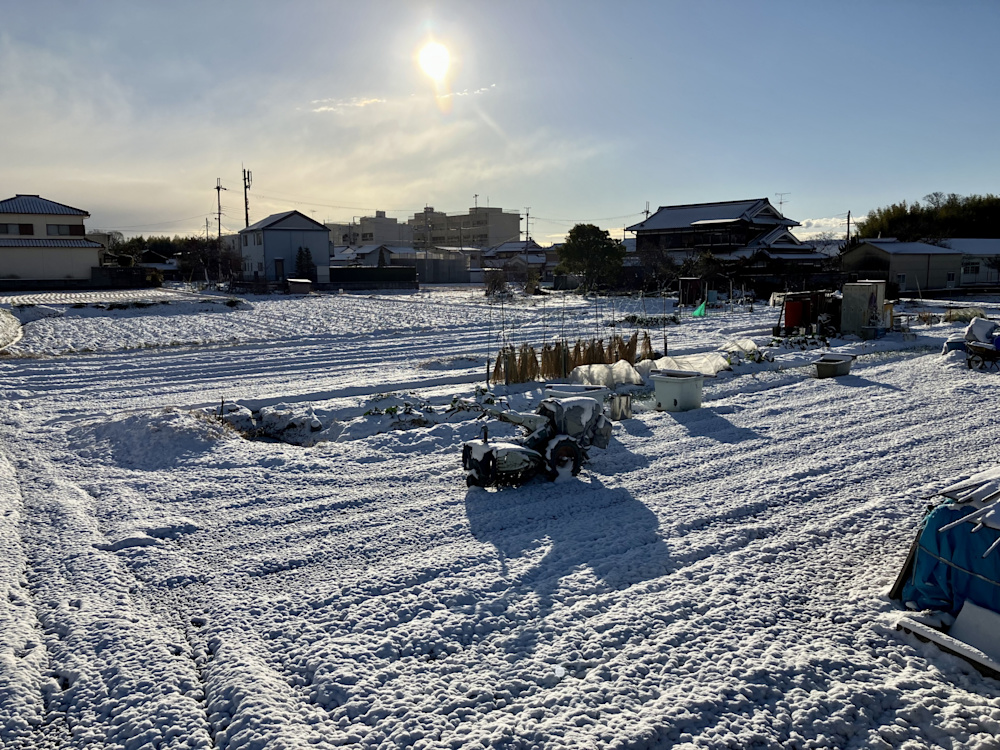
Are you tired of Tokyo's crowds and the high cost of living? No worries, because the government will actually pay you to leave.
Japan has a real problem with population distribution. Tokyo keeps growing while rural areas, the inaka, empty out. To address this, the national government partners with local municipalities to offer substantial financial incentives for people willing to relocate from Tokyo to designated regional areas.
Who Qualifies for Relocation Subsidies?
To qualify, you must have lived in Tokyo's 23 wards or the broader Tokyo metropolitan area (excluding certain disadvantaged areas) for at least five years total during the ten years immediately before your move.
What’s more, you must have also been commuting to the 23 wards for work during this period.
There's one more important requirement that was introduced recently: For at least the most recent year before moving, you must have either lived in or commuted to the 23 wards. This prevents people from gaming the system by moving away years ago and suddenly claiming the subsidy.
Interestingly enough, if you attended university in the 23 wards and later got a job there, your student years can count toward the five-year requirement.
How Much Can You Receive?
The amount you receive can vary according to your household composition and your activities after moving.
A single person can receive up to 600,000 yen. A household (like a couple) can receive up to 1 million yen. And if you have children under 18, you can even receive an additional 1 million yen per child.
For example, a family of four (two parents and two children under 18) relocating together could receive up to 3 million yen in total. That's serious money that can cover moving costs, help with a down payment on a home, or provide a financial safety net while you settle into your new community.
This isn’t even the maximum of what you can get. If you start a business in your new location, you might qualify for an additional 2 million yen. One minor requirement here is that the business should contribute to local economic revitalization. Think child care services, restaurants using local products, or community development projects.
Where Can You Move?
Not every city or town participates in this program, and some popular destinations that don't need help attracting residents are excluded. You'll need to check the participating municipalities to see which locations offer relocation subsidies.
Generally, you can move to prefectures outside the Tokyo metropolitan area (Tokyo, Saitama, Chiba, and Kanagawa). Even some rural areas within Tokyo itself qualify if they're designated as areas needing revitalization, so check each municipality’s website for accurate information.
The Employment Requirements
If something sounds too good to be true, it probably is, and this is one of those cases. So, you can't just move and collect the money: You need to demonstrate you're still contributing to the community.
This means that you must either find employment at a local small or medium-sized company, continue your current job remotely (teleworking), or start a business in your new location.
Many people worry about finding work in smaller cities, but remember that remote work has become much more common. If your current employer allows teleworking, you might be able to keep your Tokyo job while enjoying a lower cost of living elsewhere.
An Example: Moving to Rural Japan
Let's say you've been living in Tokyo's Setagaya Ward for the past six years, working for a company in Shibuya. You're married with one child aged 15. You've always dreamed of a quieter life and found a beautiful mansion (apartment) in a small city in Nagano Prefecture that participates in the relocation subsidy program.
What’s more, your employer agrees to let you work remotely full-time. So, after moving and living there for three months, you apply for the relocation subsidy. Because you have one child under 18, your household qualifies for up to 2 million yen (1 million for the household, plus 1 million for your child).
This is a good amount of money that can help offset moving costs, cover the difference in housing if your new place requires substantial upfront payments, or simply provide financial security as you adjust to your new community.
Important Conditions for Relocation Subsidy in Japan
You must stay in your new location for at least five years. If you move away before then, you might have to repay the entire subsidy amount. This requirement ensures the program achieves its goal of actually redistributing the population rather than just funding temporary relocations.
Also, remember that each municipality has its own specific requirements and subsidy amounts on top of the national program. Some cities offer additional benefits like help finding housing, support with children's education, or even abandoned houses (akiya) at extremely low prices. Contact your target municipality directly to learn about all available benefits.
Conclusion: Making the Most of Housing Subsidy in Japan
If you're facing housing difficulties, planning to buy or renovate a home, or considering a major life change, start by assessing which housing subsidy program fits your situation.
Struggling with current rent? Look into the Housing Security Benefit. Planning to buy or renovate? Research the latest Home Energy Conservation programs. Dreaming of leaving Tokyo for a quieter life? Check out relocation subsidies for your target destination.
Don't hesitate to ask for help navigating these systems. Local government offices often have multilingual support or can direct you to organizations that do. Real estate agents, especially those who work with foreign residents, can also provide guidance on housing subsidies.
Speaking of which, you can also look for a company that provides employee benefits like housing and relocation support, so read our article to understand your options.
Japan Dev Editorial Team
This post was written by the Japan Dev editorial team, based on Japanese official sources.
- Backend Engineer / バックエンドエンジニア (LINEミニアプリ)
- LY Corporation
- Tokyo
- ¥8M ~ ¥15M
- Applied AI Engineer, Human Learning(Senior Principal Level)- mome...
- Cookpad
- Tokyo
- ¥20M or more
- Tech Lead/Senior Software Engineer (Go), API Platform Department,...
- Money Forward
- Kyoto
- ¥7M ~ ¥11M
- Senior Full-Stack Software Engineer
- Visual Alpha
- Tokyo
- ¥6M ~ ¥10M




Latest Tech Jobs 🇯🇵
Explore the top developer jobs in Japan for foreigners
- Backend Engineer / バックエンドエンジニア (LINEミニアプリ)
- LY Corporation
- Tokyo
- ¥8M ~ ¥15M
- Applied AI Engineer, Human Learning(Senior Principal Level)- mome...
- Cookpad
- Tokyo
- ¥20M or more
- Tech Lead/Senior Software Engineer (Go), API Platform Department,...
- Money Forward
- Kyoto
- ¥7M ~ ¥11M
- Senior Full-Stack Software Engineer
- Visual Alpha
- Tokyo
- ¥6M ~ ¥10M
- AI Systems Engineer
- Rapyuta Robotics
- Tokyo
- Embedded Software Engineer - Robotics
- Rapyuta Robotics
- Tokyo
- Quality Assurance Architect - Robotics & Automation
- Rapyuta Robotics
- Tokyo
- IT Security & Compliance Lead
- Rapyuta Robotics
- Tokyo
- Client-Facing Solution Architect
- Visual Alpha
- Tokyo
- ¥8M ~ ¥12M

Get Job Alerts
Sign up for our newsletter to get hand-picked tech jobs in Japan – straight to your inbox.

© 2026 Japan Dev. All rights reserved.
Proudly built in Tokyo.


Curated with 💙 in Tokyo
All our data is gathered from publicly available sources or contributed by users