



Updated March 25, 2025
It's in the air: The meaning of “kuuki wo yomu”
There can be a lot of unsaid social expectations both in and outside of the office in Japan. Many times you are expected to “read between the lines.” In Japanese, this is called kuuki wo yomu (空気を読む) or “reading the air.”
But what does it mean to read the air on and off the clock in Japan? I’ll break down the concept and give you some examples and tips for navigating this sometimes tricky social concept.
In this article: 📝
1. What is “kuuki wo yomu” or “reading the air”?
Kuuki (空気) means “air” and yomu 読む is “read.” Together it literally means to “read the air.”
This is basically the same as “reading between the lines” or “reading the room” in English. It means paying attention to the vibes of a situation.
Some situations are clear in every culture. You don’t want to brag about your new relationship if you're out drinking with a friend who just had a huge breakup. You don't want to be gloomy and bring down the mood at a wedding.
Being in tune with a situation can be as simple as moving to the side for someone walking the opposite direction on a narrow street, or not closing a door on someone trying to come through behind you!
This concept exists in many cultures. However, it might not be intuitive if you grew up in a culture with a concept of “politeness” that is different from Japan, like the U.S.
I won’t go into it in a lot of detail here, but Politeness Theory provides some useful framework for the “air” we are reading. (Just keep in mind it was penned in the 1970s). The basic concept is this: We all want to be liked by other people and be free to do what we want to do.
When other people appeal to our self-esteem, the theory calls it "positive politeness." When they stay out of our way, it’s called "negative politeness." This is a huge generalization, but for the sake of this explanation, the Japanese concept of politeness tilts on the “negative” side.
What does that mean? Japanese politeness centers on avoiding getting in the way of someone’s actions or causing inconveniences. If you use Japanese in the workplace, you are probably familiar with the constant “apologizing” for every request.
It’s not just “please” in Japanese — it’s go-meiwaku (ご迷惑) “inconvenience” or o-tesu (お手数) “bother” that you are causing by making a request. (And impeding on their freedom, apparently.)
Another example of “negative” politeness is that public places in Japan tend to be quieter. If you are on public transport, you don't strike up “polite” friendly conversation with the person next to you. It is considered respectful to not bother anyone on the train with the noise of a conversation.
The other part of reading the air is guessing what someone wants or expects you to do in social situations. This can be especially hard in the workplace.
I once had a manager claim it was ippan joushiki (一般常識) , “general knowledge” or “common sense,” when she wanted her staff to do a certain thing without her saying it.
That might work in an office of Japanese people who have been training to “read the air” since childhood. But it was hard when most of the staff were foreign.
Still, adults have to learn business manners regardless of culture. These expectations also change across generations and across time.
So when do you have to read between the lines?

2. What are some situations where you need to read the air?
A lot of Japanese communication is non-verbal. As a so-called “high context language,” many things go unsaid. It’s all about examining the situation and figuring out what people want.
One example is requests. In Politeness Theory, requests are considered taking away someone’s freedom to do what they want. In the U.S., we might be super friendly to someone, appealing to their self-esteem, and butter them up for a big favor.
But in Japan, it can be rude to ask a favor directly, no matter how friendly you act. To avoid inconveniencing someone, there is a lot of apologizing involved. Or it might even just be phrased as a suggestion to avoid any confrontation at all.
If you misread the situation and think that this suggestion is to be followed at your own discretion and isn’t a request, then you might be in for some trouble. A lot of times if your boss suggests you do something, it’s actually an order.
Another element of negative politeness is making it clear that you aren’t taking advantage of someone.
The other day at work, my coworkers and I were discussing a book that came up in a seminar one of them attended. I wanted to buy and read it, but we weren’t sure if we could use our budget on it. The seminar lecturer was someone we work with at another company, and she is one of the authors of the book.
“Why don’t we send an email saying we are going to get the book and read it? Maybe then she will offer to send us a copy,” one of my coworkers suggested. Asking directly for something for free, especially something the person potentially makes money on, is rude.
But, if we hint at it…! This happens in professional situations more than you might think. So keep your air-reading glasses on!
A more common example is on the train. Of course, you should give up your seat for the elderly, pregnant women, and people with disabilities. But let’s say there are open seats on either side of you, and a couple boards the train.
The couple goes for the seats. What should you do? You don’t want to split them up (or be sandwiched between them) and they can’t ask you to move without being rude. You might want to scoot over one seat so they can sit together.
Another important time to read the air is when asking for permission.
Politeness Theory time: This is about having the freedom to do something you want to do. Getting in your way by saying no would impede on your freedom (and also not be good for your image). So many times you won’t expressly hear a “no.”
This isn’t a work situation, but I have learned a lot about social expectations from participating in traditional martial arts as a hobby. Testing for rank in a martial art is two parts: Your own readiness and if your sensei (先生) thinks you are ready.
But saying you aren’t good enough threatens that self-esteem I mentioned. Recently, I was checked for eligibility for an examination. Instead of being told no, my teacher asked me if I could come to class again before the exam. (I couldn’t, and he knew, so…)
That was enough for me to know it was a quiet no. But I heard that someone else had not gotten the message.
He had suggested to someone else that she wait, but instead she pushed on ahead. She even registered for the exam without his permission. He had to call her the night before and try to reason with her more directly not to go through with it.
I was shocked when I heard the story, since it goes against what I thought was “common sense!” (Am I turning into that manager I mentioned?) Not only would it embarrass her to fail in front of everyone at a big event, but it would also harm the reputation of our teacher.
A situation that combines requests and permission is deciding (or fighting over) who pays the bill for a meal. Friends (or coworkers for a company nomikai) usually split the bill. In business situations, though, usually one person or company will foot the bill.

Back to Politeness Theory: We don’t want to get in the way of someone doing something they want to do, but we also don’t want to take advantage of or cause trouble for them either.
My coworker has been introducing his contacts to a possible business partner. He had been paying or arranging for everything for at least four different meetings. After our most recent meeting, the possible business partner took the chance to pay for our meal.
Since he’s not Japanese, he was nervous to try and get my (Japanese) coworker to agree! But the timing was actually perfect.
Even as our guest, continuing to have everything set up and paid for would eventually tip the social scale toward taking advantage of my coworker’s eagerness to work together. But offering too early might have threatened my colleague’s image as the host.
By carefully reading the situation and returning the favor at an appropriate time, he managed to level the playing field.
For more example situations, including some silly ones, a friend showed me this game called KUUKIYOMI: Consider It. If you don’t have time to download and play it yourself, then you can watch this video of a Canadian playing the game.
The signs might be there, but what if you don’t — or can’t — read them?
3. What happens if you don’t read the air?
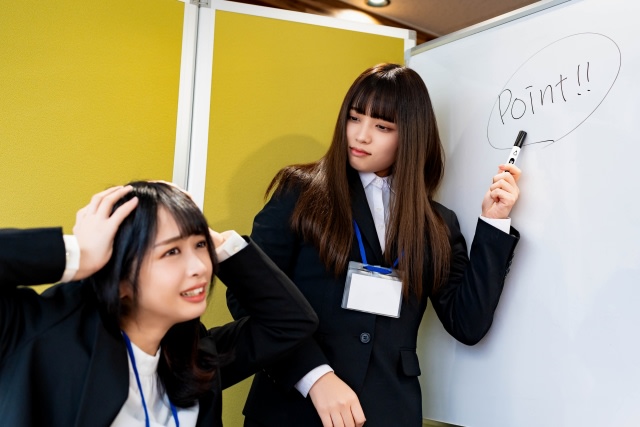
If you aren’t very good at reading between the lines, or are socially clueless, you “can’t read the air” — kuuki ga yomenai (空気が読めない). Or just “KY," for short.
While calling someone “KY” can be used for teasing, being told to kuuki wo yome (空気を読め) is a very direct command. If you hear this, you have really stepped over the line.
For some examples of not reading the air I see on a daily basis, I am turning to train etiquette again.
In Japan, to create a safer place for women during the most congested commuting hours, there is usually a women only train car. However, I see men absorbed in their phone or their earbuds get on anyway. And not notice the rest of the car staring daggers at them.
I recently had a group of non-American foreigner friends tell me about an American they met at a concert that annoyed them. This person’s biggest offense was how loud they spoke… My ears burned!
If you are from basically anywhere other than Japan, you also probably speak “louder” than most Japanese people. It’s good to keep an eye on your surroundings, especially on the train, and make sure you and your friends aren’t being too loud. (Guilty...)
Let’s go back to the office. One of the most important places you need to read the room professionally is in meetings. The more participants, the more important it gets. Especially if some people aren’t from your company.
As I mentioned in my article about communication in the workplace, even correcting someone in the wrong circumstances could be frowned upon. Everyone makes mistakes. It’s part of learning. But when someone higher on the social ladder than you says something not quite right, think twice before you point it out. At least directly.
One time, a manager didn’t notice that he didn’t update a PowerPoint meant for an external audience. But instead of saying “this part is wrong” in a meeting, my coworkers asked him where he got the information from, where the information was usually posted, etc…
I got a little annoyed because it went around in circles without him noticing exactly what we meant. I felt like we were taking a detour when it could be a shortcut.
But it was important that he noticed his own mistake rather than us putting him on the spot. As a rule, you want to avoid direct confrontations. If you really need to have a disagreement with someone, make sure to have the conversation in private.
You guessed it: This goes back to not threatening someone’s reputation or self-esteem in front of others.
I have never worked in a non-Japanese company without a traditional vertical hierarchy, but my impression is that things are more equal and correcting a coworker or disagreeing openly is more acceptable in other cultures.
This is one area where foreigners can be judged to be “emotional” or “angry” for “talking back” to their superiors. Sadly, this is particularly true if you are a woman. Just err on the side of caution!
4. Reading the air as a foreigner
Learning the air might be daunting, especially as a foreigner. Many Japanese think that foreigners can’t read the air. But it isn’t some magical power — anyone can learn social rules and cultural conventions if they tune in.
Here are some tips for learning how to read the air.
1. Be aware of your surroundings
This might seem like a no-brainer, but it is important to always assess the situation. Things that are fine in your country might be against social norms in Japan. Don’t just assume something is okay because you are used to it.
Are you the only one talking loudly on the train? Does an elderly person or pregnant woman need a seat on the train? Is the meeting a formality and not a place to ask questions or challenge plans? What is the hierarchy for reporting something or making requests in the company?
One place you might get tripped up is meetings. When things are wrapping up, the person leading the meeting might ask if there are any questions. This is not an invitation to ask detailed questions. Especially if you are on a time limit.
Extensive questions might be better suited for a one-on-one chat afterward. Many things are decided at meetings but followed up on later. The meeting might also be a formality after everything has been discussed beforehand. It might not be the time to come up with a whole new idea.
I’ve had coworkers who aren’t Japanese say they want to scrap a whole plan and do something else in the middle of a meeting. It had taken a lot of time to get the “higher ups" on-board the previous plan. Changing would take us back to square one, but they wouldn’t budge.
Here it is good to familiarize yourself with the decision-making process at your company. Who decides what, and when? Lots of times extensive social groundwork has been laid before a discussion is even held.
If you take care to notice what is going on around you rather than leaving it to your Japanese coworkers or friends, then you will be more aware of what is appropriate in a given situation.
2. Consume Japanese media
The best way to learn is concrete examples. I mentioned this in my article about ways to study Japanese, but TV shows, movies, and books are a great place to look at real-life examples.
Live action dramas in everyday life or office settings are great for getting a feel for social interactions. Even reality or talk shows can give you hints. Just keep in mind that everything is for entertainment!
Anime and manga are fun, but be careful that you aren’t getting all your social clues from them. Many genres have a certain dramatic flare to them that wouldn’t fly in the office or outside of it. Still, unspoken rules like the hierarchical structure of groups and social expectations are so ingrained in the culture that they even appear in more fantastical situations.
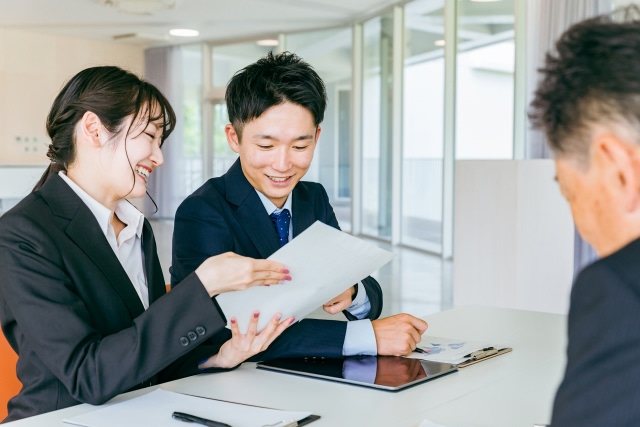
If you don’t understand something, then ask ask ask! It might be hard for a Japanese person to ask about “common sense,” but take advantage of your foreigner status to clarify situations!
It can be as simple as confirming the who, what when, and where of a request. Since spoken Japanese often omits parts of a sentence you need in English, this can be more useful than you might think.
Whatever information you learn, you can file it away as an example to help you read a future situation. As a foreigner, it’s also more acceptable to ask why, too. Be careful though, some things don't have explanations other than simple convention.
Just make sure you have your air-reading glasses on! Like all things, there is a time and place for asking questions.
Sometimes colleagues are busy with other things or you are short on time in a meeting. Paying attention to timing will help improve your air-reading skills just as much as the answers to your questions.
5. Conclusion
The concept of kuuki wo yomu, or reading the air, seems daunting at first for foreigners not familiar with Japanese culture. There are many well-known general social rules to follow, but expectations in the workplace can be especially subtle at times.
If you don’t want to be called "KY" for not being able to “read between the lines,” then put on your air-reading glasses. The best way to learn how to read situations is to experience them. You might make mistakes, but these missteps will help you navigate the situation better next time.
Politeness Theory can be a good tool to analyze situations, but if you get the chance to ask friends or coworkers questions, then take it! Use your position as a foreigner to learn. Your eagerness to learn the culture will reflect well on you.
Reading the air isn't a magical power -- It is a social skill that even Japanese people have to learn. Just like you learned rules for social interactions in your own country, you can master these situations in Japan too.


Matcha Verte
Matcha is a production coordinator who has worked in the Japanese mass media and entertainment industry for over ten years. She has experienced office life in a variety of Japanese companies, from tech startups to traditional major national corporations. Nicknamed a “gaijin yuruchara,” she hopes to bring both insight and humor to readers with the ups and downs of her experiences as an American in corporate Japan.
- Software Engineer
- Solafune
- Tokyo
- ¥7M ~ ¥10M
- Senior Software Engineer
- Solafune
- Tokyo
- ¥10M ~ ¥13M
- Cybersecurity Document Creation Support
- Solafune
- Tokyo
- ¥5M ~ ¥7.5M
- Security Verification Engineer (Cyber Defense - Gov't Project)
- Solafune
- Tokyo
- Up to ¥8.5M
- Engineering Manager, Money Forward Cloud, Fukuoka
- Money Forward
- Fukuoka
- ¥10M ~ ¥15M


Latest Tech Jobs 🇯🇵
Explore the top developer jobs in Japan for foreigners
- Software Engineer
- Solafune
- Tokyo
- ¥7M ~ ¥10M
- Senior Software Engineer
- Solafune
- Tokyo
- ¥10M ~ ¥13M
- Cybersecurity Document Creation Support
- Solafune
- Tokyo
- ¥5M ~ ¥7.5M
- Security Verification Engineer (Cyber Defense - Gov't Project)
- Solafune
- Tokyo
- Up to ¥8.5M
- Engineering Manager, Money Forward Cloud, Fukuoka
- Money Forward
- Fukuoka
- ¥10M ~ ¥15M
- SRE and Platform Engineering Lead, Platform Department 2, Tokyo
- Money Forward
- Tokyo
- ¥7.9M ~ ¥15M
- AI Tech Lead (Context & Harness), CTO Office
- Money Forward
- Tokyo
- ¥7.9M ~ ¥15M
- Backend Engineer / バックエンドエンジニア (LINEミニアプリ)
- LY Corporation
- Tokyo
- ¥8M ~ ¥15M
- Applied AI Engineer, Human Learning(Senior Principal Level)- mome...
- Cookpad
- Tokyo
- ¥20M or more



Get Job Alerts
Sign up for our newsletter to get hand-picked tech jobs in Japan – straight to your inbox.

© 2026 Japan Dev. All rights reserved.
Proudly built in Tokyo.


Curated with 💙 in Tokyo
All our data is gathered from publicly available sources or contributed by users