



Updated January 22, 2026
Laws in Japan for Foreigners: What You Need to Know
Whether you’ve just moved to Japan or are planning to, understanding the country’s laws is essential.
After all, Japan has some rules that might seem really strict or totally different from what you're used to back home.
In this guide, we’ll highlight some of the most important laws and ordinances that you, as a foreigner, should be aware of, so your experience in Japan is smoother and more enjoyable.
In this article: 📝
Understanding Japanese Laws: What Are the Main Laws in Japan?
Japan is often regarded as one of the safest and most orderly countries in the world. For one, the crime rate is low, people follow the rules, and there is an unspoken social contract that keeps things running smoothly.
However, for foreigners, this sense of order can sometimes be confusing, especially when it comes to the law. Many things that might be perfectly legal in your home country can get you into serious trouble here.
Much like anywhere else, laws in Japan are categorized into different types, and one that often surprises foreigners is the concept of nuisance ordinances.
These are local laws designed to maintain public order and address behaviors that may not be outright crimes but are still commonly considered disruptive behavior. Depending on the extent of offense, going against a nuisance ordinance can be punishable. In addition, strict enforcement of laws related to traffic, drugs, and public behavior means that seemingly minor infractions for someone who is not accustomed to Japanese laws can result in fines, legal trouble, or worse—deportation.
So, let’s explore some of the most common regulations and ordinances you need to be aware of to stay on the right side of the law and avoid unnecessary headaches.
Drinking and Driving Laws in Japan: Zero-Tolerance Policy
In some countries, such as the United States, the law allows for a certain level of alcohol consumption before driving, typically a blood alcohol content (BAC) of 0.08%. If you’re from the States, please do not drive under the influence based on this assumption.
Japan operates under a zero-tolerance policy when it comes to drinking and driving. Even a trace amount of alcohol in your system can get you fined, arrested, or even cost you your driver’s license, forcing you to take a special training and test again before you’re back on the road.
As you can tell, the consequences are severe: offenders can face fines of up to 1,000,000 yen and lose their driving privileges. In some cases, drunk drivers can even be sentenced to prison.
What’s more, Japan’s laws don’t just punish the driver. If you knowingly get into a car with someone who has been drinking, you might find yourself fined alongside your friend as a complicit party.
Even bar staff and restaurant owners can be held responsible if they allow an intoxicated customer to drive home.
So, the safest rule to follow is also the simplest one: If you’ve had even one drink, do not drive.
Public transport is widely available in Japan anyway. Taxis are everywhere as well, and there are also designated driver services (daiko, 代行) that allow you to hire someone to drive your car home for you. There’s really no excuse to take the risk.
Cyclists Beware
The penalties extend to cyclists as well. Since November 2024, Japan has significantly strengthened enforcement against drunk cycling. The revised Road Traffic Law now specifies that riding a bicycle with a blood alcohol concentration of 0.15 milligrams per liter of breath or higher is a punishable offense.
What many foreigners don't realize is that drunk cycling can result in two separate penalties: criminal charges (up to 3 years imprisonment or fines up to ¥500,000) and administrative license suspension for those who hold a driver's license. More on this down below.
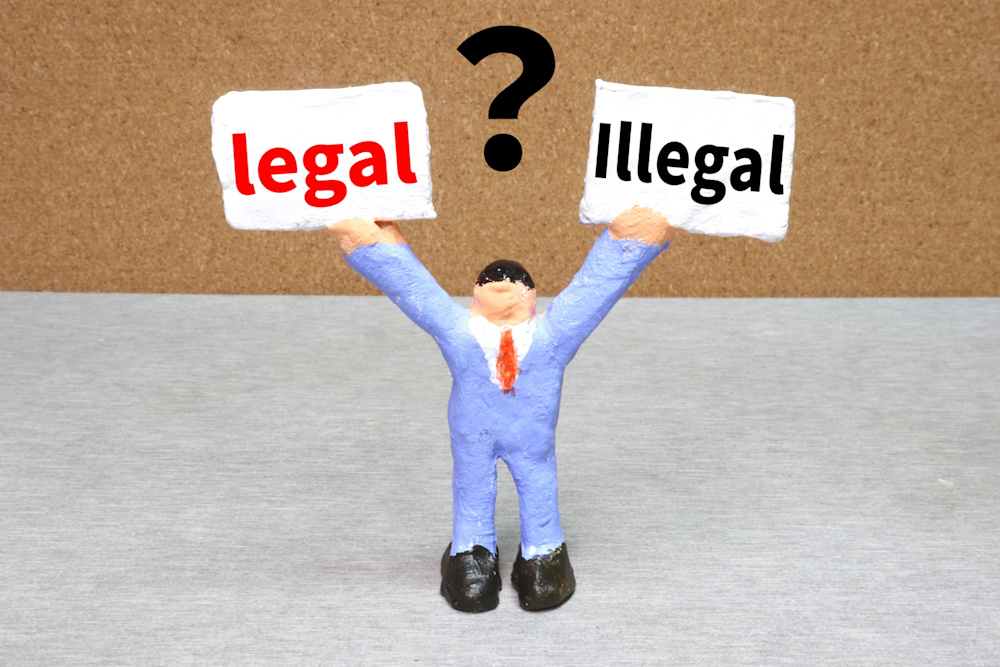
Japanese Laws Around Marijuana Use: No Exceptions
Nowadays, it’s perfectly normal to be living in a legalized state or country where marijuana use isn’t prohibited. While “weed” may be legal in countries like Germany, Spain, the US, and Canada, it’s still very much illegal in Japan.
You’ll be shocked by how harsh Japan’s laws toward cannabis are: cannabis, possession, sale, and even traces of it in your system can lead to severe legal consequences.
Unlike in some countries where minor possession might lead to a warning or a small fine, in Japan, even a tiny amount can result in arrest, imprisonment, and deportation. There’s no medical marijuana exemption, either. There are no gray areas, just an outright ban, so don’t think you can explain your situation to the officials.
The shocking part is that the law applies even if you consume marijuana outside of Japan. Some foreigners have been arrested after testing positive for THC upon entering the country.
Japanese authorities take a strict stance on this, and the social consequences of a drug arrest are just as harsh as the legal ones. Even major celebrities and athletes have had their careers utterly destroyed after a drug-related arrest in Japan.
Bikers, Listen Up: Violation of Laws and Regulations for Biking
Bicycles are quite literally everywhere in Japan, and for the most part, cycling is a convenient and safe way to get around. But this doesn’t mean there aren’t rules and regulations.
In November 2024, Japan introduced stricter regulations to curb reckless cycling in the country. Using a smartphone while riding, listening to music with headphones, or riding under the influence of alcohol can have significant consequences.
We’re talking not just hundreds of thousands of yen, but imprisonment. The revised penalty for using a smartphone while riding, for instance, is imprisonment of up to 6 months or a fine of up to 100,000 yen, which goes up if the violation causes an accident or traffic hazard.
Although you won’t need a license to ride a bicycle, you’re still expected to follow the same basic traffic rules as drivers. So, be careful: running red lights, riding on sidewalks where it’s not allowed, or failing to use a light at night can get you ticketed.
Do not think you won’t get caught, either. The police often stop cyclists for even the most minor infractions, especially in urban areas, so keep that in mind before hopping on a bike.
The Drunk Cycling Crackdown: What You Need to Know
If you think hopping on your bike after a few drinks is a safe alternative to driving, think again.
Japan's November 2024 revision to the Road Traffic Law has turned drunk cycling into a seriously enforceable offense, one that can cost you your driver's license even if you weren't anywhere near a car.
Between November 2024 and June 2025, over 4,500 cyclists were arrested for riding while intoxicated. Also, in the first nine months of 2025, 896 people had their driver's licenses suspended for drunk cycling, compared to only 23 suspensions during the same period in 2024 before the law revision.
Under the new revision, police can now administer breathalyzer tests to cyclists just like they do for drivers. If your blood alcohol concentration measures 0.15 milligrams per liter of breath or higher, you're in trouble. For context, that's roughly equivalent to one or two drinks for most people, which is a pretty low threshold.
Here's what makes this particularly brutal: You can get hit with penalties twice. First, there are criminal charges of up to 3 years imprisonment or fines up to ¥500,000 (approximately $3,200).
Second, if you hold a driver's license, it can be suspended immediately through an administrative process, no trial required. The reasoning is that someone willing to ride a bicycle drunk is likely to pose a significant danger when driving a car as well.
Regional Enforcement Varies
How strictly this gets enforced, however, depends heavily on where you are.
Osaka leads the pack with 340 license suspensions, followed by Tokyo with 124, Wakayama with 73, and Nara with 66. Meanwhile, 22 prefectures didn't record a single suspension, showing that police practices vary significantly across the country.
Some prefectures, like Chiba, have taken it even further, dismissing government employees caught cycling drunk.
You Can Get Others in Trouble, Too
An important point you need to understand is that the law doesn't just target cyclists. If you serve alcohol to someone knowing they'll ride a bicycle afterward, or if you lend your bicycle to someone who is intoxicated, you could face up to 2 years imprisonment or fines up to ¥300,000.
This is similar to how the law treats people who enable drunk driving. So, if you've been drinking, don't cycle, or let others do so. Period. The convenience just isn't worth the risk.
Nuisance Ordinances: Japanese Rules You Might Not Know About
Some laws in Japan aren’t about major crimes but are still strictly enforced. These nuisance ordinances vary by city but typically cover behaviors considered disruptive or inappropriate in public spaces.
Let’s take a look at some of the most prominent ones you should know about as a foreign resident or a newcomer.
Secret Photography and Filming: Not Cool, Not Allowed
One of the most serious nuisance ordinances in Japan is the prohibition of taking secret photographs or videos of people without their consent. In fact, this is also against the law and can be considered a serious crime, depending on the situation.
This law is particularly strict in places like public transportation, changing rooms, and other private settings. With the increase in hidden camera incidents, authorities in Japan have taken a firm stance against such behavior.
Depending on the severity of the case, offenders can face steep fines or even imprisonment. So, remember that even if you think you are in the right, filming someone without their permission “for proof,” as it’s common to do so on social media nowadays, can blow up in your face.
Improper Garbage Disposal Can Get You in Trouble
Japan takes recycling and waste separation very seriously. Learning the rules around how to dispose of your waste will save you a lot of headaches if you’re new here.
And if you ever wondered why Japan has no trash cans, you’re not alone.
In short, due to past tragic events, trash cans are considered too big of a safety issue in public areas. So, it’s perfectly common for people to carry their trash in their bags and dispose of it at home.
Each prefecture has different regulations for littering, but a good rule of thumb is to never litter: there will most certainly be consequences, and it’s also not the nicest thing to do.
As for the trash produced at home, every city has different rules about how to sort and dispose of garbage, and failure to follow these guidelines can result in fines.
Trash is sorted into burnable, non-burnable, recyclable, and organic waste, in clear bags to make identification easier.
Many foreigners find the system confusing at first because there are often designated days for burnable and non-burnable trash, as well as special rules for large items and recyclables, but everything is very well scheduled once you get the hang of things.
All you have to do is follow the rules provided by your local government or your apartment building. Remember that if you leave your trash in any area other than the designated one, your garbage won’t be taken and you may receive a warning from your local government or building management.

Japanese Rules Around Smoking in Public Spaces
Smoking regulations in Japan have become increasingly strict over the years. While smoking is still allowed in some indoor areas, such as designated smoking rooms in restaurants and bars, these are rather rare these days.
Many cities have outright banned street smoking and only allow it to be done in designated areas. If you’re caught smoking in a non-smoking area, you may be fined on the spot. Similarly, smoking in trains, buses, and airplanes is also prohibited.
Cities like Tokyo have designated smoking zones, and more municipalities are implementing similar policies to reduce secondhand smoke exposure in public spaces. So, if you’re new here, checking for smoking area signs before lighting up will be in your best interest.
False Accusations of Molestation on Public Transport
Japan’s crowded trains have led to strict laws against groping, or chikan, a serious issue that the authorities and society take extremely seriously. In response to frequent cases of growing and public sexual assault, the country has implemented women-only train cars and launched public awareness campaigns to address the problem.
However, because the issue is so prevalent, there’s also a heightened sensitivity toward any type of physical contact on public transportation, which sometimes results in false accusations.
Many women in Japan, having been victims or wary of potential harassment, may react strongly to unexpected contact, even if it’s accidental. Foreigners in particular should be mindful of their surroundings and avoid any behavior that could be misinterpreted.
Common tips to avoid being falsely accused are carrying a backpack on the front rather than on the back, keeping hands on an overhead train strap, and avoiding prolonged eye contact. If you have an umbrella, keeping it in your hands and holding it upright close to your body is another common practice to prevent misunderstandings.
If you’re ever wrongly accused of molestation in a public space, it’s important to stay calm. Admitting to something you didn’t do is never a good idea, no matter how much you may be pressured into it. Instead, contact your employer or someone you trust and ask them to come to you immediately.
Seeking legal representation and explaining your side of the situation is crucial in such cases, so don’t try to resolve this on your own.
Not Illegal, but Restricted: Additional Japanese Rules to Be Aware Of
While they may not exactly be against the law, there are some additional rules you might want to be aware of to avoid causing any disturbance in public.
For instance, in some countries, it’s common for people to start eating snacks or deli foods before paying, as long as they fully intend to purchase the item at checkout. However, in Japan, this is considered highly inappropriate and even illegal in some cases.
Opening a package before paying for it can be seen as damaging goods or shoplifting. If you want to check a product’s color or features before buying, always ask a store clerk for assistance rather than opening the package yourself.
Another common issue arises due to the country’s specific noise etiquette. While it’s perfectly fine to invite friends over, throwing large, noisy parties or playing loud music late at night can be considered disruptive to neighbors.
In an apartment building with thin walls, even normal conversation levels can carry through, so keeping voices and music at a considerable volume will help you stay in good standing with your neighbors.
Are Tattoos Legal in Japan?
Japan has a complicated relationship with tattoos. While they aren’t against the law, many public places—especially onsen (hot springs), gyms, and pools—ban people with visible tattoos due to their historical association with the yakuza.
Some establishments allow entry if tattoos are covered, but it’s always best to check beforehand. In fact, there are even foreigner-friendly ones that allow you to use the facilities with exposed tattoos in smaller, more private settings.
To check out some tattoo-friendly onsens, be sure to read our guide. For more information on living as a foreigner with tattoos in Japan, see our guide to living with tattoos.
Final Word: What Are the Rules for Living in Japan?
Japan has strict laws and local ordinances that can sometimes be surprising to foreigners.
From zero tolerance drinking and driving laws to unexpected rules about garbage disposal, understanding these regulations is essential to having a good, trouble-free time in Japan.
While some laws are criminal in nature, others, such as noise, etiquette, and shop policies, are more about maintaining public order. By being aware of these rules, you can avoid trouble, respect local customs, and make the most of your time in Japan.
For more tips on what to avoid and what may be considered rude, check out our guide to disrespectful things to avoid in Japan.


Japan Dev Team
This post was written by our Japan Dev editorial team.
- Senior Data Engineer - MIDAS Data Platform, Digital Bank
- Money Forward
- Tokyo
- ¥6.5M ~ ¥11M
- Client Delivery Lead
- Kraken Technologies
- Tokyo
- Senior Client Delivery Lead
- Kraken Technologies
- Tokyo
- Software Developer
- Limina
- Tokyo
- Client-Facing Solution Architect
- Visual Alpha
- Tokyo
- ¥7M ~ ¥11M




Latest Tech Jobs 🇯🇵
Explore the top developer jobs in Japan for foreigners
- Senior Data Engineer - MIDAS Data Platform, Digital Bank
- Money Forward
- Tokyo
- ¥6.5M ~ ¥11M
- Client Delivery Lead
- Kraken Technologies
- Tokyo
- Senior Client Delivery Lead
- Kraken Technologies
- Tokyo
- Software Developer
- Limina
- Tokyo
- Client-Facing Solution Architect
- Visual Alpha
- Tokyo
- ¥7M ~ ¥11M
- Senior Full-Stack Software Engineer
- Visual Alpha
- Tokyo
- ¥5M ~ ¥9M
- Senior Software Engineer (WES & Fleet Management)
- Mujin
- Tokyo
- ¥8M ~ ¥15M
- Full Stack Engineer (Applications for Robots in Home Environments...
- AI Robot Association (AIRoA)
- Tokyo
- Lead System Integration Robotics Engineer - Logistic Division
- Telexistence
- Tokyo
- Robotics Software Engineer - Motion Planning
- Telexistence
- Tokyo



Get Job Alerts
Sign up for our newsletter to get hand-picked tech jobs in Japan – straight to your inbox.

© 2026 Japan Dev. All rights reserved.
Proudly built in Tokyo.


Curated with 💙 in Tokyo by Eric Turner
All our data is gathered from publicly available sources or contributed by users