



Updated July 23, 2026
Pediatrics in Japan: Everything You Need to Know
If you are raising a child in Japan, it helps to understand how pediatric care works before you actually need it, so you can act quickly when something comes up.
Depending on the situation, you may need to go to a local pediatric clinic, a general hospital, an emergency department, or call a pediatric advice line, such as #8000, if you’re unsure what to do. In a stressful moment, it’s not always obvious which option is best.
In this article, we break down how pediatrics in Japan works. You’ll learn how Japanese pediatric clinics work, when hospital referrals are needed, how to find English-friendly care, where to go during an emergency, and everything else you should know to find the right kind of help for your kid without added stress.
Understanding Japan's Pediatric System
Japan’s pediatric system is reliable and affordable if you have National Health Insurance or Employee Health Insurance, so let’s see how it works.
What does 小児科 (Shonika) mean?
The term for pediatrics in Japanese is 小児科 (shonika), and a pediatrician in Japanese is 小児科医 (shonikai).
Pediatricians focus on children's health from newborns up through the teenage years, usually up to around age 15, though some continue seeing patients into high school or even longer for ongoing conditions.
Pediatric care covers physical health, how the child learns and grows, and early mental health signs. Here’s how Japan’s pediatric care network is set up:
Pediatric clinics: These are local clinics that handle most everyday childhood illnesses and follow-up visits.
General hospitals with pediatric departments: A better option for cases that need extra tests, specialist input, or closer monitoring, or when a referral is needed.
Pediatric emergency departments: You can find these at larger hospitals for serious and urgent cases.
Most families start by visiting a nearby clinic, then move on to a bigger hospital if more care is needed or your pediatrician refers you to a specialist.
That said, if the situation feels serious, you can head straight to a hospital without a referral. You may be charged an extra fee, but if the doctor determines it’s a true emergency, it’ll be waived.
If you can, call ahead to make sure that the department you need is staffed. Otherwise, you might waste time making the trip.
What’s the Difference Between Pediatrics and Internal Medicine?
Internal medicine, or 内科 (naika), is mainly focused on adult health.
In Japan, internal medicine clinics are the first stop for adults who need checkups, general medical advice, treatment for common illnesses, and care for long-term conditions such as high blood pressure or diabetes.
Many internal medicine clinics are run by doctors who’ve spent years working in hospitals before opening their own practice, so the care may reflect that doctor’s background and specialty area.
Pediatrics, on the other hand, is the branch of medicine that deals with the health and medical care of infants, children, and adolescents, usually up to 15 years old.
Because children’s bodies and symptoms are different from those of adults, pediatricians understand how illness presents differently depending on a child's age and developmental stage.
They pay close attention to things like physical development, nutrition, allergies, vaccinations, mental health concerns, school-related difficulties, and problems that can appear during puberty. That’s why many families keep seeing the same pediatrician for years.
When to Use a Local Clinic vs. a General Hospital vs. the Emergency Room
One of the most confusing parts of seeking medical care for a child is deciding where to go, so use this as your guide.
Go to a local pediatric clinic for common and non-serious problems and illnesses like mild fever, cough, sore throat, vomiting, diarrhea, mild rash, ear pain, pink eye, constipation, and so on. This is also the best place for seeking non-urgent medical advice or when you need repeat prescriptions.
Visit a general hospital’s pediatric department if your child’s condition is more complex or requires specialist care. You’ll need a referral from a clinic first, because without one, you’ll have to pay an extra fee and wait longer than usual (more on this later).
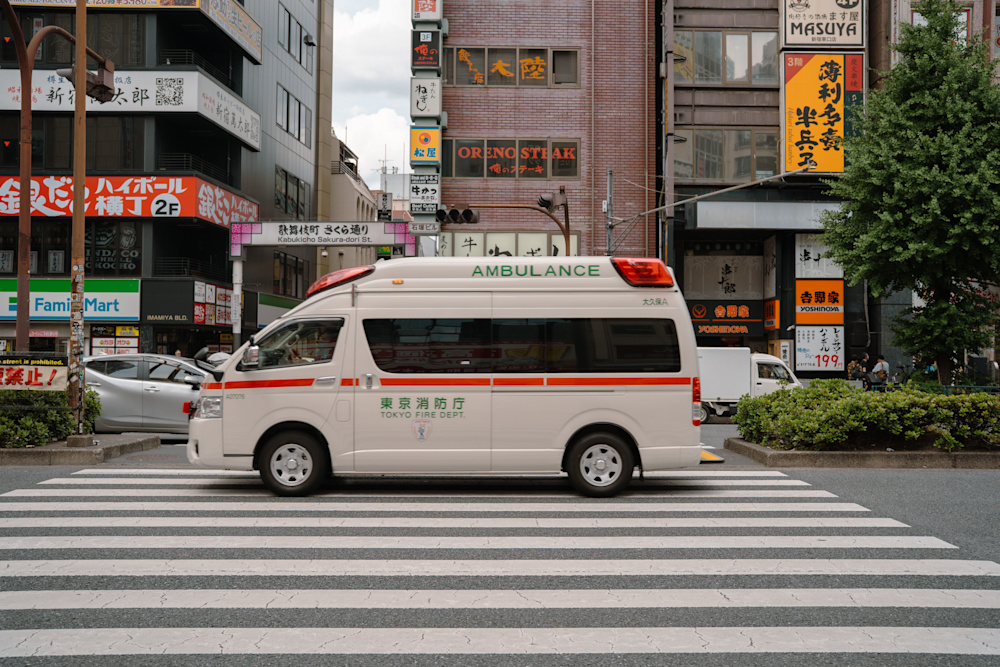
Go straight to the emergency department if your child has trouble breathing, turns blue around the lips, has a seizure, is badly dehydrated, has severe burns or another serious injury, or has any sudden symptoms that seem dangerous. Speed matters most here, so you don’t have to wait for a referral.
Pediatric Clinics’ Working Hours
Most pediatric clinics open between 08:00 and 09:00 and take a lunch and clean-up break at 12:00. They usually reopen between 14:00 and 15:00, and close between 17:00 and 18:00.
Clinics are usually closed on weekends and public holidays, and some don’t work on certain days of the week, like Wednesdays or Thursdays.
How the Referral System Works
As we explained, unless your child’s condition is serious or life-threatening, you’re expected to visit a local clinic first. If the clinic thinks that your child needs more advanced care, it will write you a referral letter, also known as a letter of introduction, and send you to a hospital that can handle the next stage.
Without that referral letter, you’ll have to pay a fee and possibly wait much longer to be admitted. Still, if clinics are closed or your child has severe symptoms, go straight to the hospital. Safety comes first.
Finding an English-Speaking Pediatrician Tokyo and Beyond
When your child is sick, you don’t want to spend the visit wondering whether you misunderstood the diagnosis or the doctor’s instructions, so here’s what to do to get the best care.
How to Search for English-Speaking Clinics (JNTO, Himawari, City-Specific Resources)
The best way to do this is by using medical directories first, then calling the clinic of your choice to confirm the details yourself.
The Japan National Tourism Organization (JNTO) website lists English-friendly medical institutions, including pediatric clinics, and it’s very easy to use. You can search by city/area, language, medical department, specific keywords, etc.
If you live in Tokyo, use the Himawari medical search service to find an English-speaking hospital in Tokyo.
If you live elsewhere in Japan, check your city, ward, or prefecture website for local foreign resident medical guides.
For even more options, visit the Travelers Hospital directory.
Online Consultation Options
Online consultations can help when you’re not sure how urgent the problem is or where to take your child for treatment, or if you think that bringing your sick child in a crowded clinic is not a good idea.
AMDA International Medical Information Center, for example, offers phone help and interpreter services for foreign patients.
You have two more options for online consultations: Kids Doctor and Mitene Call Doctor. Both have smartphone apps, and both let you speak with a doctor by video call in Japanese.
If the doctor thinks your child needs medicine, they can write a prescription through the app. Just remember that many pharmacies are closed during Golden Week, New Year's, and other long holidays, so check their hours before using one of these apps.
You can also call a clinic directly, but only if they offer video or phone visits, so check their website beforehand.
If you’re dealing with an urgent situation after-hours and need advice ASAP, call the #8000 pediatric emergency consultation phone line. They’ll advise you on whether to visit a clinic, a hospital, or get urgent care. The only issue is that the line is mostly Japanese only, so keep that in mind before you call.
Useful Phrases for Phone Bookings and Describing Symptoms
Whether you’ve just started learning Japanese or you’ve lived here for years, having the following phrases on hand can save you a lot of time and stress:
Phone booking phrases
I’d like to make an appointment for my child - 子どもの予約をお願いしたいです (Kodomo no yoyaku o onegai shitai desu)
This is our first visit - 初診です (Shoshin desu)
Do you have a pediatrics department? - 小児科はありますか (Shounika wa arimasu ka)
Does anyone speak English? - 英語を話せる方はいますか (Eigo o hanaseru kata wa imasu ka)
Can you see my child today? - 今日診てもらえますか (Kyou mite moraemasu ka)
The symptoms started last night or this morning - 昨夜 / 今朝から症状があります (Sakuya / Kesa kara shoujou ga arimasu)
Describing symptoms
(My child) has a high fever - 高い熱があります (Takai netsu ga arimasu)
(My child) is wheezing - ゼーゼーしています (Zeezee shite imasu)
(My child) has trouble breathing - 息が苦しそうです (Iki ga kurushisou desu)
(My child) seems very tired - ぐったりしています (Guttari shite imasu)
(My child) is hard to wake up - 起こしてもなかなか起きません (Okoshite mo nakanaka okimasen)
(My child) had a seizure - けいれんがありました (Keiren ga arimashita)
(My child’s) lips look purple - 唇が紫色です (Kuchibiru ga murasaki iro desu)
There is blood in the stool - 便に血が混じっています (Ben ni chi ga majitte imasu)
(My child) hit their head - 頭を打ちました (Atama o uchimashita)
The Best English-Speaking Pediatric Clinics in Tokyo

OHANA Kid's Clinic AKABANE
Area / nearest station: Kita-ku, Akabane Station West Exit (3-minute walk).
Address: 2F, 1-36-11 Akabane Nishi, Kita-ku, Tokyo 115-0055.
Phone number: 03-5993-5087
Pediatric services: General pediatric consultation, vaccinations, and health checkups.
Hours: 8:30-12:00 (Mon-Sat/Sun depending on week); 14:00-18:30 or 17:00 on some weekends. Closed Thursday afternoons, alternate weekends, and holidays.
Booking method: Web appointments strongly encouraged (via their system). Walk-ins are accepted, but patients who’ve booked have priority.
Hasuhana Kids Family Clinic
Area / nearest station: Itabashi-ku, Motohasunuma Station (Toei Mita Line, A2 exit, 1-minute walk).
Address: 23-3 Hasunumacho, Itabashi-ku, Tokyo.
Phone number: 03-3960-8287
Pediatric services: General pediatric consultation, vaccinations, health checkups, and cardiology-related care for kids.
Hours: Mon-Thu 9:00-18:00, Fri 9:00-12:30, Sat 9:00-18:00. Closed Friday afternoons, Sundays, and national holidays.
Booking method: Web and phone reservations are available. Walk-ins are possible depending on the schedule.
Tokyo Medical and Surgical Clinic
Area / nearest station: Minato-ku, near Shiba-koen.
Address: 32 Shiba koen Building 2F, 3-4-30 Shiba-koen, Minato-ku, Tokyo
Phone number: 03-3436-3028
Pediatric services: Assessment and treatment for acute issues, vaccinations, and health checkups.
Hours: Mon-Fri 8:30-17:30, Sat 8:30-13:00. Closed on Sunday.
Booking method: Call or book online. Same-day appointments are often available for acute issues.
Flow East Clinic
Area / nearest station: Right next to Exit 3 of Hiroo Station
Address: 7th Floor, Dai-ni Sano Bldg., 5-10-24 Minami-Azabu, Minato-ku, Tokyo
Phone number: 050-5511-0770 (Guidance number 260)
Pediatric services: Pediatric consultations, allergy care, vaccinations, and health checkups.
Hours: Mon-Fri 08:30-11:00. Afternoons: Mon, Wed, Thu, and Fri 15:00-18:15. Sat, Sun: Open only on the 2nd and 4th Saturday of the month from 08:30-11:00, and the following Sunday from 09:00-11:45. Closed on holidays and alternating Sundays.
Booking method: Appointments are recommended. They accept walk-ins, but you’ll likely have to wait longer.
Kijima Pediatric & Otorhinolaryngology
Area / nearest station: About a 10-minute walk from Yoyogihachiman Station on the Odakyu Line.
Address: 2-21-10 CENTRAL TOMIGAYA Building 1F Tomigaya Shibuya-ku Tokyo
Phone number: 03-3467-6740
Pediatric services: General pediatric consultations, infant regular checkups, various medical examinations available (e.g., blood tests, chest X-rays, etc.).
Hours: Mon-Wed and Fri-Sat 9:00-12:30. Mon-Wed and Fri 15:50-19:00. Closed on Thursdays, Sundays, public holidays, and Saturday afternoons.
Booking method: Walk-ins and reservations online are available for those with Japanese insurance and ID number.
National Medical Clinic
Area / nearest station: Minato-ku, Hiroo Station (Tokyo Metro Hibiya Line)
Address: 202 5-16-11 Minami Azabu, Minato-ku, Tokyo
Phone number: 03-3473-2057
Pediatric services: Pediatric care for babies and older children, prenatal visits, baby checkups, school physicals, immunization.
Hours: Mon-Fri 9:00-12:00 and 13:30-17:00. Sat 9:00-12:00. Closed Saturday afternoons, Sundays, and holidays.
Booking method: Appointments can be made by phone.
The Best English-Speaking Pediatric Clinics in Yokohama
The Bluff Medical and Dental Clinic
Area / nearest station: Motomachi-Chūkagai on the Minatomirai Line, Exit #6 towards America Yama Park (8-minute walk), and Ishikawachō on the JR Negishi Line South Exit (13-minute walk).
Address: 82 Yamatechō, Naka Ward, Yokohama, Kanagawa
Phone number: 045-641-6961
Pediatric services: Medical consultation, physical examinations, immunizations, Yokohama City subsidized immunizations, Yokohama City subsidized checkups, dental treatments.
Hours: Mon, Tue, Thu-Sat 9:00-12:30 and 13:30-17:00. Wed 9:00-13:00. Closed Sundays, national holidays, and December 25.
Booking method: Reservations available by phone or online.
The Yokohama Front Bayside Clinic known for THE YOKO BAY KiDs
Area / nearest station: Kita West Exit of Yokohama Station.
Address: 3F, 1-41 Tsuruyacho, Kanagawa-ku, Yokohama-shi, Kanagawa Prefecture - The Yokohama Front Clinic Mall
Phone number: 045-620-0015
Pediatric services: Vaccinations, health checkups, treatment for acute illnesses.
Hours: Mon-Fri 9:30-13:00. Mon, Tue, Thu 14:00-18:00. Saturdays and public holidays: 9:00-13:00, 14:00-17:00; Sundays: 9:00-13:00.
Booking method: Reservations available online.
Totsuka Clinic
Area / nearest station: 10-minute walk from Totsuka Station West Exit
Address: 649 Yabe-cho, Totsuka-ku, Yokohama City, Kanagawa Prefecture
Phone number: 045-864-2110
Pediatric services: General pediatric care, health checkups, immunizations.
Hours: Mon-Wed and Fri 9:30-12:30 and 15:00-18:00. Thu 15:00-20:00, Sat 9:00-12:00. Closed on Sundays and national holidays.
Booking method: Booking available by phone or online.
What to Expect at the Pediatric Appointment in Japan
Taking your sick child to a pediatric clinic in Japan feels less overwhelming once you know how things usually go and what you should bring to the appointment.
Calling Ahead and Booking
Call the clinic before you bring your child in, especially if it’s your first visit or you're unsure when reception closes.
Some clinics accept walk-ins, but many require appointments, so booking ahead can help your child be seen faster. Otherwise, you might need to wait for hours because patients who've booked will be given priority.
If your child needs care outside normal hours, check after-hours clinics or emergency care.
What to Bring to the Appointment
To get seen faster and get asked fewer questions, it’s best to have the following documents with you:
Passport for ID
Travel insurance documents or insurance card (保険証: Hokensho)
Clinic card (診察券: Shinsatsuken) if you have one from a previous visit
Vaccination record (予防接種記録: Yobo sesshu kiroku) in Japanese or in English
A list of allergies your child might have
A list of medications your child might be on
A list of previous illnesses or hospitalizations
Mother and Child Health Handbook (母子手帳: Boshitecho)
Medical certificate/subsidy card (医療証: Iryosho)
Medicine note (お薬手帳: Okusuri techo) if you have one
How to Get Your Child Covered Under Your Insurance
Your child needs health insurance soon after birth, so don’t leave this until the first fever or rash.
First, submit a birth registration (出生届, shusshō todoke) at your local city or ward office within 14 days after birth. To do this, you’ll need the birth registration form, the hospital-issued birth certificate, and the Mother and Child Health Handbook.
After you file it, your baby will be added to the residency record (住民票, jūminhyō), and you’ll also receive documents showing their My Number.
If you’re covered through your employer, apply to get your child covered as soon as possible after the birth (within about 5 days as a general guideline). To do this, submit a "Notification of Dependent (Change)" form (健康保険被扶養者(異動)届) to your company's HR or general affairs department. You’ll need your company’s form along with a copy of your baby’s residency record.
This gets your child on National Health Insurance or your work plan. Once it goes through, you get a subsidy card or certificate that cuts or reduces a lot of the costs for medical visits. Children pay 20% until the end of the fiscal year in which they turn 6 (March 31), before any local child subsidy is applied. All you need to do is show it at the appointment.
What Happens at the Pediatric Hospital, Japan
Once you arrive at the appointment, this is how the process usually goes:
Check in at reception and hand over your child’s insurance card, clinic card if you have one, and the documents listed above.
Staff will ask you to fill out a short form about your child’s symptoms, and if it’s your first visit and you don’t have all the documents ready, they will ask about your child’s allergies, past illnesses, and current medications.
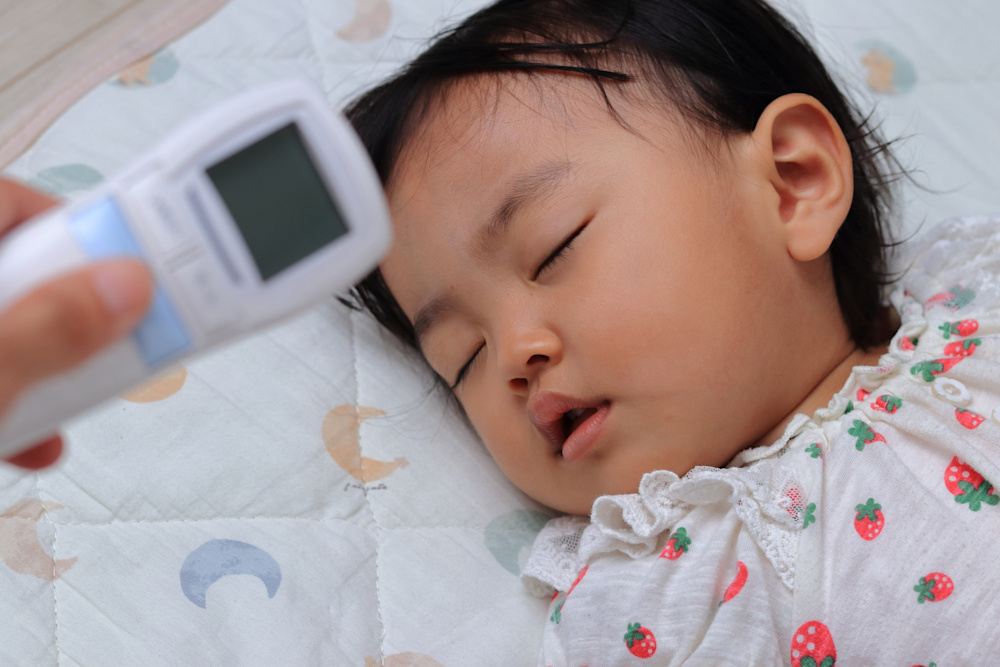
A nurse might take your child's temperature and weight while you wait in the kids' area.
When your turn comes, the doctor will see and examine your child, explain what they think is causing the problem, and tell you what to do next, and prescribe medications if necessary.
Once the visit ends, you pay your share of the cost using your insurance card and any child subsidy card your city gives you.
Pediatricians in Japan might prescribe fever medicine, pain meds, skin creams, inhalers for breathing symptoms, and antibiotics when the cause is a bacterial infection.
Powder medicine is very common because it mixes easily with water or soft food, and children usually take it without much fuss.
FAQs
Do Japanese Pediatricians Speak English?
Many pediatric clinics operate in Japanese. Large hospitals are more likely to have English-speaking staff, but it isn’t guaranteed, so it’s good to check in advance. For peace of mind, choosing an English-speaking clinic, like the ones we recommended above, is best.
How Much Does a Pediatric Visit Cost in Japan?
It depends on your child’s insurance, age, and where you live. With Employee Health Insurance or National Health Insurance, you’ll pay part of the cost for covered care. For kids under 6 years old, it’s 20% before any local child subsidy is applied. A child medical subsidy can bring the bill down to zero, or you might pay several thousand yen.
Can I Use My Health Insurance at a Japanese Clinic?
Yes, if the clinic accepts Japan’s public health insurance, and the visit covers insured treatment. Bring the insurance card to reception, as well as the child's medical subsidy card if you have one.
What Should I Do if My Child Won’t Take Powder Medicine?
If your child won’t take [powder medicine], ask the doctor or pharmacist how to best mix it in with food or drink, because some can make it taste bitter. A common method is to make a small paste with water and place it inside the cheek, then offer a drink or a small bite of their favorite food right after.
Is the #8000 Line Available in English?
Usually not. The pediatric emergency consultation phone line #8000 is mostly Japanese only.
Final Thoughts on Pediatric Care in Japan
Receiving paediatric care in Japan doesn’t seem so complicated once you know all the steps. In short: You call ahead or book an appointment, check in at reception, hand over your insurance and other documents, then wait for the doctor.
The better prepared you are, the faster your child will receive care. So, keep your child’s documents in one place, and save the number of a nearby clinic with English-speaking staff and a hospital that sees children after hours. This way, you’ll always be ready for any emergency. But, of course, let’s hope that it never gets to that.
Lastly, if you need childcare options in Japan that cater to international families, check out our guide.


Japan Dev Editorial Team
Guides and articles about tech and life in Japan from our Japan-based editorial team. Articles are researched from Japanese government sources and our standards are overseen by Manami Turner, Co-founder of Japan Dev.
- Delivery Manager, LINK Ecosystem
- Moneytree
- Remote
- ¥8M ~ ¥10M
- Software Engineer – Open Position (Robotics / Backend, C++)
- Mujin
- Tokyo
- ¥8M ~ ¥15M
- Senior Software Engineer, Satellite Operations System Development...
- Axelspace
- Tokyo
- ¥6M ~ ¥9M
- Senior DevOps Engineer - Build Systems & CI
- Mujin
- Tokyo
- ¥10M ~ ¥13M




Latest Tech Jobs 🇯🇵
Explore the top developer jobs in Japan for foreigners
- Delivery Manager, LINK Ecosystem
- Moneytree
- Remote
- ¥8M ~ ¥10M
- Software Engineer – Open Position (Robotics / Backend, C++)
- Mujin
- Tokyo
- ¥8M ~ ¥15M
- Senior Software Engineer, Satellite Operations System Development...
- Axelspace
- Tokyo
- ¥6M ~ ¥9M
- Senior DevOps Engineer - Build Systems & CI
- Mujin
- Tokyo
- ¥10M ~ ¥13M
- Senior Product Engineer (Partner Product Development Department)
- Money Forward
- Tokyo
- ¥6.9M ~ ¥10M
- Senior Software Engineer
- MeetsMore
- Tokyo
- ¥7.5M ~ ¥10M
- Senior Backend Engineer
- Tokenz
- Tokyo
- Senior Accounting Engineer / 財務データ基盤エンジニア
- KOMODO
- Tokyo
- Tech Lead Engineer (Voice/Speech)
- Geniee
- Tokyo
- ¥7M ~ ¥16M





Get Job Alerts
Sign up for our newsletter to get hand-picked tech jobs in Japan – straight to your inbox.

© 2026 Japan Dev. All rights reserved.
Proudly built in Tokyo.


Curated with 💙 in Tokyo
All our data is gathered from publicly available sources or contributed by users