



Updated March 19, 2026
Speeding in Japan: Cameras, Speed Limits and How to Stay Compliant
Something you'll quickly notice when you start driving in Japan are the speed cameras positioned along highways and roads.
Whether you've just arrived in the country or are a completely new driver altogether, knowing about Japanese speed cameras will help you stay safe and avoid hefty fines.
In this guide, we’ll walk you through everything from the Japan speed limit to the penalties for speeding violations, so you can navigate Japan's roads with confidence.
In this article: 📝
Types of Japanese Speed Cameras
Japan uses several types of speed enforcement systems to monitor traffic and catch speeding violations. Understanding what these cameras look like and how they function can help you recognize them on the road and drive more cautiously in these monitored areas.
Fixed Speed Cameras (固定式速度計 / Koteishiki Sokudokei)
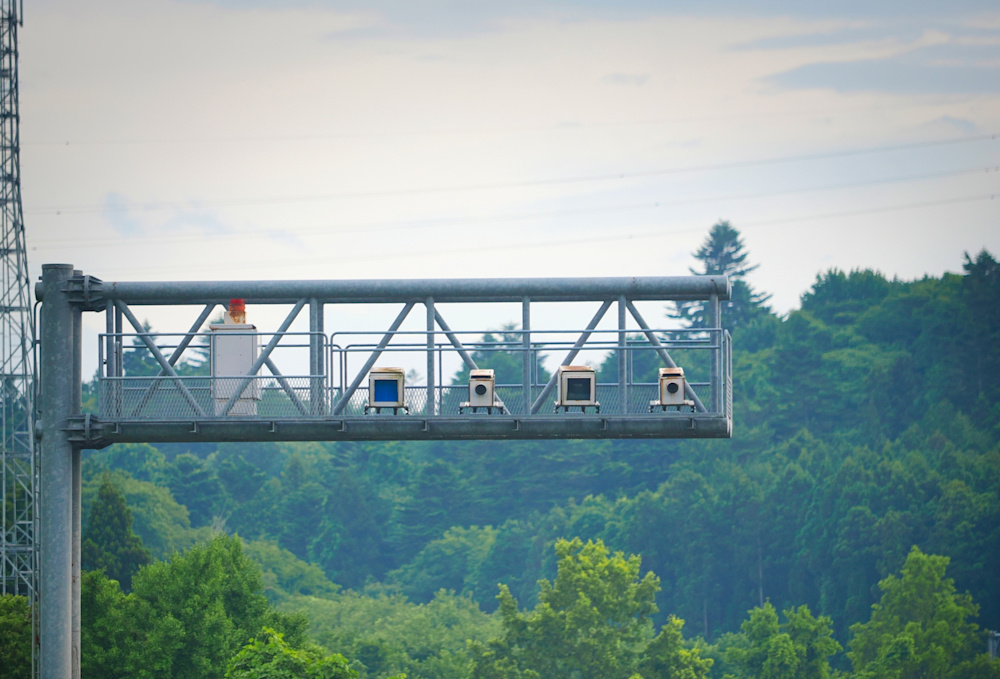
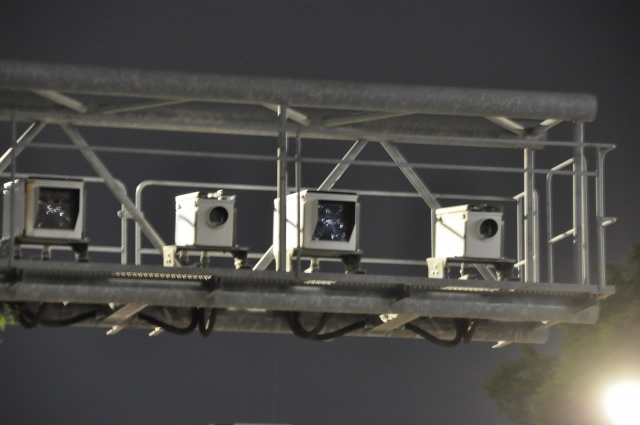
Fixed speed cameras are the most visible type of speed enforcement in Japan. These permanent installations are typically large, box-like devices mounted on poles beside the road or suspended above traffic on overhead bridges and gantries.
You'll often spot them on highways, expressways, and near school zones where speeding poses particular risks.
These cameras work automatically, photographing vehicles that exceed the speed limit and capturing essential information like the vehicle's speed, the time of the violation, and the license plate number.
The good news is that Japanese law requires warning signs to be posted before any camera-enforced speed zone. Look for blue square signs with the kanji characters for "speed" (速度 / sokudo) and "control" (取締 / torishimari) to know a camera is ahead.
What's interesting about Japan's system is that speed cameras won't activate for minor speeding. Not always, at least. In some places, they're set to trigger only when you're driving significantly over the limit, which is usually 30 km/h over on regular roads, or 40 km/h over on highways. However, in other regions, the rules may be applied more strictly, so don’t rely on this.
This threshold exists because of legal precedents dating back to 1969 that restrict police from filming individuals unless a criminal offense is being committed.
Portable Speed Cameras (可搬式速度計 / Kahanshiki Sokudokei)
Portable speed cameras are the newer, more flexible option in Japan's speed enforcement arsenal. These smaller devices can be mounted on tripods and placed virtually anywhere, making them particularly effective for temporary speed enforcement operations.
You're most likely to encounter them during special enforcement periods like Golden Week, on school routes, or in tourist areas. If you're caught by a portable speed camera, you'll typically be stopped by a police officer down the road who will issue your ticket on the spot.
However, some newer portable systems can operate like fixed cameras, photographing your vehicle and sending a notice to your registered address within days to a month after the violation.
Radar Speed Detection (レーダー式速度測定機 / Rēdāshiki Sokudo Sokuteiki)
Radar-based systems represent another category of speed enforcement in Japan. These devices use radar waves to measure vehicle speed and can be either handheld by officers or mounted in fixed positions.
You might encounter different variations of radar systems, including the H-system, which combines radar technology with infrared sensors and a digital system that sends photos directly to local police stations.
There's also the LH-system, which combines loop coils embedded in the road with digital photography. These loop coils look like metal joints in the pavement, making them harder to detect than traditional radar units. The electromagnetic sensors work alongside cameras to catch speeders with high accuracy.
The N System: Not a Speed Camera
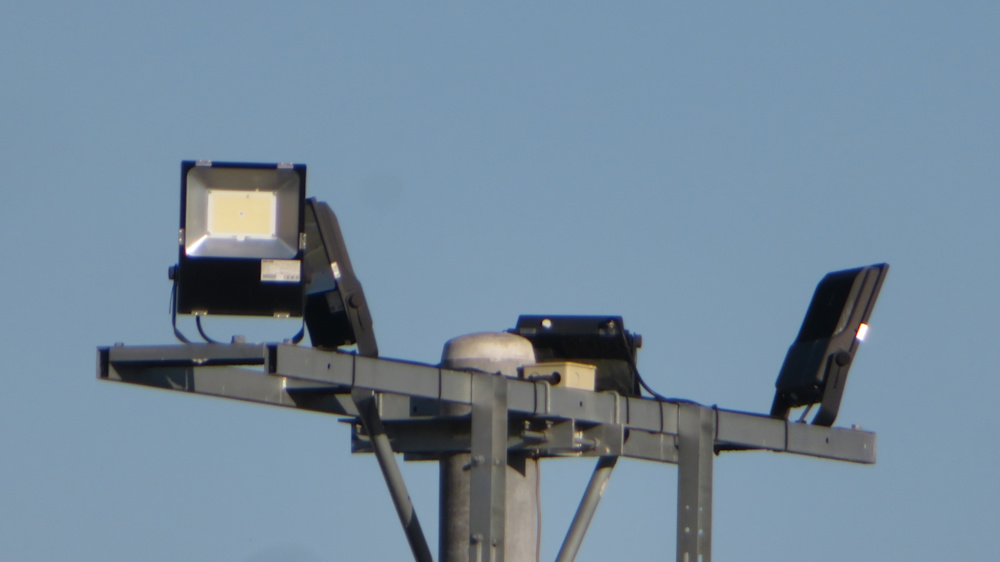
While we're discussing cameras, it's worth mentioning the N System cameras you'll see throughout Japan.
These look remarkably similar to speed cameras but serve a different purpose. N System cameras continuously read and record license plate numbers to track all vehicle movements.
They're primarily used by police to locate stolen vehicles or track suspects, not to enforce speed limits. So if you spot a camera but don't see the telltale square radar box next to it, it's likely an N System camera.
Understanding A Speeding Ticket in Japan
Japan has a color-coded ticket system that might seem confusing at first, but it's actually quite straightforward once you understand the categories. The ticket color you receive determines the severity of the violation and what comes next.
White Tickets: Minor Infractions
White tickets are issued for the least serious violations, such as not wearing a seatbelt, failing to use a child seat, or not wearing a helmet on a motorcycle. These tickets don't carry fines but add demerit points to your record.
Think of these as warnings with actual consequences. Once you accumulate enough points, you might face license suspension.
Blue Tickets: Moderate Violations
Blue tickets cover more serious offenses, including speeding up to 30 km/h over the limit on regular roads or up to 40 km/h over on highways. Other violations include running red lights, using a mobile phone while driving, and illegal parking.
While these are technically criminal offenses, you can avoid prosecution by paying the fine within seven days. Blue ticket fines, called "hanrikin," vary based on the violation and vehicle type. Speeding fines typically start around ¥9,000 and increase by ¥3,000 increments for every 5 km/h over.
Blue tickets come with 1 to 6 demerit points depending on severity. Speeding less than 20 km/h over the limit gives you 1 point, while speeding 30 to 35 km/h over the limit adds 3 points.
Payment must be made in cash at a bank or post office within seven days. Just keep in mind that no installment plans, ATMs, or convenience store payments are accepted.
Red Tickets: Serious Offenses
Red tickets represent the most serious violations in Japan. Your license is immediately suspended upon receiving one, regardless of your previous record.
Red ticket offenses include excessive speeding (over 30 km/h on regular roads or 40 km/h on highways), driving without a license, drunk driving, and hit-and-run accidents.
Red tickets carry severe penalties, including criminal fines and imprisonment. Extreme speeding violations, such as going 50 km/h or more over the limit, can result in up to six months in prison or fines up to ¥100,000.
Paying alone doesn’t settle the matter, and you must appear in court for full prosecution.
Understanding the Points System: Speeding Fines in Japan
Japan operates on a demerit point system where points accumulate on your driving record over three years. The more serious the offense, the more points you receive.
When you first get your license, you start with zero points, and you want to keep that number as low as possible.
License suspensions kick in based on your accumulated points and past driving record. For drivers with a clean record and no previous violations, you'll face a 30-day suspension at 6 points, 60 days at 9 points, and 90 days at 12 points. Your license gets revoked entirely at 15 points.
However, if you've had previous violations or suspensions in the past three years, you'll face penalties at much lower point thresholds.
For foreigners driving on an International Driving Permit, points don't accumulate in the traditional sense, but you can still receive tickets, fines, and even jail time for violations. Most importantly, any violations you commit while driving with an IDP will make it difficult, or in serious cases, impossible to convert to a Japanese driver's license later.
When Speeding Causes Injury or Property Damage: Speeding Violation in Japan
While regular speeding tickets are one thing, the consequences become far more severe when speeding results in accidents that injure or kill others.
In case you didn’t read our post on learning about laws in Japan for foreigners, Japan takes traffic accidents extremely seriously and has specific criminal charges for drivers whose negligence causes harm.
Negligent Driving Resulting in Injury or Death
Under Japanese law, if a driver fails to exercise proper care while operating a vehicle and causes injury to another person, they can be charged with "Negligent Driving Resulting in Injury."
This charge applies regardless of whether the driver was speeding at the time. What matters is that their negligence led to the accident.
The penalty for negligent driving resulting in injury is up to seven years of imprisonment or a fine of up to one million yen. If the negligence results in someone's death, it's classified as "Negligent Driving Resulting in Death" and carries the same maximum penalties.
In addition to criminal punishment, drivers face administrative penalties, including substantial demerit points on their driving record.
Dangerous Driving Causing Death or Injury
For more egregious cases, prosecutors may pursue charges of "Dangerous Driving Causing Death or Injury," which carries much harsher penalties.
This charge applies when drivers engage in particularly reckless behavior, such as driving at speeds that make it difficult to control the vehicle, driving under the influence of alcohol or drugs to the point where normal driving is impossible, or deliberately engaging in dangerous maneuvers.
If convicted of dangerous driving resulting in injury, offenders face up to 15 years of imprisonment. If the dangerous driving causes death, the sentence is imprisonment for a maximum of 20 years.
These cases are taken extremely seriously by Japanese courts, and public pressure often leads prosecutors to pursue the harshest charges possible.
Recent high-profile cases demonstrate how seriously Japan treats dangerous driving. In 2024, a driver who killed someone while traveling at 194 km/h in a 60 km/h zone received an eight-year prison sentence after the charge was upgraded from negligent driving to dangerous driving due to public pressure and a petition by the victim's family.
The Legal Speed Limit in Japan, Explained
According to Japanese traffic law, the statutory speed limit is 60 km/h on regular roads and 100 km/h on expressways if no signs are posted. However, posted limits often differ depending on road conditions, location, and infrastructure.
Urban streets typically have 30 to 40 km/h limits, especially in residential areas.
Many narrow roads without center lines are limited to 30 km/h to protect pedestrians and cyclists.
Rural mountainous areas often have 40 to 50 km/h limits due to winding roads and limited visibility.
Expressway limits vary considerably. The highest legal speed in Japan is 120 km/h on select sections of the Shin-Tōmei and Tōhoku Expressways, but most expressways maintain 80 to 100 km/h limits. Many feature variable speed limits that adjust based on traffic, accidents, construction, or weather. Digital signs display these changing limits; when blank, the statutory limit applies.
It's worth noting that in practice, many Japanese drivers tend to drive slightly over the posted limit on major roads. While there's no official tolerance for speeding, enforcement generally kicks in around 10-20 km/h over the limit on expressways and slightly less on regular roads.
But this doesn't mean speeding is acceptable. You're still breaking the law and can be ticketed.
If you’re interested in understanding more about driving regulations, check out our posts on getting a driver's license in Japan and general traffic rules in Japan to navigate the country's roads safely.
Important Road Signs to Know to Avoid Speeding Fines in Japan
Japanese road signs follow international standards for the most part, making them relatively easy to understand even if you can't read Japanese. However, a few key signs are worth memorizing, particularly those related to speed limits and traffic control.
Maximum Speed Limit Signs
Maximum speed limit signs are circular with a red border and white background, displaying the speed limit in kilometers per hour.
These are straightforward and similar to what you'll find in many other countries. The number shown is the absolute maximum you're allowed to drive, not a suggestion.
Minimum Speed Limit Signs
One sign that surprises many drivers in Japan is the minimum speed limit sign. This blue circular sign displays a number underlined in white, indicating the minimum speed you must maintain.
These signs are most commonly found on highways and express lanes to prevent traffic blockage from slow-moving vehicles.
Stop Signs (止まれ / Tomare)
Japan's stop sign is distinctive.
It's a red inverted triangle with the white kanji "止まれ" (tomare) meaning "stop." Unlike octagonal stop signs in many countries, Japan's triangular design has been in use since 1963.
Don’t forget that the law strictly enforces complete stops at these signs. Even if you slow down significantly but don't come to a complete halt, you can be ticketed. Many drivers learn this lesson the hard way with a ¥7,000 fine and 2 demerit points.
Slow Down Sign (徐行 / Jokō)
Another potentially confusing sign is the "Slow Down" sign, which also uses a red inverted triangle but with different kanji.
This instructs drivers to slow to a safe speed at which they can stop immediately if necessary, which is typically around 10-15 km/h. Don't confuse this with the "yield" signs you might be familiar with from other countries.
Speed Camera Warning Signs
As mentioned earlier, Japanese law requires warning signs before camera-enforced zones. These blue square signs display the kanji for "speed" (速度) and "control" (取締).
When you see these signs, it's your cue to double-check your speedometer and ensure you're within the posted limit.
Speed Camera Detection Apps
While we're certainly not encouraging speeding, it's worth mentioning that several navigation apps in Japan can detect and alert you to speed cameras and other monitoring devices.
Many drivers use these apps not just to avoid tickets, but to identify areas where other drivers tend to speed, allowing them to be extra alert while driving.
Most of these services operate on a subscription model, though many offer free basic features. It's worth noting that these apps are primarily available in Japanese, so some language ability or willingness to navigate through translation apps may be necessary.
Yahoo! Car Navi (Yahoo! カーナビ)
Yahoo! Car Navi is one of Japan's most popular free navigation apps, offering comprehensive route guidance, real-time traffic information, and speed camera alerts. The app displays icons for speed cameras (called "Orbis" in Japanese), stop signs, and various road hazards directly on the map.
One useful feature is the app's integration with JARTIC (Japan Road Traffic Information Center) data, which provides up-to-the-minute traffic congestion information and road closures. While the basic features are free, a Premium subscription offers enhanced Orbis detection and additional features.
The main limitation is that the interface is currently only available in Japanese. However, the visual icons and map interface are intuitive enough, allowing many non-Japanese speakers to successfully use the app.
NAVITIME and CAR NAVITIME
NAVITIME offers several navigation solutions, with CAR NAVITIME being specifically designed for drivers. Unlike many of its competitors, CAR NAVITIME includes English language support, making it accessible to foreign residents and visitors.
The app provides comprehensive car navigation features, including route search, voice guidance in English, real-time traffic information, and speed camera alerts.
CAR NAVITIME works even without a network connection, as it downloads map data to your device. The app requires about 2.7GB of storage space and a WiFi connection for the initial download. Features include a dashcam function, 3D skyview, vehicle maintenance logs, and routes specifically designed for trucks and motorcycles.
NAVITIME also offers the Japan Travel app for tourists, which provides navigation, transit information, and destination details in multiple languages, including English, Chinese, Korean, and Thai. While primarily focused on public transportation, it also includes basic car navigation features.
Orbis Guide (オービスガイド)
Orbis Guide specializes specifically in speed camera detection. The app maintains an extensive database of both fixed and mobile speed camera locations throughout Japan.
While more limited in overall navigation features compared to the above apps, its focused approach makes it a useful supplementary app for drivers who already have a primary navigation solution.
Conclusion: Japanese Speed Cameras and Avoiding Japan Speeding Fines
Understanding speed cameras and enforcement in Japan is just one part of safe driving.
The country's roads are generally well-maintained, and most drivers follow the rules carefully. Still, speed cameras play an important part in Japan's traffic safety, helping reduce accidents and encourage responsible driving habits.
Whether you're a long-term resident working to understand traffic rules in Japan or planning to rent a car for a road trip, knowing how the speed camera system works also helps you avoid unnecessary fines.
The best approach is simple: Follow the posted speed limits, watch for warning signs, and drive safely. If you're unsure about local speed limits or road rules, consider getting proper car insurance coverage in Japan to protect yourself in case of accidents.


Japan Dev Team
This post was written by our Japan Dev editorial team.
- Quality Assurance Engineer (Embedded Systems)
- Mujin
- Tokyo
- ¥6M ~ ¥8M
- Product Manager (Hardware Lifecycle & Supply Chain)
- Mujin
- Tokyo
- ¥6M ~ ¥10M
- Senior Software Engineer — Platform (Atlas)
- MeetsMore
- Tokyo
- ¥7M ~ ¥11M
- Senior SRE
- MeetsMore
- Tokyo
- ¥7M ~ ¥11M
- Senior Security Engineer
- MeetsMore
- Tokyo
- ¥7M ~ ¥11M


Latest Tech Jobs 🇯🇵
Explore the top developer jobs in Japan for foreigners
- Quality Assurance Engineer (Embedded Systems)
- Mujin
- Tokyo
- ¥6M ~ ¥8M
- Product Manager (Hardware Lifecycle & Supply Chain)
- Mujin
- Tokyo
- ¥6M ~ ¥10M
- Senior Software Engineer — Platform (Atlas)
- MeetsMore
- Tokyo
- ¥7M ~ ¥11M
- Senior SRE
- MeetsMore
- Tokyo
- ¥7M ~ ¥11M
- Senior Security Engineer
- MeetsMore
- Tokyo
- ¥7M ~ ¥11M
- Robotics Data Engineer
- Omakase Robotics
- Tokyo
- Full Stack Engineer
- Omakase.ai
- Tokyo
- Machine Learning Manager, App SW
- Wayve AI
- Tokyo




Get Job Alerts
Sign up for our newsletter to get hand-picked tech jobs in Japan – straight to your inbox.

© 2026 Japan Dev. All rights reserved.
Proudly built in Tokyo.


Curated with 💙 in Tokyo
All our data is gathered from publicly available sources or contributed by users