



Updated June 26, 2026
Working with Muslim Employees in Japan: A Practical Guide for HR Teams
This article is for you. The HR manager, team lead, or employer in Japan who has a Muslim colleague joining the team, or wants to be ready when one does.
You don't need to be an expert in Islam to create a good environment for Muslim employees.
You only need to understand a few practical things.
Like what daily prayers look like at the office, what halal means beyond "no pork," how Ramadan affects a workday, and how to handle questions and requests with confidence rather than awkwardness.
This guide covers all of it. No overload. Only what you actually need to know to be a good employer to a growing part of Japan's workforce.
Why Japanese HR Teams Need to Think About This Now
Japan's Muslim community is the fastest-growing religious minority in the country. According to research by Waseda University professor Hirofumi Tanada, the population has grown from roughly 185,000 in 2010 to around 420,000 by the end of 2024. That's a 3.8-fold increase in about 20 years. The number of mosques has followed the same growth, going from only 24 in 2001 to around 160 locations in Japan as of mid-2025.
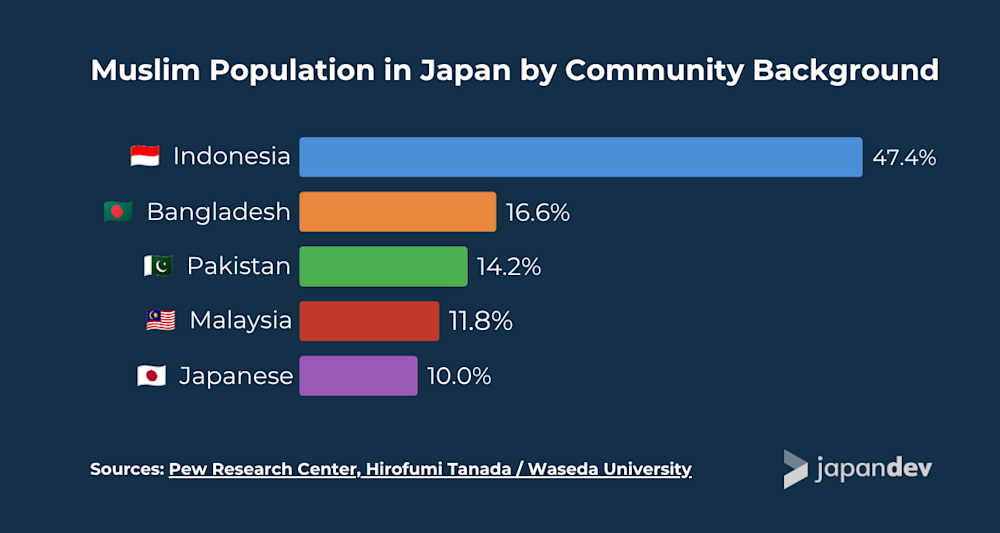
About 90% of Muslims in Japan are foreign nationals. The largest group comes from Indonesia, at roughly 200,000 people and almost 50% of the Muslim population in Japan. Bangladeshis, Pakistanis, and Malaysians follow closely behind at 16%, 14.2% and 11.8%. Japanese converts make up the remaining 10%.
Here's where Muslim communities are concentrated in Japan:
City / Region |
Population |
Tokyo (Shinjuku, Hachioji areas) Utsunomiya city (Tochigi) |
Largest concentration; multiple mosques |
Nagoya |
Growing masjid network; large South Asian community |
Osaka |
Significant Indonesian and Pakistani communities |
Fukuoka |
Small but active community |
Hamamatsu city (Shizuoka) |
Large South Asian and Middle Eastern population |
As Japan opens its doors to more foreign talent, the number of Muslim professionals in the tech sector is rising too. For companies that want to hire from Indonesia, Pakistan, Bangladesh, Malaysia, or the broader Muslim world, building a welcoming environment now will set you ahead of companies that wait until it becomes a problem to solve.
If you want to check a Muslim professional's view of what daily life and work in Japan actually look like, take a look at our article about Being Muslim in Japan: What Daily Life and Work Really Look Like.
What Does Islam Actually Need? The Practical Basics
You don't need a theology degree. But a basic understanding of Islamic practice is enough.
Islam is built on five pillars, and two of them have a direct impact on the workplace:
Salah (prayer / 礼拝): Muslims pray five times a day at times set by the sun's position. Each prayer takes 5 to 7 minutes. Two to four of these prayers will fall within a standard 8-hour workday, depending on the season.
Sawm (fasting / 断食): During Ramadan, the ninth month of the Islamic lunar calendar, Muslims fast from dawn to sunset. No food, no water, no smoking during daylight hours. This runs for about 30 days and shifts roughly 10 to 11 days earlier each year.
Three more things matter at the workplace level, even if they aren't formal pillars:
Halal (permitted food / ハラール): Muslims eat food that meets halal requirements. This goes beyond avoiding pork. Alcohol, blood, certain animal byproducts, and meat not slaughtered in the Islamic way are also not permitted.
Modest dress: Muslim women may wear a hijab (headscarf) or other modest clothing. Muslim men may have beards or wear certain types of clothing for religious reasons.
Jumu'ah (Friday prayer): Friday midday congregational prayer is obligatory for Muslim men. It happens once a week, typically between 12 PM and 2 PM, and requires a trip to a mosque.
That's the foundation. Everything else in this guide builds from these five things.
Muslim Prayer Times in Japan: What HR Teams Need to Know
This is the area where the most friction occurs, and it's the one where a small shift in understanding prevents the most problems.
Prayer times in Japan shift with the seasons, because they follow the sun's position rather than a fixed clock. This means a Muslim employee's schedule will look different in July than it does in December. There's no single timetable you can write into a policy document and use all year.
Here's a rough picture of how prayer times map to a typical workday across seasons:
Prayer |
Approximate Time (Summer) |
Approximate Time (Winter) |
During Work Hours? |
Fajr (Dawn) |
~4:00 AM |
~6:30 AM |
No |
Dhuhr (Midday) |
~12:00 PM |
~11:45 AM |
Yes |
Asr (Afternoon) |
~3:30 PM |
~2:30 PM |
Yes |
Maghrib (Sunset) |
~7:00 PM |
~4:30 PM |
Sometimes |
Isha (Night) |
~8:30 PM |
~6:30 PM |
Sometimes |
On a standard workday, a Muslim employee will need to pray two to four times during working hours. Each prayer takes 5 to 7 minutes. The employee manages their own timing, but they do need access to a quiet, clean space.
Does the company need a dedicated prayer room?
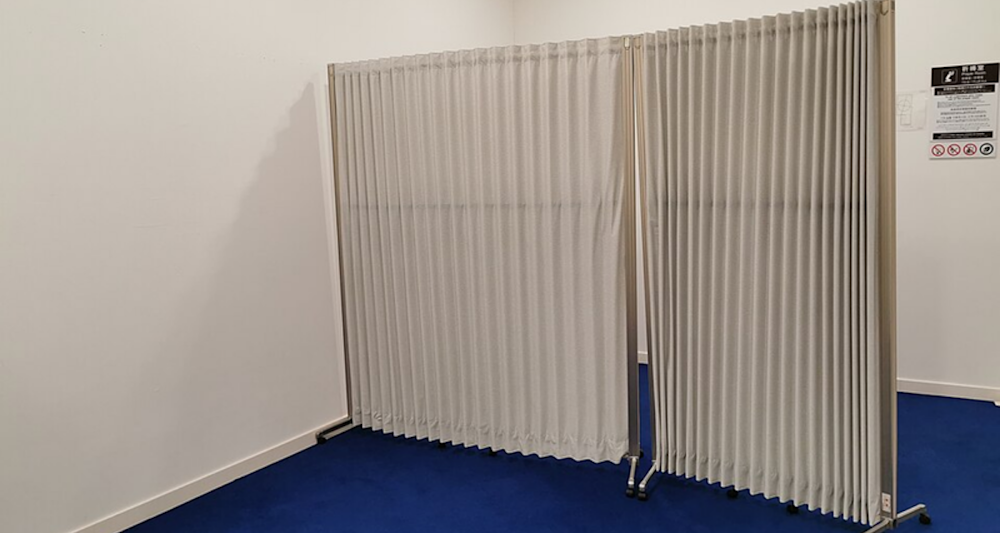
Prayer Area in Tokyo, Japan
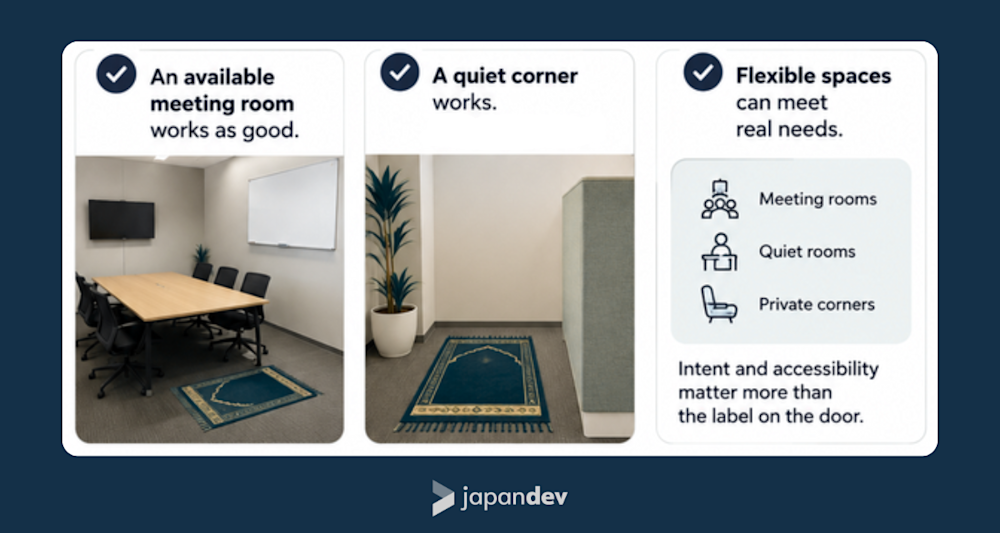
No. A designated prayer room is a bonus, not a rule. An available meeting room might be ideal but a quiet corner works as well (see image above). What matters is that the employee can access a private, reasonably clean space without needing to fill out a request form every time.
Toshiba set up a prayer room at their Tokyo headquarters and a second one at their Kawasaki facility. HENNGE provides a dedicated prayer and meditation room. But if your office isn't there yet, start with the meeting room. The symbolic act of making space matters more than the physical specifications of the room.
What about Jumu'ah, the Friday midday prayer?
Jumu'ah is the weekly Friday congregational prayer, obligatory for Muslim men. Unlike daily prayers, it requires going to a mosque, which takes travel time on top of the prayer itself. A standard 1-hour lunch break is often too short.
Two arrangements that Japanese companies have used successfully:
Offer an extended 2-hour lunch break on Fridays, with the employee compensating through overtime later that day or during the week.
Negotiate a Friday-off arrangement in exchange for working a weekend day, such as Saturday.
Neither requires a formal policy change. A direct conversation or a written agreement between the manager and employee is often enough. Companies with flextime or remote work policies will have easier conversations.
Ramadan, Eid, and the Muslim Calendar: What to Put on Your HR Calendar
Islamic holidays follow the lunar calendar. Unlike national holidays. Which means they shift roughly 10 to 11 days earlier every year. This catches many HR teams off guard. The fix is simple: add Ramadan and Eid to your HR calendar at the start of each year. Check Japan Muslim Work Guide & Prayer Times for extra information.
In 2026, Ramadan runs from approximately February 18 to March 19. In 2027, it will begin around February 7.
What Ramadan looks like at the office
During Ramadan, Muslim employees fast from dawn to sunset. No food, no water during daylight hours. The physical reality of this varies by season.
Summer Ramadan in Japan: Fasting hours run up to 16 to 18 hours a day. It is demanding. Some employees may have lower energy levels, especially toward the end of the day.
Winter Ramadan in Japan: Fasting hours are around 11 to 12 hours, which is more manageable.
What this means for managers:
As much as possible try to avoid scheduling high-stakes presentations. Or physically demanding tasks. Especially in the late afternoon during Ramadan, when energy is lowest.
Sunset (Maghrib prayer / Iftar, the breaking of the fast) is a significant moment. A 15-minute break at sunset, or the ability to adjust break time to align with Iftar, makes a great difference.
Most Muslim employees will not ask for Ramadan to change the structure of their workday. They want to manage it themselves. What they do appreciate is a manager who is aware, flexible with small things and does not make them explain themselves from scratch every time.
Eid (Islamic Holiday) and time off
There are two Eid celebrations in the Islamic year:
Eid al-Fitr: Marks the end of Ramadan. Lasts one to three days.
Eid al-Adha: The Festival of Sacrifice, occurring roughly 70 days after Eid al-Fitr and lasts one to three days.
Neither is a public holiday in Japan. Muslim employees typically request annual leave for these days. But because the dates shift each year, they may not know the exact dates far in advance. Try to build some flexibility into how they submit requests during these periods. Try not to schedule company-wide events or mandatory training on Eid dates once you know them.
Halal Food: Small Effort, Big Impact
Here's what halal actually means in a workplace context. Many HR teams think "halal" means "no pork." It's more specific than that. Halal-prohibited items include:
Pork and pork-derived ingredients (including gelatin, lard, and some emulsifiers)
Alcohol, including mirin (みりん), a common Japanese cooking wine used in sauces and marinades, some soy sauces, and other condiments
Meat that hasn't been slaughtered according to Islamic guidelines
Blood or blood products
This includes most of the standard Japanese cuisine. Yakitori, tonkatsu, ramen broths, and most convenience store meals are not halal by default. Even dishes that look safe may contain mirin or pork extract as a hidden seasoning.
What this means for team events
You don't need to overhaul the event. You can send one email before it.
Ask your Muslim colleague in advance what they can and can't eat, and whether the venue can accommodate. If the event is a nomikai centered on alcohol, check whether a different format might work better for that occasion, or provide a variety of non-alcoholic beverages that everyone can enjoy.
Halal-friendly restaurant options to look for in Japan:
Indian and South Asian restaurants: Most use halal-certified meat and don't use alcohol in cooking. Widely available in major cities.
Middle Eastern restaurants: Mostly halal by design. Available in Tokyo, Osaka, and Nagoya.
Chinese Muslim (Halal Chinese) restaurants: Cities with large Chinese Muslim communities, such as parts of Tokyo and Osaka.
Indonesian and Malaysian restaurants: Halal-certified and clearly labeled.
Halal-certified Japanese restaurants: Growing in number, especially in Tokyo and tourist areas. Check Google Maps for "ハラール" (halal-compatible) or Halal Gourmet Japan.
Some companies, like HENNGE, include a halal option at every bi-monthly company lunch. The investment is one extra phone call to the caterer. But it carries a big impact. It shows that employees and their dietary needs are considered.
Check our halal food in Japan guide for a useful resource to share during onboarding.
Understanding Modest Dress: Hijabs, Beards, and Workplace Appearance
This is a topic that might be difficult for HR teams, because they're not sure what they're allowed to ask or say. The simple answer is: Try to treat religious dress the same way you treat any other personal appearance standard.
Hijabs in the Japanese workplace
A hijab is a headscarf worn by Muslim women as an expression of modesty and faith. Some Muslim women also wear a niqab (face veil) or other forms of modest dress. Wearing the hijab is a religious obligation for many Muslim women, not a personal preference that can be requested away.
Japan's Labor Standards Act prohibits discrimination based on nationality and creed. More importantly, it puts your company on the wrong side of a trend that is only moving in one direction as Japan internationalizes.
A practical concern that comes up is uniforms or safety gear. Some workplaces have a strict uniform policy. Work with the employee to find a solution that meets the dress code needs and accommodates modest dress.
This is manageable in most cases. Sometimes, minor adjustments, such as allowing an undercap beneath a hard hat, or approving a longer-sleeved version of a standard uniform.
Beards and grooming
Many Muslim men grow beards for religious reasons. If your company has a no-beard policy, review whether it is necessary for safety or hygiene reasons, or whether it is a convention that can be adjusted. Requiring a Muslim man to shave his beard as a condition of employment can hurt trust before the working relationship has even started.
How Muslim Employees Will Approach You, and How to Respond
Most Muslim professionals who've worked internationally have experience with these conversations. They know how to be direct without being confrontational. They will hopefully come to you during the interview or onboarding stage rather than waiting until a problem arises.
Here are the questions you're most likely to hear, and what the employee is actually asking:
Question from Employee |
What They're Really Asking |
"Would it be possible to use a meeting room for prayer breaks?" |
Is this company flexible enough that I won't have to hide this? |
"How does the company handle Friday lunch schedules?" |
Will I be able to attend Jumu'ah without constant negotiation? |
"Are there halal options at company lunches or team events?" |
Will I be included, or will I sit there? |
"Do you have a prayer room or a quiet space I can use?" |
Is this a company that's thought about this before? |
"How does the team handle Ramadan?" |
Will my manager understand, or will I have to explain this every year? |
The best response to any of these questions is curiosity, not defensiveness. It's completely fine to say, "We haven't set up a formal policy yet, but let's work out what would work for you." That answer is honest and shows good intent.
Questions you can ask Muslim employees to better understand their specific situation:
"Are there prayer times during the workday I should be aware of?"
"Are there any upcoming religious holidays where you might need adjusted leave?"
"Is there anything about our team lunch or social events I should know about in advance?"
"Do you have any preference on how we handle these things as a team?"
Try to keep the tone conversational. You're gathering information to support someone, not conducting a compliance audit. Muslim employees are happy to answer these questions. They would rather explain once than manage confusion for months.
One thing to avoid: Don't ask an employee whether their religious requirements are "really" required or whether they can make exceptions. Questions like "Can you please skip the prayer this once?" or "Can you have a little drink at the nomikai?" show that you see their faith as an inconvenience rather than a part of who they are.
What Good Accommodation Looks Like: Real Examples from Japan
Good accommodation isn't complicated. The companies doing it well aren't spending large amounts of money or rewriting their HR policy from scratch. They're making a small number of deliberate decisions and communicating them clearly.
HENNGE
HENNGE provides the following:
Dedicated prayer and meditation room for Muslim employees
Halal option included at every bi-monthly company lunch
No special request system required for either
Toshiba
Toshiba set up prayer rooms at two locations: their Tokyo headquarters in Hamamatsucho and their Smart Community Center in Kawasaki. The decision came directly from leadership, framed as part of a broader commitment to building a global workforce. Their cafeteria doesn't serve halal-certified food, but they display all ingredients with clear illustrations so employees with dietary restrictions can make informed choices without having to ask every time.
Toshiba also uses a flextime system that Muslim employees can use during Ramadan to adjust their hours around fasting and prayer. That flexibility didn't get built for Ramadan. It was already there, and it happens to work perfectly for it.
Rakuten
Rakuten introduced a halal menu at their company cafeteria in 2014, starting with a request from a Muslim employee. Before launching, they held tasting sessions and idea-sharing meetings that included Muslim staff. The process mattered as much as the outcome. Halal meals are cooked separately from other food, using dedicated halal gloves and alcohol-free sterilizers.
When Rakuten moved their headquarters to Futagotamagawa, they built a dedicated prayer room into the new office from the start. Not as an afterthought. As part of the plan.
Yokowo
Yokowo is a manufacturer based in Gunma Prefecture, not a tech company. But their approach is worth noting. They have a subsidiary in Malaysia and actively recruit Malaysian workers to their Japanese factory. To make that recruitment work, they added halal options to the employee cafeteria, solving one of the first practical concerns any Muslim worker has when considering a move to Japan. The result: a stronger pipeline of skilled workers who know their daily needs have been thought about.
Yanmar
Yanmar, the machinery manufacturer, launched a Muslim-friendly menu at their head office cafeteria in Osaka from March 2016. Alongside the food change, they set aside a dedicated prayer room. They didn't wait for a Muslim employee to ask. A cross-departmental team from marketing, general affairs, and HR drove the project, which meant the solution was built with buy-in from across the company rather than sitting on one person's desk.
A New Product Making Prayer Spaces Easier to Install
Not every company has a spare room to convert. A manufacturer in Okayama has a solution for that.
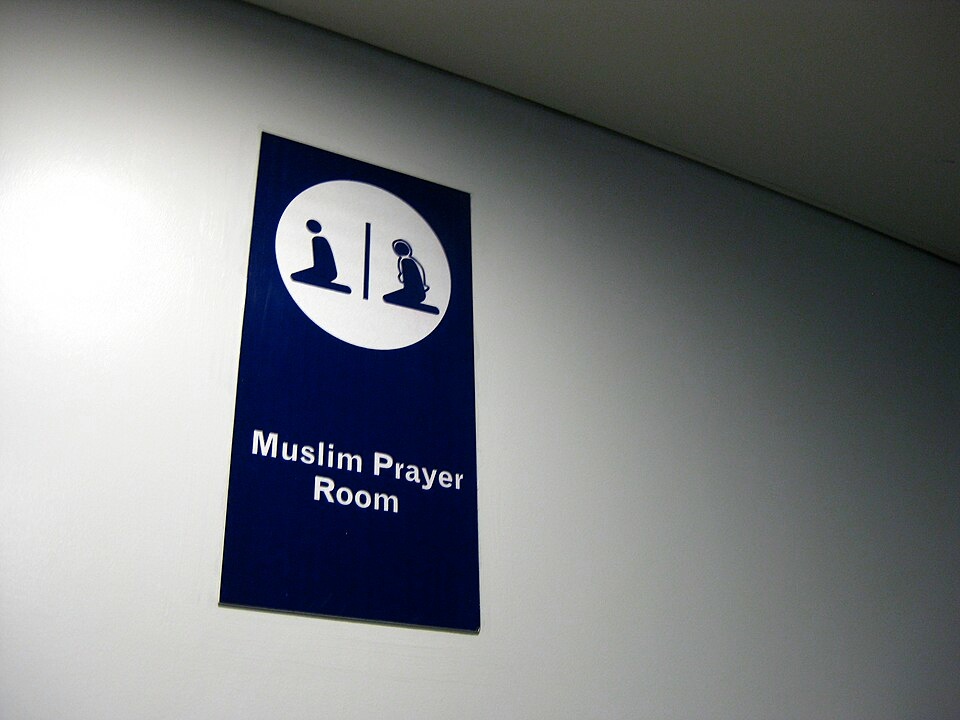
OM Kiki Co., based in Soja, Okayama Prefecture, developed a compact, standalone prayer room called Prayer Space. A staff member came up with the idea after traveling the prefecture with a Muslim friend from Malaysia. He struggled to find anywhere to pray throughout the trip. OM Kiki started selling it in December 2025.
The structure stands 180 cm tall with a 150 x 150 cm floor. The mat is waterproof and easy to clean, and a rotatable qibla marker (prayer direction) on the ceiling. No renovation needed. It goes where you put it.
The demand is there. A survey of 107 Muslim visitors to Japan found that 72% of men and 79% of women said prayer space availability was a factor in choosing a travel destination. The same thinking applies to job hunting. A candidate comparing two offers will notice which employer thought about this.
For companies that want to go further than a meeting room but aren't ready to build, Prayer Space is a straightforward option worth knowing about.
What companies with strong flextime policies do naturally:
Flextime and remote work policies give Muslim employees the autonomy to manage their own prayer times without asking permission.
Friday Jumu'ah arrangements handled as a direct manager-employee conversation. Not a formal HR process.
Ramadan energy level adjustments treated like any temporary schedule modification
The pattern across all these examples is the same. The company made a decision at the leadership level. Inclusion was a priority, and then the specifics were to be worked out between managers and employees. No committee or lengthy policy documents.
If you're looking to hire Muslim professionals from Indonesia, Pakistan, Bangladesh, and beyond, the companies listed on Japan Dev are a strong reference point for what a welcoming, internationally minded employer looks like in Japan.
A Note on Work-Life Balance
Companies that accommodate Muslim employees well tend to already have good work-life balance policies in place. That's not a coincidence.
Flexible hours, trust-based time management, and freedom from excessive overtime are the same things that make it possible for a Muslim employee to pray, attend Jumu'ah, and break the Ramadan fast at sunset. These aren't only special accommodations for one group. They're signs of a company that respects its employees' lives outside the office.
If your company struggles to offer basic flexibility, that's worth thinking about regardless of Muslim accommodation. Companies that are serious about building international teams need these foundations in place. Our guide on work-life balance in the Japanese tech industry is a useful starting point for evaluating where your company stands.
Final Thoughts
Let's be direct about the economics.
The basics, a prayer area, a halal option at lunches, a short team briefing, and flexible Fridays cost little. A meeting room that's already there. A phone call to a caterer. A 15-minute Zoom session for the team. An HR calendar reminder added once a year.
The return is access to a growing global talent pool that is always looking for employers who have thought about their needs. Software engineers from the Muslim world are skilled, mobile, and paying attention to which companies signal openness and which don't.
Building a Muslim-friendly working environment in Japan doesn't need a policy overhaul. But it requires awareness. A willingness to have direct conversations, and a few deliberate choices made before someone has to ask.
The companies that get ahead of this now will be the ones with the best talent pipelines five years from now.

Hasan Ali
Born and raised in Libya, Hasan spent the last 6 years exploring Japanese culture while living in Nagano and Aichi. His journey began at a high school in the town of Karuizawa, followed by a Bachelor of Business in Nagoya. Professionally, He is an SEO and content specialist with over 3 years of experience crafting digital strategies. When not working, He is trying to catch up on his goal of visiting every single prefecture in Japan.
- SRE - DataOps/MLOps
- Autify
- Tokyo
- ¥8.5M ~ ¥10M
- Software Engineer
- Solafune
- Tokyo
- ¥7M ~ ¥10M
- Senior Software Engineer
- Solafune
- Tokyo
- ¥10M ~ ¥13M
- Cybersecurity Document Creation Support
- Solafune
- Tokyo
- ¥5M ~ ¥7.5M



Latest Tech Jobs 🇯🇵
Explore the top developer jobs in Japan for foreigners
- SRE - DataOps/MLOps
- Autify
- Tokyo
- ¥8.5M ~ ¥10M
- Software Engineer
- Solafune
- Tokyo
- ¥7M ~ ¥10M
- Senior Software Engineer
- Solafune
- Tokyo
- ¥10M ~ ¥13M
- Cybersecurity Document Creation Support
- Solafune
- Tokyo
- ¥5M ~ ¥7.5M
- Security Verification Engineer (Cyber Defense - Gov't Project)
- Solafune
- Tokyo
- Up to ¥8.5M
- Engineering Manager, Money Forward Cloud, Fukuoka
- Money Forward
- Fukuoka
- ¥10M ~ ¥15M
- SRE and Platform Engineering Lead, Platform Department 2, Tokyo
- Money Forward
- Tokyo
- ¥7.9M ~ ¥15M
- AI Tech Lead (Context & Harness), CTO Office
- Money Forward
- Tokyo
- ¥7.9M ~ ¥15M


Get Job Alerts
Sign up for our newsletter to get hand-picked tech jobs in Japan – straight to your inbox.

© 2026 Japan Dev. All rights reserved.
Proudly built in Tokyo.


Curated with 💙 in Tokyo by Eric Turner
All our data is gathered from publicly available sources or contributed by users