



Updated December 8, 2025
Electric Scooters in Japan: What's the Deal?
Kick scooters, also called electric scooters or e-scooters for short, have become widespread.
E-scooters can be a great alternative to public transport and cab rides. They offer a convenience that wasn’t available before. They’re also more cost-effective and accessible, which is why most foreigners who come here wonder: Is scooter rental an option in Japan?
The short answer is yes, scooter rentals are available in Japan. In this article, I'll explain all about scooter rentals work in in Tokyo and other major cities.
I’ll start with the basics and explain how to use electric scooters in Japan and proceed by introducing the most popular kick scooter brands here, plus their pros and cons.
First Things First: Are Electric Scooters Legal in Japan?
While the sudden popularity of e-scooters may have sort of landed them in a legal grey area in some countries, scooter rental in Japan is perfectly legal. In fact, these vehicles are slowly becoming a vital part of daily life in Japan’s big cities like Tokyo, Osaka, Kyoto, along with many other smaller cities.
This means that you can ride the scooters you see around you, as long as you go through the dedicated process in the app, and abide by the rules, of course.
While the legal concerns regarding e-scooters were more of a thing in the past, in the last couple of years, things have changed.
With the adjustments made to the Road Traffic Law and the creation of a dedicated e-scooter law, riding and renting kick scooters is finally as easy and safe in Japan as it is in other countries.
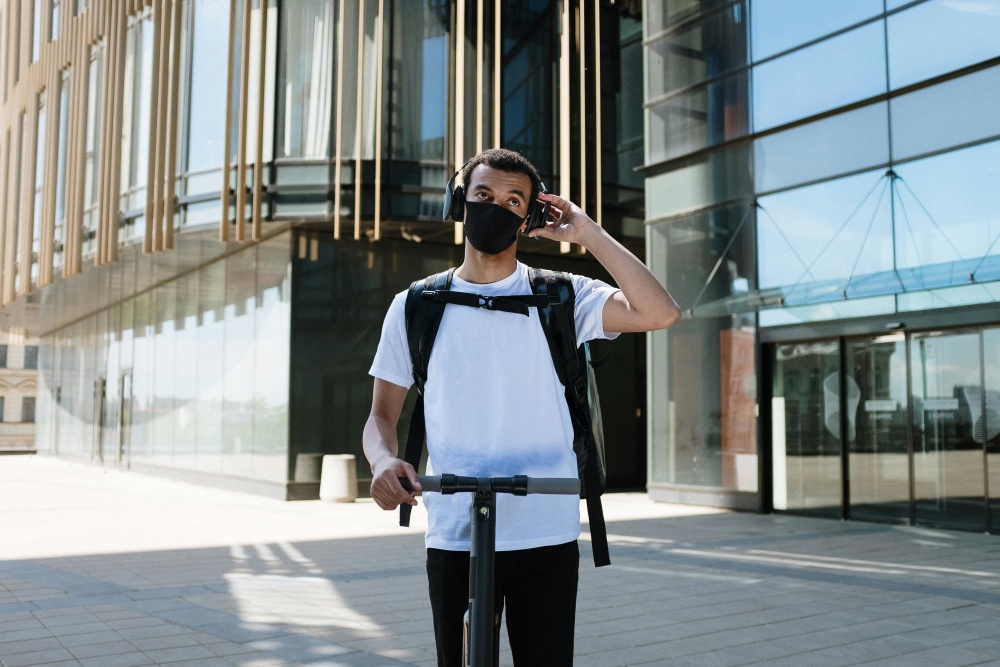
Kick Scooters in Japan: New Regulations, An Increase in E-Scooter Use
Until as recently as two years ago, kick scooters were still legally classified as motorized bicycles in Japan.
This meant that riding one required a driver’s license, as well as wearing a helmet, as a biker would. Luckily, in 2022, the traffic laws have changed, and e-scooters are now classified as Specified Small Motorized Vehicles.
Thanks to the new law, e-scooters are now perfectly accessible to those who don’t have a driver’s license, but also to foreigners whose licenses may not be valid in Japan.
So, it’s no wonder that electric scooters are especially popular among tourists who want to travel short distances but don’t want to take a cab.
As expected, following the new regulations, e-scooters have experienced a surge like never before. Companies have reported a whopping 50% increase in their user numbers as soon as the new laws came into effect.
That said, while a driver’s license isn’t required anymore, there are still some restrictions, and you need to know some basic traffic rules if you want to rent a kick scooter in Japan.
Things To Know Before Riding an E-Scooter in Japan
While you don't need a license to ride an electric scooter in Japan, there are important regulations you need to know. E-scooters that meet certain specifications are classified as specific small motorized bicycles, and ride-sharing companies like LUUP operate under these rules in Tokyo and other major cities.
First, you must be at least 16 years old to ride, and you'll need to provide proof of ID when signing up.
Second, e-scooters have a maximum speed limit of 20 kilometers per hour (about 12 miles per hour), and you must ride on the left side of the road, just like cars and motorcycles. You can also use designated bicycle lanes where available.
Sidewalks are generally off-limits, though there's an exception: If you switch to sidewalk mode (6 km/h with a flashing green light) and the sidewalk has a sign indicating "pedestrians and bicycles only," you can ride there as long as you don't obstruct pedestrian traffic.
Please keep in mind that traffic rules are taken seriously here. Riding under the influence of alcohol is strictly prohibited and carries severe penalties of up to 5 years in prison or fines up to 1 million yen.
You also must obey all traffic signals, come to a complete stop at stop signs, and yield to pedestrians at crosswalks. E-scooters must also make two-stage right turns at intersections, similar to bicycles. Other important rules include no riding double and no phone use while riding.
Lastly, while wearing a helmet is no longer legally required, it's strongly recommended given the increase in e-scooter-related accidents.
As long as you treat the e-scooter like a vehicle, follow traffic laws, and stay mindful of pedestrians, you'll have a safe and convenient ride around town.

Popular Electric Scooter Companies in Japan
Having laid down the ground rules, it’s safe to say that you’re now ready to zoom around town on your two-wheelers, but not before you download an app.
You may already know this, but the most popular e-scooter rental app in Japan is called LUUP. Still, the recent popularity of these vehicles has created a new wave of companies entering the market, allowing for a healthy dose of competition.
Without further ado, let’s now take a look at LUUP and how to use it, and then I’ll introduce some of the alternatives.
How To Use LUUP: Japan’s Most Popular E-Scooter Rental Service
Essentially, LUUP’s popularity in Japan is similar to that of Bird or Lime. In the few short years it‘s been in business, LUUP’s name has simply become one and the same with the concept of renting an e-scooter here.
LUUP is by far the most widespread among its younger competitors. Unless you’re living in the inaka (the countryside), you’ll see the scooters regularly. They’re pretty much available in every big city, most notably Tokyo, Kyoto, Osaka, Kobe, Hiroshima, Nagoya, and Yokohama.
Using LUUP is as simple as downloading the app from Apple’s App Store or the Google Play Store. Once downloaded, you can register and verify your credit card.
However, keep in mind that you’ll need proof of ID at hand to prove you’re at least 16 years old. Another thing to point out here is that you’ll have to take a mini-test about basic traffic rules, which shouldn’t be a problem if you’ve familiarized yourself with the subject beforehand.
Once you’re signed up, all you need to do is:
Find a scooter that’s convenient for you on the map
Scan the QR code on the bike to activate it
Park the vehicle in a designated spot when you’re done riding
Take a picture in the app to complete the ride and pay
While prices can differ, a 30-minute ride usually costs about 200 JPY. Keep in mind that if you’re living in the central areas of big cities like Tokyo, Kyoto, and Osaka, you can get a signup offer for a free, 30-minute ride simply by entering the code NEW RIDE.
Charichari: The Competition
While it’s not quite an e-scooter, ChariChari has emerged as a recent competitor to LUUP in Japan with its bike-sharing service. The company’s coverage is narrower compared to LUUP, given that, for now, you can only find the ChariChari bike ports in Tokyo, Kumamato, Nagoya, and Fukuoka.
ChariChari isn’t your average bike-sharing company, as they offer both regular bikes and e-bikes. The e-bikes have electrical assistance, so you don’t have to worry about arriving at your destination dripping in sweat.
The service is quite affordable too. While regular bike rides cost 6 yen per minute, the e-bike costs 15 yen per minute to ride.
Using ChariChari is as simple as using LUUP, and the process is similar.
All you need to do is:
Download the app on Google Play Store or Apple’s App Store
Register and set up your payment option
Find bike ports on the map
Scan the QR code on the bike and start your ride
End the ride by parking the bike at a bike port near you
I should note that ChariChari doesn’t automatically charge you at the end of your ride, but at the end of the month for all the rides you’ve taken throughout. Also, unlike LUUP, ChariChari doesn’t require proof of ID to sign up.
Concluding Words: TL; DR
With no driver’s license requirement, e-scooters are undeniably rising in popularity in Japan. Notably, LUUP, the e-scooter service that became the name brand in Japan offers e-scooters in the most densely populated areas of Japan.
One requirement that needs to be emphasized, however, is that you do need to be at least 16 years old to ride the e-scooters. To prove this, keep in mind that you also need to present your ID while registering for the LUUP app.
If you’re into biking, a nice alternative can be ChariChari, a bike-sharing company that also offers e-bikes for affordable prices.
While this is all we have on e-scooter services in Japan, if you’re looking for alternative ways to get around, make sure to check out my post on Uber in Japan, where I explained the current state of ride-sharing services.


Japan Dev Editorial Team
This post was written by the Japan Dev editorial team, based on Japanese official sources.
- QA Engineer (ExaEnterpriseAI - 生成AI事業)
- ExaWizards
- Tokyo
- ¥6M ~ ¥9M
- Cloud Platform Engineer (K8S&NW specialist)
- PayPay
- Tokyo
- Quality Assurance Engineer (Embedded Systems)
- Mujin
- Tokyo
- ¥6M ~ ¥8M
- Product Manager (Hardware Lifecycle & Supply Chain)
- Mujin
- Tokyo
- ¥6M ~ ¥10M
- Senior Software Engineer — Platform (Atlas)
- MeetsMore
- Tokyo
- ¥7M ~ ¥11M




Latest Tech Jobs 🇯🇵
Explore the top developer jobs in Japan for foreigners
- QA Engineer (ExaEnterpriseAI - 生成AI事業)
- ExaWizards
- Tokyo
- ¥6M ~ ¥9M
- Cloud Platform Engineer (K8S&NW specialist)
- PayPay
- Tokyo
- Quality Assurance Engineer (Embedded Systems)
- Mujin
- Tokyo
- ¥6M ~ ¥8M
- Product Manager (Hardware Lifecycle & Supply Chain)
- Mujin
- Tokyo
- ¥6M ~ ¥10M
- Senior Software Engineer — Platform (Atlas)
- MeetsMore
- Tokyo
- ¥7M ~ ¥11M
- Senior SRE
- MeetsMore
- Tokyo
- ¥7M ~ ¥11M
- Senior Security Engineer
- MeetsMore
- Tokyo
- ¥7M ~ ¥11M
- Robotics Data Engineer
- Omakase Robotics
- Tokyo


Get Job Alerts
Sign up for our newsletter to get hand-picked tech jobs in Japan – straight to your inbox.

© 2026 Japan Dev. All rights reserved.
Proudly built in Tokyo.


Curated with 💙 in Tokyo
All our data is gathered from publicly available sources or contributed by users