



Updated October 2, 2026
Space and Satellite Companies in Japan: The State of the Industry [Oct 2026]


Japan has been building a serious space sector, even though it hasn’t exactly been getting the attention it deserves.
Private space companies in Japan are launching micro-satellites, building synthetic aperture radar (SAR) constellations, and turning satellite data into tools for agriculture, disaster response, and national security. The government has backed all of this with real money and policy change.
If you want to learn more about the current state of the space industry in Japan, that’s exactly what we cover in this article. We also explain the policies behind it, the market trends shaping it, and a few companies spearheading the field that are worth knowing about, which also happen to be on our Japan Dev company list.
In this article: 📝
The Space Industry in Japan: Trends and Government Policy
The question “Does Japan have an Aerospace Industry?” sometimes comes up from people who associate the space sector primarily with the US, and specifically with companies like SpaceX or NASA programs.
The simple answer is yes, Japan has had a government-led space program through JAXA for decades, but the space industry in Japan has shifted in the past few years.
The government has taken a much more active role, and private capital is following suit. Here are the three main driving factors of this change.
A Shift Away from the Old Model
For most of Japan’s space history, JAXA (the Japan Aerospace Exploration Agency) and a small set of large industrial contractors basically ran the show. The commercial space industry in Japan was tiny by comparison.
That’s been changing, and the pace has picked up in recent years.
For one, Japan has set a target of growing its domestic space industry to JPY 8 trillion (roughly USD 51.6 billion) by the early 2030s. The main funding mechanism is the JPY 1 trillion Space Strategy Fund, administered by JAXA.
Investment decisions today are handled by external experts rather than government officials, which keeps it more commercially oriented. The second round of funding included JAXA tenders worth around JPY 300 billion (approximately USD 2 billion).
The government has also listed aerospace as one of 17 strategic sectors for economic security. The goal? To lock in multi-year budget commitments and push through regulatory changes that make it easier for private companies to operate. That’s a big departure from the old model, where the space sector functioned more like public infrastructure rather than an industry.
One area that reflects this shift is the liability reform. Japan is expanding the liability coverage that’s available for accidents caused by rocket launches. This move makes it easier for private companies to operate launch businesses without taking on existential legal risk.
This kind of regulatory groundwork is what lets a startup ecosystem like Japan’s develop around such a capital-intensive industry.
Defense, Security, and Why Policy Is Changing
The strategic reasoning is fairly straightforward: Satellites have become critical to modern military operations, from secure communications and navigation to surveillance and early warning.
Japan is responding to that reality the same way other countries are.
Japan’s Ministry of Defence has been actively supporting domestic space companies, especially in the SAR satellite segment. Its multi-year budget provides stable revenue for companies in this space, with expected growth from investments in Space Situational Awareness (SSA) and Space Domain Awareness (SDA).
Beyond defense, the government has signaled plans to use satellite imaging for disaster detection and response, given that earthquakes, typhoons, and other natural events are common in Japan.
According to Japanese officials, this approach is about resilience and defense, not offense. That said, it does explain why Japan’s commercial space industry is now getting the kind of backing that used to be reserved for JAXA programs.
Finally, it’s also worth noting the broader context.
Globally, defense spending now accounts for around 55% of total space budgets, up from roughly 45% five years ago. The defense space sector is valued between USD 90 billion and USD 120 billion, with projections pointing to USD 250 billion by 2035. Japan is adjusting to this new reality with a domestic policy to support it.
VC Investment and Startup IPOs
Private investment has also been following along with the policy.
In the first half of 2025, Japanese aerospace startups were among the top fundraising sectors in the country. ArkEdge Space, for example, raised JPY 8 billion (around USD 50.6 million) to commercialize microsatellite technology. To date, five space startups have gone public in Japan since 2023.
Part of what’s pushing this is the Tokyo Stock Exchange’s upcoming rule requiring growth-market-listed companies to reach a market cap of JPY 10 billion within five years of IPO or face delisting from 2030.
This creates pressure to grow fast, and VCs are betting on the companies most likely to hit those numbers. The confidence investors are placing in the sector is a reasonable sign that the growth expectations are taken seriously.
How Many Satellites Does Japan Have?
Japan currently operates dozens of satellites for government, defense, and commercial purposes. However, the number changes regularly as new satellites are launched and older ones are retired.
JAXA manages a fleet of Earth observation, meteorological, and scientific satellites, including the well-known ALOS series used for disaster monitoring and mapping. Japan also operates dedicated defense satellites through its Ministry of Defence.
On the commercial side, the number of Japanese satellites in orbit has been growing steadily as companies like Axelspace and Synspective launch their own constellations.
Axelspace has already launched five micro-satellites as part of its AxelGlobe Earth observation service, and Synspective has been adding SAR satellites to its growing constellation. QPS Research Institute is another domestic player building out a small SAR constellation independently.
While this is good, the goal is to have more. The government’s broader space strategy envisions Japan expanding its satellite capacity in both the civil and commercial sectors through the 2030s, particularly in Earth observation and communications.
For a country that generates the volume of satellite data demand that Japan does, having domestic satellite infrastructure (rather than depending on foreign operators) is both an economic and a security priority.
Growing Use of Satellite Data in Japan for Security and Disaster Management
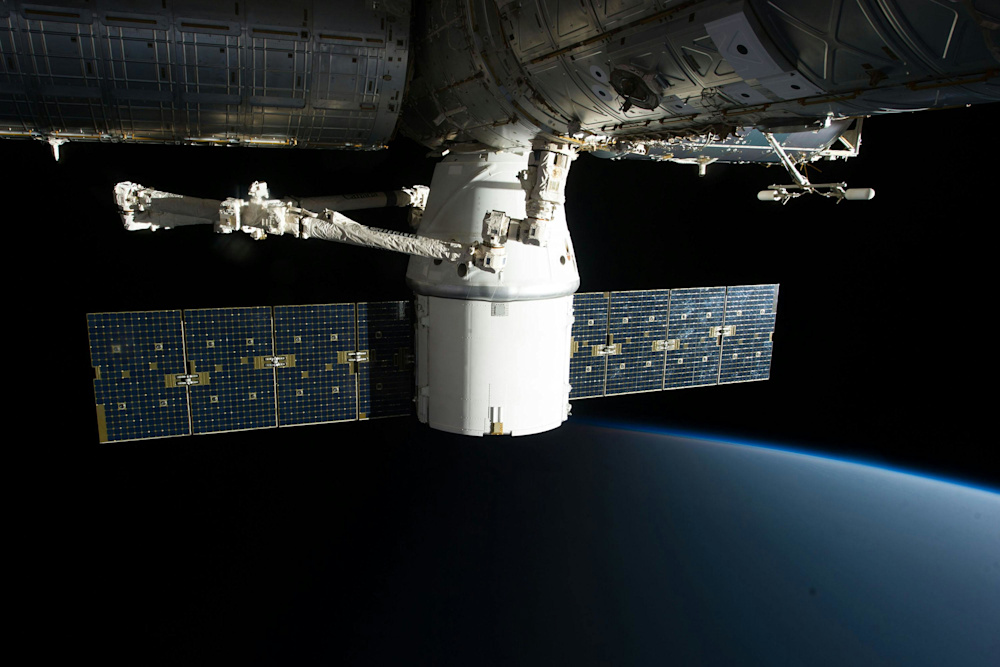
The satellite imagery services market in Japan may be the clearest indicator of where the aerospace sector is headed.
It’s currently valued at around USD 411 million (2025) and is projected to reach USD 837 million by 2030, at a compound annual growth rate of about 15%. Government and defense spending are the primary drivers here, with disaster management closely following behind.
Security and Surveillance Applications
The Japanese Ministry of Defence has been expanding its use of satellite imagery for national security, which now makes up a good portion of the use cases of satellite data.
This covers high-resolution Earth observation to monitor regional activity and track potential threats. Japan operates in a geopolitically complex part of the world, so space-based intelligence has become a core requirement.
In 2023, the MoD announced it would use Planet’s Dove Earth imaging nanosatellites to collect intelligence related to national security threats. This kind of procurement decision (by going to a commercial operator for intelligence data) shows how the defense sector’s relationship with private space companies is changing.
For private satellite data companies, this represents a meaningful and growing revenue source. Instead of building and operating their own satellite infrastructure, government agencies can contract with Japanese satellite companies like Synspective or Axelspace to access the data they need. This approach is much faster and cheaper than the traditional model.
Disaster Response and Environmental Monitoring
Typhoons, earthquakes, tsunamis, and flooding are common in Japan. After a major event, quickly assessing damage across wide areas is a real operational challenge, and satellite imagery is one of the few tools that can do this at scale.
SAR technology, which can image through cloud cover and at night, is especially useful here since disaster conditions often make optical imaging unreliable.
Synspective explicitly positions its satellite constellation around this use case. For instance, the Japanese government has indicated that satellite imaging will play a role in broader disaster prevention and response infrastructure going forward.
Beyond immediate damage assessment, satellite data is also being used for long-term environmental monitoring. This involves tracking things like land use changes, crop conditions, and coastal erosion over time.
Domestic demand from both emergency response and ongoing monitoring applications is expected to keep growing as the satellite data market grows further.
The Small Satellite Market: Why Japan Is Going Smaller
One of the most significant structural shifts in the space industry in Japan is the move toward smaller satellites.
Lighter and more compact than traditional spacecraft, the demand for them has been steadily rising.
What’s Driving Small Satellite Demand in Japan?
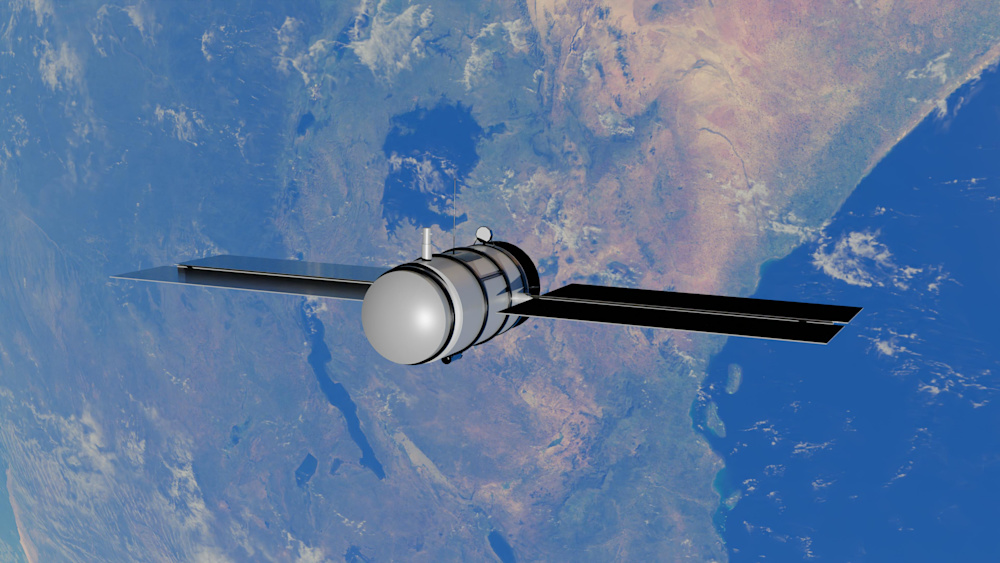
Japan’s small satellite market is projected to grow from around USD 306 million in 2025 to USD 761 million by 2035, at a compound annual growth rate of about 9.5%.
Low Earth Orbit (LEO) accounts for roughly 80% of demand by orbital type, which is consistent with global trends toward LEO constellations for Earth observation and communications.
What’s more, small satellites cost less to build and launch than traditional spacecraft. They can be deployed in large numbers to provide more frequent imaging coverage. Advances in miniaturization make it possible to fit capable sensors into much smaller packages. For commercial companies, this means lower upfront costs and shorter development cycles.
Japan’s manufacturing precision gives it a real advantage in this segment.
The Space Strategy Fund has been directing resources specifically toward satellite and orbital technology. Companies like Axelspace have been developing mass-production capabilities for micro-satellites. This kind of production is what makes a small satellite market feasible beyond individual one-off launches.
The government has also been investing in domestic launch capability. Private launch companies like Interstellar Technologies are working toward commercial orbital launches from Japan.
Challenges Worth Knowing About
The market projections are very much real, but so are the constraints.
Building a commercially sustainable space business takes a lot of time and money. Plus, Japan’s domestic market is smaller and more concentrated than those in the US or Europe.
Regulatory approvals for new satellite constellations are also slow in Japan, compared to international competition from US and European companies with bigger home markets.
Not to mention, the TSE listing requirements create a specific kind of pressure. Japanese space businesses often have long development cycles that don’t map well onto a five-year path to a JPY 10 billion market cap.
The government’s multi-year budget commitments help by providing predictable revenue, but the tension between investor timelines and space industry realities is something founders and investors in this sector should be aware of.
4 Space-Related Companies in Japan You Should Know About
The following companies all have profiles on Japan Dev. They cover different parts of the space sector, from satellite manufacturing and ground infrastructure to data analytics, so there’s a range of entry points depending on your background.
1. Axelspace
Axelspace was founded in 2008 and is one of the longest-running microsatellite companies in Japan. Their stated goal is to make satellite technology accessible for everyday use, and they’ve made concrete progress on it.
Their main product line is AxelGlobe, an Earth observation service built on micro-satellites. Between 2019 and 2021, they launched five satellites using Japan’s first mass-produced satellite production technology.
They’ve also developed Axel Liner, a service that lets clients outside the space sector use satellite data and projects for their own applications.
The mass-production angle is what sets Axelspace apart from many satellite manufacturers. Rather than treating each satellite as a custom build, they’ve worked toward a repeatable production process that brings costs down and increases deployment speed.
The company is Tokyo-based and supports remote work, runs flexible hours with no core time, and provides language learning support to foreign engineers who’d like to get settled in Japan.
While their Japanese language requirements depend on the specific role, they often have open positions listed on Japan Dev, which are worth checking out.
2. Synspective
Synspective develops and operates SAR satellites and sells data and analytics built on that data. Founded in 2018, the company aims to have a constellation of 30 SAR satellites in orbit by the late 2020s.
SAR technology can image through clouds and in darkness, which sets it apart from standard optical satellites that need clear skies and daylight. This capability makes Synspective’s constellation particularly well-suited for disaster response and national security applications.
Synspective has business relations with both government and commercial customers and has even received backing from Japan’s Ministry of Defence as part of its multi-year procurement program.
The company spans hardware and software, offering engineering roles across satellite systems, data processing, and analytics product development. Japanese language requirements vary by position.
Synspective offers stock options, conference attendance, and skill development support. So, be sure to check their Japan Dev profile for current openings.
3. Infostellar
Infostellar builds satellites and the infrastructure that lets satellite operators communicate with their spacecraft.
The cloud platform StellarStation is their main product, which virtualizes ground station networks. Satellite operators can book ground contact time through the platform without building and maintaining their own ground stations. This is a meaningful cost and complexity reduction for smaller satellite operators.
Infostellar’s model makes sense in the context of a growing small satellite market. As more companies launch satellites, the demand for ground segment services grows, and most of those companies don’t want to be in the ground station business.
Infostellar sits in that gap, providing the connectivity layer that makes smaller satellite operations commercially viable.
The company has offices in Tokyo and the UK, and English is the primary working language. Japanese isn’t required, and the company even sponsors visas for candidates outside Japan.
For an engineer interested in satellite communications infrastructure and wanting a truly international working environment, this is one of the more accessible entry points into the Japanese space sector.
4. Sagri
Sagri is a software company that uses satellite data and AI to address problems in agricultural land management and food security.
They essentially have three core products:
Actaba: An agricultural land use surveying tool deployed in over 40 municipalities across Japan.
Detaba: A crop planting survey app that uses satellite imagery to infer what’s being grown in a given area.
Sagri: A farmer-facing app that provides field-level guidance based on satellite and AI-derived data.
Their customer base includes local governments managing subsidy programs and land use declarations, as well as individual farming operations.
The key thing to understand about Sagri’s place in the satellite data ecosystem is that it represents the downstream end of the value chain.
Companies like Axelspace and Synspective build and launch the satellites. The data gets downlinked and processed by companies like Sagri, turning that processed data into something a municipal official or a farmer can actually use.
For engineers interested in applied machine learning, geospatial data, or civic tech, Sagri is a good example of what satellite data companies in Japan look like outside the manufacturing side of the industry.
A Recap on Space Companies in Japan
Japanese satellite companies are now launching their own constellations, selling satellite data commercially, and attracting venture capital at levels that would have been unthinkable five years ago.
Government procurement is expanding, the Space Strategy Fund is channeling serious capital into the sector, and the regulatory environment is slowly becoming more hospitable to commercial operators.
For tech professionals thinking about Japan as a place to build a career, the space sector is definitely worth paying attention to. The industry is early enough that individual contributors can shape what companies and products look like, which isn’t always true in more developed, mature industries.
So, if you’re a software engineer, data engineer, or systems engineer with an interest in space companies in Japan, the Japan Dev company list is a good starting point for checking out company profiles and open positions.
- Frontend Engineer(React Native)
- Mujin
- Tokyo
- ¥8M ~ ¥12M
- Backend Engineer
- Tokenz
- Tokyo
- Senior DevOps Engineer - Build Systems & CI
- Mujin
- Tokyo
- ¥8M ~ ¥13M
- Product Solution Architect
- Treasure AI
- Tokyo
- Applied AI Engineer, Human Learning(Senior Principal Level)- mome...
- Cookpad
- Tokyo
- ¥20M or more



Latest Tech Jobs 🇯🇵
Explore the top developer jobs in Japan for foreigners
- Frontend Engineer(React Native)
- Mujin
- Tokyo
- ¥8M ~ ¥12M
- Backend Engineer
- Tokenz
- Tokyo
- Senior DevOps Engineer - Build Systems & CI
- Mujin
- Tokyo
- ¥8M ~ ¥13M
- Product Solution Architect
- Treasure AI
- Tokyo
- Applied AI Engineer, Human Learning(Senior Principal Level)- mome...
- Cookpad
- Tokyo
- ¥20M or more
- QA Engineer (Freelance Contract)
- amptalk
- Tokyo
- ¥5M ~ ¥10M
- Platform Engineer (Infrastructure/Kubernetes & AWS) – HENNGE Plat...
- HENNGE
- Tokyo
- ¥8M ~ ¥10.5M
- Site Reliability Engineer
- estie
- Tokyo
- ¥6M ~ ¥12M
- Senior Quality Engineer, Workflow Platform, Nagoya
- Money Forward
- Nagoya
- ¥10M ~ ¥15M




Get Job Alerts
Sign up for our newsletter to get hand-picked tech jobs in Japan – straight to your inbox.

© 2026 Japan Dev. All rights reserved.
Proudly built in Tokyo.


Curated with 💙 in Tokyo by Eric Turner
All our data is gathered from publicly available sources or contributed by users