



Updated March 27, 2026
Traffic Violations in Japan: Understanding the License Points System
For foreigners living in Japan, driving offers convenience and freedom, but also comes with strict rules you’ll want to understand before getting on the road.
Most importantly, you need to know about traffic violations and the license points system because one wrong move can cost you a fine and even lead to the loss of your license. So, if you wonder why Japanese drivers seem so disciplined, it's partly because the consequences of breaking traffic rules here can be surprisingly harsh.
But once you understand how the system works, it's actually pretty easy to stay on the right side of the law. Here, we tell you everything you need to know about the license points system.
In this article: 📝
Japan License Points System: Explained
Unlike some countries that deduct points from your license when you mess up, Japan uses what's called a demerit point system. Think of it like a running tally of all your mistakes.
You start at zero points when you get your driver's license, and every time you violate traffic rules, points get added to your record.
The more serious the violation, the more points you rack up, and these points stick around on your record for three years. Accumulate too many, and you're looking at license suspension or even revocation.
How the Points Add Up
Here's how the points add up based on your driving history:
Previous Violations |
Points for 30-Day Suspension |
Points for 60-Day Suspension |
Points for 90-Day Suspension |
No previous violations |
6-8 points |
9-11 points |
12-14 points |
1 previous violation |
— |
4-5 points |
6-7 points |
2 previous violations |
— |
— |
2 points |
For license revocation, the threshold is even lower if you've got a history:
Previous Violations |
Points for 1-Year Revocation |
Points for 2-Year Revocation |
Points for 3-Year Revocation |
No previous violations |
15-24 points |
25-34 points |
35-39 points |
1 previous violation |
10-19 points |
20-29 points |
30-34 points |
2+ previous violations |
5-14 points |
15-24 points |
25-29 points |
As you can tell, the system gets stricter if you've been in trouble before. It’s a good reminder that the law comes down even harder on repeat offenders, which is a common theme in Japanese law.
Common Traffic Violations and Their Point Costs
Let's look at some everyday violations and how many points they cost you.
For serious offenses, you lose the most points:
Driving under the influence (blood alcohol ≥ 0.25%): 25 points
Driving under the influence (blood alcohol < 0.25%): 13 points
Driving without a license: 25 points
Aggressive/obstructive driving: 25-35 points
Speeding fines cost you fewer points:
Over 50 km/h above the limit: 12 points
30-50 km/h over (40+ on highways): 6 points
25-30 km/h over (25-40 on highways): 3 points
20-25 km/h over: 2 points
Less than 20 km/h over: 1 point
Finally, some common, minor violations cost the least amount of points:
Using a mobile phone while driving (causing a hazard): 6 points
Using/holding a mobile phone while driving: 3 points
Running a red light: 2 points
Illegal parking in no-stopping zones: 3 points
Failure to stop at the designated location: 2 points
One thing many people don't realize is that if you leave the scene of an accident, an extra 5 points are added to your license.
How Long Does Penalty Points Stay on Your License in Japan?
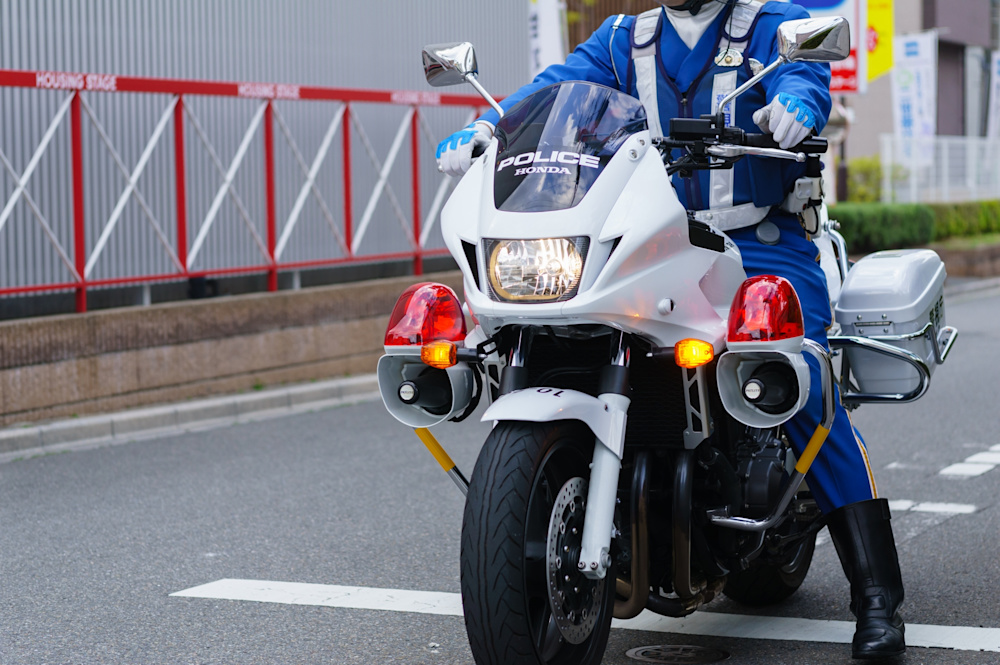
Points on your license in Japan are not permanent, and the system has mechanisms to reward safe behavior.
The One-Year Rule
If you go one full year without any accidents or violations after your latest infraction, your accumulated points get wiped clean.
Think of this like hitting the reset button. If you got 2 points for running a red light and then drove perfectly for a year, those 2 points simply disappear before your next violation.
The Three-Month Special Rule
There’s also a special rule for careful drivers. If you remain issue-free for two years and then receive a minor violation worth three points or fewer, those points will vanish after three months without further trouble.
Even if you’re a very careful driver, everyone makes mistakes, and this rule is exactly for those cases. So, if you ever happen to lose a few points, just be extra cautious and wait it out.
After Suspension or Revocation
Once you complete a suspension or revocation period, your points also reset to zero.
However, it’s important to keep in mind that your history of receiving that punishment, known as "previous violations" or zenreki, remains on your record for three years. This can affect things like your expat car insurance premiums and whether you qualify for a gold license.
Understanding The System: Traffic Ticket System
When you get pulled over in Japan, the officer won't just give you any old ticket. There are actually four different types, each color-coded based on how serious your violation is.
White Tickets
These are for the smallest infractions, things that are annoying but not dangerous. You won't pay a fine, but you will get a point added to your license. White ticket violations include:
Not wearing a seatbelt
Failing to use a child safety seat
Not wearing a motorcycle helmet
Blue Tickets
Blue tickets are what most people will encounter if they slip up. These cover minor to moderate violations that technically count as criminal offenses, but if you pay the fine (called hansokunkin or penalty fine) within the deadline, you avoid criminal prosecution.
Common blue ticket violations are:
Speeding below serious violation limits
Using a mobile phone while driving
Running a red light
Making illegal turns
Parking violations
Driving without your license on you
The fines for blue tickets typically range from ¥6,000 to ¥18,000 for regular cars, depending on the violation. You have seven to ten days from when you receive the ticket to pay up.
Red Tickets
Now we're getting into serious territory. Red tickets mean you've committed a major violation that carries criminal penalties. This isn't something you can just pay off and forget about.
Red ticket offenses include:
Drunk driving (any amount of alcohol)
Driving without a valid license
Hit-and-run or failing to help after an accident
Excessive speeding (over 30 km/h on regular roads, over 40 km/h on highways)
If you get a red ticket, expect your license to be suspended or revoked immediately. You'll also have to appear in court, and you could face hefty fines or even jail time, depending on the severity.
Yellow Stickers for Parking Violations
Yellow stickers aren’t technically "tickets," but rather small fines slapped on your windshield for illegal parking. When you find one of these, you need to head to your local police station to pay the fine.
If you don't, you or the vehicle's registered owner will receive a payment notice in the mail.
Common Traffic Violations in Japan
Based on 2024 statistics, here are the traffic violations that get people in trouble most often:
Failure to stop: 1,177,924 cases
Speeding: 847,378 cases
Parking violation fine payment orders: 635,787 cases
No-entry violations: 551,589 cases
Traffic signal violations: 404,034 cases
The most common one, failing to stop, usually happens at those small intersections where there's a stop sign but maybe not so great visibility. These are everywhere in Japan's residential areas, and police love to set up checkpoints near them, so beware.
Overspeeding in Japan is also incredibly common, especially on highways where the speed limits feel surprisingly low compared to what your car can handle.
How to Pay Traffic Fine in Japan
If you received a blue ticket, here's what you need to know about the payment process.
You can pay at any bank or post office during business hours. The ticket comes with a payment slip that makes it easy.
Don’t miss the deadline, though. You must pay within seven days, including the day you received the ticket. This deadline is strict, so don't put it off.
Unfortunately, the payment method is cash only, so don’t ask if you can pay with credit cards or installment plans.
Missing the deadline isn't just an inconvenience. Your unpaid fine will result in a notification being sent to your registered address. If you continue to ignore it, the case can escalate to criminal proceedings (more on this below), and you might face higher fines or even license suspension.
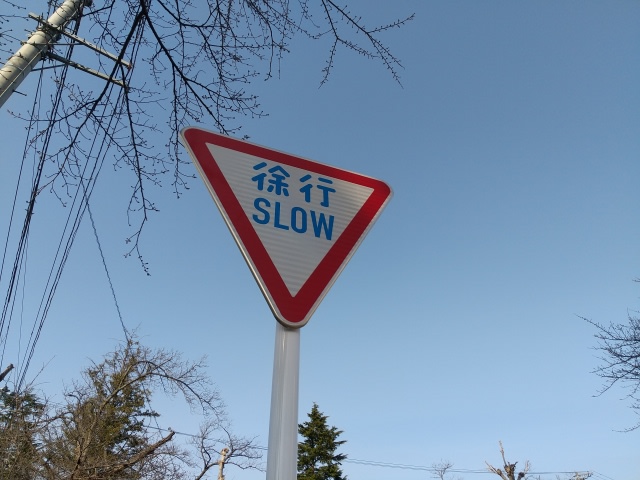
The Traffic Violation Notification System
Japan has a practical system that handles all these minor violations without overwhelming the courts.
For blue ticket violations, if you pay your fine on time, the case is closed, no criminal record, no court appearance needed. This is called the Traffic Offense Notification System.
If you don't pay within those eight days, you'll receive an official notification. At this point, you've got about 10 days to respond. If you ignore it, the prosecutor's office might summon you, and now you're looking at potential criminal prosecution for what started as a simple traffic ticket.
Be diligent about your response, or just pay your fines on time. It's really not worth the headache.
Dealing with a Suspended License in Japan
If your points add up or you commit a serious violation, you might face a Japan driving license suspension. Here's what that process looks like:
Getting Notified
If you're approaching the point threshold (usually at 4-5 points with no previous violations), you'll receive a notification from the Automobile Safety Driving Center. This is basically a warning: It means you're close to getting into actual trouble.
Once you hit the suspension threshold, you'll get an official notice to appear for a hearing. This typically happens via mail, so make sure your registered address is current.
The Hearing
At the hearing, you'll have a chance to explain yourself or submit evidence if you believe there were circumstances involved in your case that are beyond your control.
You can bring a proxy if you can't attend personally, but they'll need proper authorization, which you’ll need to plan for beforehand.
Attending the Lecture Course
If your license gets suspended, you can potentially shorten the suspension period by attending a special lecture course run by the Public Safety Committee. These courses mainly cover safe driving practices, traffic laws, and the consequences of violations.
Your suspension is then reduced depending on how you perform on the course's written test:
Excellent score: Suspension reduced by 29 days
Good score: Suspension reduced by 24 days
Satisfactory score: Suspension reduced by 20 days
For a 30-day suspension, this can make a real difference. The course usually lasts 6 hours and costs around ¥13,800.
What If You're Working?
License suspension can impact your life in a major way, especially if you need to drive for work. Unfortunately, there are no exceptions for work purposes: If your license is suspended, you cannot drive at all during that period.
Some people need to take time off work or find alternative transportation arrangements. Whether this was an intended consequence of the law isn’t clear, but regardless, it goes to show how unexpectedly burdensome a suspended license can be.
Special Situations: What You Need to Know
While the basic rule applies to everyone on Japanese roads, there are a few specific situations that call for extra attention.
Drunk Driving Penalty in Japan
Japan has zero tolerance for drunk driving. While the legal limit is set at 0.15mg of alcohol per liter of breath, the reality is more strict than it appears.
In practice, if any alcohol is detected, even below the 0.15mg limit, you can still be charged, fined, or have points reduced from your license, especially if your ability to communicate or walk is impaired.
Officers assess factors such as erratic driving behavior, difficulty walking in a straight line, or slurred speech. If any of these signs are present, you may be arrested regardless of your actual alcohol reading.
The penalties are severe:
Driver: Up to 3 years imprisonment and/or fines up to ¥500,000
Passengers who knew the driver was drunk: Same penalties as the driver
People who provided alcohol: Up to 3 years imprisonment and/or fines up to ¥300,000
People who provided the vehicle: Up to 2 years imprisonment and/or fines up to ¥200,000
Yes, you read that right: The passengers and even the person who poured the drinks can face jail time. This is how seriously Japan takes drunk driving.
What Happens If You Run a Red Light in Japan
Running a red light typically results in:
2 demerit points
A fine of ¥9,000 for regular cars
Possible complications if an accident occurs
Red light cameras are common at major intersections, so even if you think nobody saw you, chances are you're on camera. The ticket will be mailed to you a few weeks later.
International License Holders
If you're driving on an international permit, you don't accumulate demerit points on your home country's license.
However, you're still subject to all the same fines, penalties, and even jail time under Japanese law. Your international permit can be suspended or revoked in Japan, though this doesn't affect your license back home.
One thing to note is that if you try to convert your international permit to a Japanese license while it's suspended, you might run into complications.
Violations in Rental Cars
If you get a ticket while driving a rental car, you're still responsible for paying it before you return the vehicle. Make sure to keep your receipt and show it to the rental company when you drop off the car.
If you don't pay before returning, the rental company will handle it, but they'll charge you administrative fees, which are sometimes double the original fine. So, it’s in your best interest to just deal with it yourself.
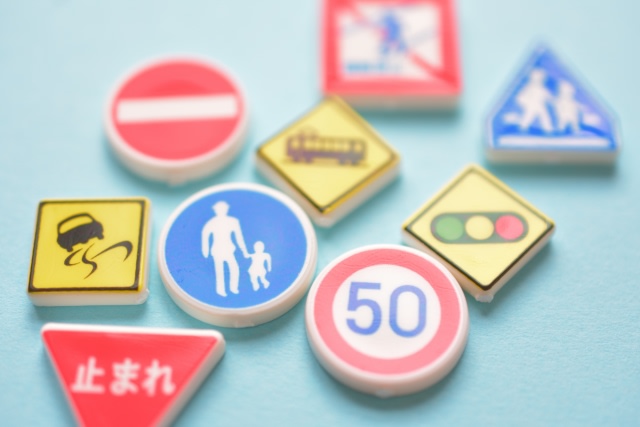
How Much Is a Parking Fine in Japan?
Parking fines vary depending on where you parked illegally and in which prefecture:
No-stopping zones: ¥18,000 for regular cars
No-parking zones: ¥15,000 for regular cars
Expired meters or time limits: ¥10,000-15,000
These yellow stickers are incredibly common in cities like Tokyo and Osaka. If you see patrol officers on those little scooters or bicycles, they're usually out hunting for parking violations.
Insurance Implications
We briefly touched on this, but many people don't realize that traffic violations can affect their insurance rates in Japan. If you have a gold license (which requires 5 years of safe driving), you even get a discount on your premiums.
If you get a single violation, however, your license drops to blue at your next renewal, and you lose that discount.
Some insurance companies also check your driving record when you apply for coverage or renew it. If the points you’ve accumulated due to past violations have reset, it can still result in higher premiums.
Tips for Avoiding Traffic Violations
Here are some practical tips to keep your record clean:
Know your stop signs: Those "止まれ" (tomare) signs at intersections mean a complete stop, not a rolling stop. Come to a full halt with your wheels completely stopped.
Watch your speed: Speed cameras are everywhere, especially on highways. Many drivers stick to about 10-15 km/h over the limit, but anything over 20 km/h is asking for trouble.
Don't touch your phone: Even glancing at your phone at a red light can get you ticketed. If you need to use navigation, get a proper phone holder and set everything before you start driving.
Always park legally: It's tempting to "just run in for a second," but those parking patrol officers work fast. Use paid parking or coin parking lots.
Never drink and drive: Please do not drink, not even one beer. Take a taxi, use public transportation, or designate a driver. The consequences simply aren't worth it.
Japanese Driving License Point System: What’s the Maximum?
Now, we’re touching on this as a hypothetical, but just how many points can you have in total?
Basically, there’s no limit to this, as your license would have been long gone before you could reach a “crazy” number. You start at zero and accumulate points with each violation. There's no maximum you can "have,” it's about how many you've accumulated over the past three years.
If you’d like to check your current point total, you can request a certificate from your local Automobile Safety Driving Center. This shows your accumulated points, violation history, and any previous suspensions.
Final Words on Speeding Fines in Japan
Japan license points system is designed to give careful drivers some leeway while coming down hard on repeat offenders and dangerous violations.
Here’s a quick rundown: You start at zero points, violations add points to your record, points stick around for three years (but can reset earlier with good behavior), and the consequences get progressively worse. Stay aware of common violations, pay fines on time, and you’ll be just fine.
If you're new to driving in Japan, take some time to familiarize yourself with the local traffic rules and signs. Most violations happen because drivers don't know the rules or get complacent. A little extra caution goes a long way.
Remember, getting around in Japan is easy even without a car because the public transportation system is fantastic, not to mention the shinkansen (the bullet trains). But if you do need to drive, understanding the Japanese driving license points system helps you stay on the road legally and safely. Drive carefully out there!


Japan Dev Team
This post was written by our Japan Dev editorial team.
- Senior Backend Engineer (Go), Communication Platform Department, ...
- Money Forward
- Tokyo
- ¥7M ~ ¥11M
- Software Engineer
- Infostellar
- Tokyo
- Operations Engineer
- Infostellar
- Tokyo
- Machine Learning Engineer
- VISASQ
- Tokyo
- ¥7M ~ ¥15M
- Staff AI Engineer (AI Agents Development), CDAO Office, Tokyo
- Money Forward
- Tokyo
- ¥11M ~ ¥20M



Latest Tech Jobs 🇯🇵
Explore the top developer jobs in Japan for foreigners
- Senior Backend Engineer (Go), Communication Platform Department, ...
- Money Forward
- Tokyo
- ¥7M ~ ¥11M
- Software Engineer
- Infostellar
- Tokyo
- Operations Engineer
- Infostellar
- Tokyo
- Machine Learning Engineer
- VISASQ
- Tokyo
- ¥7M ~ ¥15M
- Staff AI Engineer (AI Agents Development), CDAO Office, Tokyo
- Money Forward
- Tokyo
- ¥11M ~ ¥20M
- AI Engineer (AI Agent Platform Development), ERP
- Money Forward
- Tokyo
- ¥7M ~ ¥11M
- Lead Cloud Engineer
- Mico
- Tokyo
- ¥7M ~ ¥11M
- Department Manager, PRE Division, Platform Department, Tokyo
- Money Forward
- Tokyo
- ¥7.9M ~ ¥15M
- Computer Vision Engineer (Object Detection & 3D Pose Estimation)
- Mujin
- Tokyo
- ¥8M ~ ¥13M
- Robotics Algorithm Engineer (Control & Motion Planning)
- Mujin
- Tokyo
- ¥8M ~ ¥13M


Get Job Alerts
Sign up for our newsletter to get hand-picked tech jobs in Japan – straight to your inbox.

© 2026 Japan Dev. All rights reserved.
Proudly built in Tokyo.


Curated with 💙 in Tokyo by Eric Turner
All our data is gathered from publicly available sources or contributed by users