



Updated October 15, 2025
Bicycle Rules in Japan: The Ultimate Cycle Guide in Japan
Riding a bicycle in Japan is one of the most popular and convenient ways to locally get around in Japan. From commuting to work, running errands, or exploring your area, bicycles can be seen everywhere.
In this guide, we’ll walk you through everything you need to know about bicycle rules in Japan, from the buying process, registration, insurance, safety laws, and more.
In this article: 📝
- How to buy a bicycle in Japan
- Types of bicycles commonly used in Japan
- How much does a bicycle cost in Japan?
- How to register your bicycle in Japan
- Is Bicycle insurance mandatory in Japan?
- Bicycle rules in Japan to follow
- What to do in a bicycle accident
- Parking lots for bicycles
- Taking your bicycle on the train in Japan
- How to report a stolen bicycle in Japan
- In closing
How to buy a bicycle in Japan
There are two ways to buy a bicycle in Japan:
Buying a new bicycle in Japan
1. Bicycle shop
Whether you are living in a big city or a rural area, you can buy a bicycle online or at your local bicycle shop.
Bicycle shops in Japan can be an independent store or attached to a home center. These places are great because you can instantly customize your bicycle, like buying a lock or adding a basket.
Depending on the location, the staff might let you take a test ride on the bicycle before buying.
Whichever you choose, you can immediately register your bicycle at the shop.
2. Online retail shop
But buying a bicycle online is much easier. This is why places like Amazon, Rakuten, or specialty cycling sites are one of the most common ways to browse and buy bicycles online in Japan.
They usually offer a wider selection, but you might need to assemble the bike yourself and register it at a local shop or police station.
Buying a used bicycle in Japan
There are many places to buy used bicycles in Japan. The most common way is to find someone online selling their bicycle. There are many Facebook groups ([location] Sayonara Sale being the most popular) where people publish items they are selling.
Other online resale marketplaces include ジモティー (Jimity) and Mercari, both popular sites for used items, including bicycles.
While it can be hard to find, many recycling shops have used bicycles for you to buy.
Types of bicycles commonly used in Japan
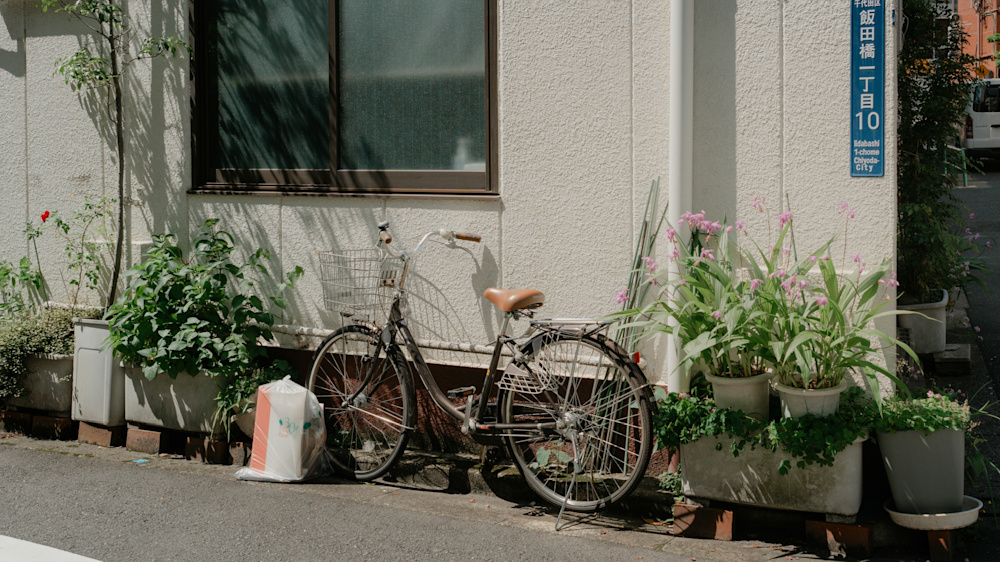
Now it’s time to decide which bicycle to choose. So let’s go over the most common types:
ママチャリ / Mamachari: Also known as city bikes, these are the most common bicycles you will see in Japan. They usually come with a basket, one gear system, and a kickstand. They are great for short commutes, grocery shopping, or dropping kids off at daycare.
電動アシスト自転車 (power-assisted bicycles): These are similar to the Mamachari bicycles, but they include a battery-powered motor that helps with pedaling, which is extremely useful when going up slopes or carrying heavy items.
Sport bicycles: this includes racing, mountain, and hybrid bicycles. They're great for traveling long distances, faster travel, or for those who want to use them to exercise.
Another common bicycle type in Japan combines the Mamachari with power-assisted peddling. It’s usually when you’re riding with a child or two. These bicycles have reinforced frames for child seating in the front or back.
If you are considering this type of bicycle, check for "BAA" (Bicycle Association Approved) and 幼児2人同乗基準適合車 marking. Both mean that the bike is safe to ride with two infants.
How much does a bicycle cost in Japan?
Buying a new bicycle in Japan can cost between ¥10,000 to ¥20,000 for basic models, while used bicycles can cost around ¥5,000 to ¥10,000, depending on where and who you are buying from.
Additionally, here are the prices for other various bicycles in Japan:
ママチャリ / Mamachari: 10,000 to 30,000 yen, depending on the model
Power-assisted bicycles: about 150,000 yen
Sport bicycles: 150,000 to 200,000 yen
Mamachari power-assisted: 100,000 yen to 150,000 yen
Used bicycle: up to the seller, as it varies depending on the type of bicycle and its age
How to register your bicycle in Japan
It is rather a straightforward process, but it is a legal requirement in Japan as it provides proof of ownership. Failure to do so can result in a penalty fine or an impounded bicycle.
Registering a new bicycle in Japan
After buying a new cycle, you can apply for a registration certificate at the shop you are at. In Japanese it will be called jitensha bouhan touroku.
You will need some form of ID (residence card or My Number) to fill out the form. But for the most part, the certificate will include your information, contact details, and the bicycle’s registration number.
The staff will be able to help you with this process.
If the bicycle was bought online, then you can complete it at your local police station. The officer will be able to help you. Just remember to bring proof of purchase when you do.
Once the paperwork is done and after paying 500 yen, you will receive a sticker to place on your bicycle frame. Think of this sticker like a registration plate on a car, connecting you with the bicycle if it gets stolen.
Registering a used bicycle in Japan
There is one important note when registering a used bicycle.
Make sure the previous owner either completes a change of bicycle ownership form or hands you their bicycle registration certificate with a written note of it being sold.
When I bought my used bicycle in Japan, I took the previous owner’s information to my local bicycle shop to get it registered under my name. There was no issue during that process.
Another way to register a used bicycle is for both the previous and new owner to go to the bicycle shop or local koban (police box) to complete this process. I also did this process when I was giving my bicycle to my friend, and we had no issues at the bicycle shop.
Is Bicycle insurance mandatory in Japan?
Yes, bicycle insurance is mandatory in Japan, as if a bicycle accident were to occur, then you’ll be at greater financial risk if you don’t have it.
Good news! Bicycle insurance in Japan is relatively cheap. You pay a couple of hundred yen per month.
The easiest way to buy bicycle insurance in Japan is at the bicycle shop or at the conbini. Here are some links to help you out:
Bicycle rules in Japan to follow
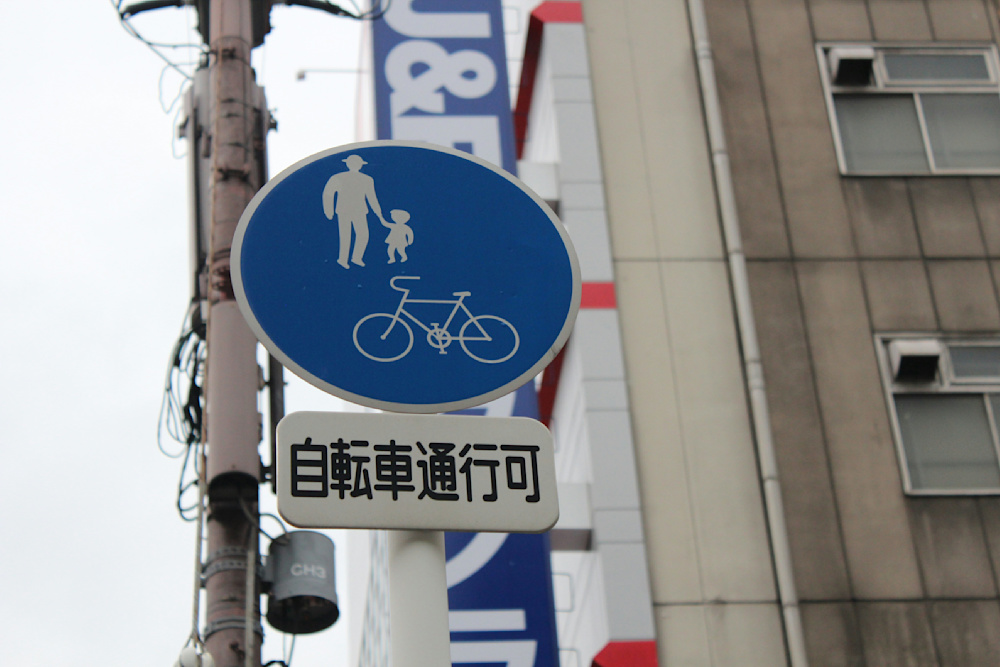
When bicycling in Japan, it’s important to follow the rules to keep you and everyone around you safe.
a) Basic bicycle rules in Japan to know
All cyclists must follow these basic bicycle rules in Japan:
Ride on the road, keep to the left: you can ride on the sidewalk only when there’s a clear sign or if you’re under 13 years, over 70, or physically disabled. Pedestrians always have the right of way.
Obey traffic signals and stop signs: You must stop at red lights and stop signs to check for cars and pedestrians before continuing.
Use bicycle lights at night: You must have a bicycle light at the front when it’s dark.
No drinking and riding: Riding under the influence of alcohol is strictly prohibited and punishable by law.
Helmet use is highly recommended: All cyclists are strongly encouraged to wear helmets. Anyone under 13 is legally required to wear them.
b) Prohibited behaviors with penalties (Page 4 of the PDF)
According to the Tokyo Metropolitan Police, these actions can lead to penalties or fines:
Prohibited bicycle behaviors |
Penalty |
Ignoring traffic lights |
Up to ¥50,000 fine |
Riding at night without a light |
Up to ¥50,000 fine |
Using a mobile phone or holding an umbrella while cycling |
Up to ¥50,000 fine |
Riding with more than one person on a bike |
Up to ¥20,000 fine |
Reckless riding (e.g., weaving between cars) |
Up to ¥50,000 fine |
Riding under the influence |
Up to 5 years in prison or ¥1,000,000 fine |
c) New bicycle laws in Japan (Effective April 1, 2026)
With the rise of bicycle-related accidents, Japan decided to tighten its bicycle regulations in 2026.
Here are the key changes:
On-the-spot fines: Cyclists can be fined on the spot for traffic violations, similar to drivers being ticketed. Fines can range between ¥3,000 to ¥7,000, depending on the offense.
Helmet rules are strictly enforced: While not punishable by fine, police may begin to give official warnings for not wearing helmets, especially for minors.
Riding without lights or on the wrong side of the road: These will be actively policed and will be subjected to immediate penalties.
Repeat offenders may need to attend traffic safety classes: Anyone who violates the rules multiple times is required to take mandatory safety training at their own expense.
d) Mamachari bicycles special rules
There are special rules for those with Mamachari bicycles when riding with kids. Here are those rules:
Child seats must be approved: Your bicycle must be officially certified to be able to ride with one or two children. A regular bike with a child seat is not allowed.
One adult and two children rule: You can carry two children if your Mamachari is a three-person approved bicycle with safety seats in the front and back.
Helmets required for children: Children on Mamachari bicycles must wear helmets. Adults can wear them too, but it’s not legally enforced.
Stability and brake check: Mamachari bikes with child seats must have strong brakes and extra stability.
You can take your Mamachari bicycle to a bicycle shop that can ensure your bicycle meets the safety feature to have a child seat.
What to do in a bicycle accident
If a bicycle accident were to occur, here’s what you need to do:
Stop immediately: Check to see if anyone is injured.
Call 110 (police) and 119 (ambulance): or any other emergency contact, if needed.
Exchange information: Get the other party’s contact details and insurance info.
Report the accident to the police: Even minor accidents must be reported as this will be essential when insurance is involved later.
Contact your bicycle insurance company: Inform them right away. If not, you may have to pay damages out of pocket.
Another important note: More often than not, if there’s a bicycle accident with a car, and the bicycle is the cause of the accident, the car may still be at fault since it's the bigger vehicle.
Parking lots for bicycles
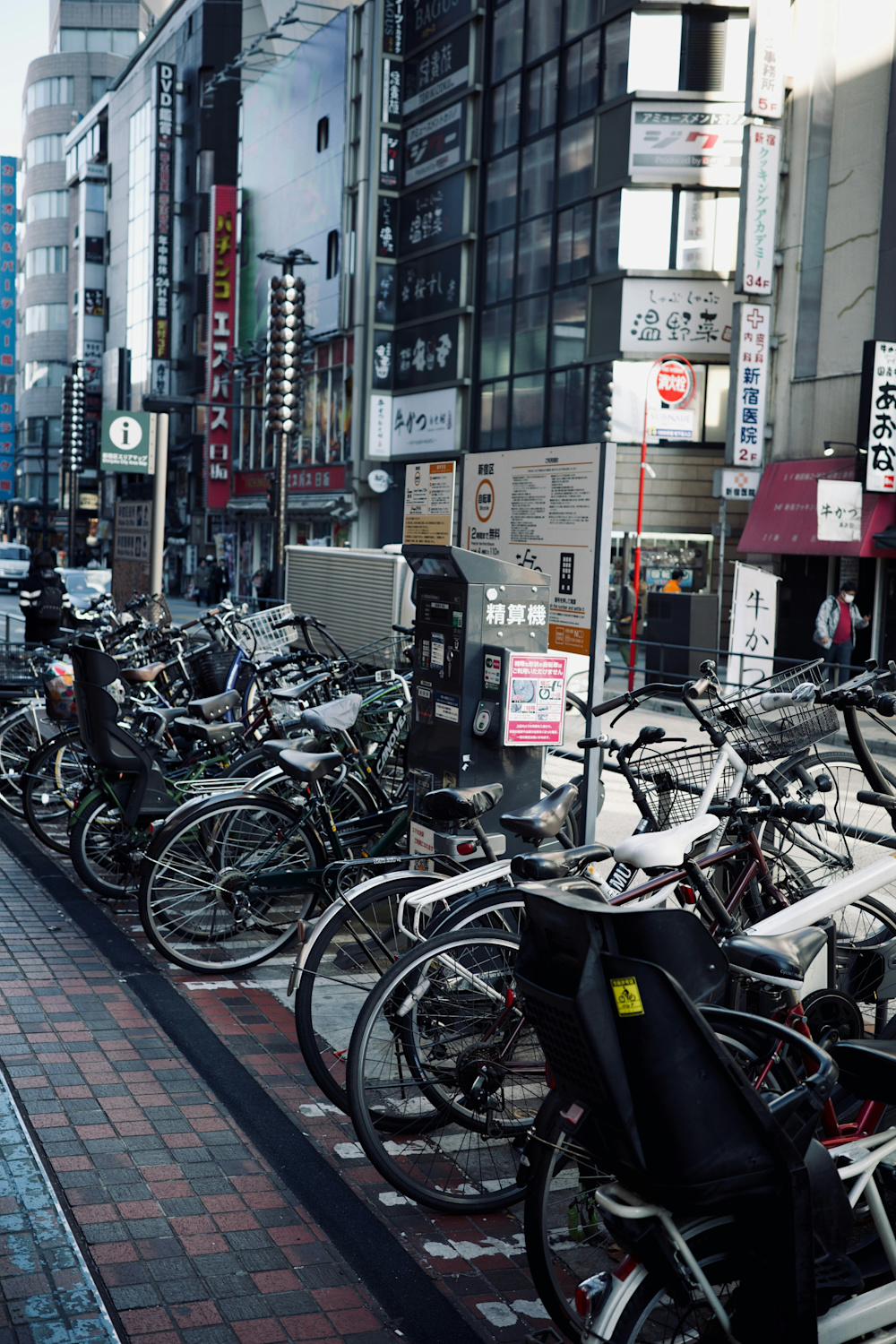
When it comes to bicycling in Japan, you need to know where to park your bicycle.
Here’s how bicycle parking lots (“駐輪場 / 駐輪場利用”) work in Japan:
Types of bicycle parking spaces in Japan
The main thing you need to be aware of is that the no bicycle parking signs usually have a bicycle icon with a red slash or “駐輪禁止.”
Here are the three types of bicycle parking spaces you’ll encounter in Japan.
Short‑term parking: usually for quick shopping or for one-time train station arrival and departure. You pay by the hour or for the whole day. But the first hour could be free depending on the location
Long-term/regular parking: If you regularly commute to the station by bicycle, there’s a high chance of monthly bicycle parking. Look for “定期利用” or “月極駐輪” signs. You can sign up for a monthly or longer-term contract.
Bicycle sharing / rental services: There are many bicycle services out there that let you use their bicycles. Just remember to park the bicycle at the designated parking spot.
How to use a bicycle parking lot in Japan
Here’s a typical flow for using a bicycle parking lot in Japan:
Locate a bicycle parking spot: usually around train stations and shopping centers. Look for bicycles around and 駐輪場 signs to know where to park.
Check for rules: They’ll have signage about whether parking is allowed. But there will also be other signs about hours, fees, etc. Also on the lookout for no parking signs (駐輪禁止).
Park your bicycle: Find an open space to place your bicycle. If there are staff attendants, they’ll show you a space where you can place your bicycle.
Secure and lock your bicycle: Once you place your bicycle in a spot, make sure it’s locked or latched on.
Pay the fee: Usually at the machine. You can pay by cash or IC card.
Afterwards, you can unlatch your bicycle and head toward the exit.
If there are monthly bicycle parking spots, you can apply to park your bicycle in those areas.
Taking your bicycle on the train in Japan
In Japan, it is not common to bring your bicycle on the train or bus. But if you want to take your bike to cycle around elsewhere, then it must be taken apart and placed in a special bicycle bag to be compact to carry.
This is called the rinko method (bike transport), where both wheels are removed and the rest of the bicycle is placed in a rinko bag.
Though it is common for cities in Japan to have bicycle rentals around, meaning you do not need to bring your own. But it’s always good to double-check just in case.
How to report a stolen bicycle in Japan
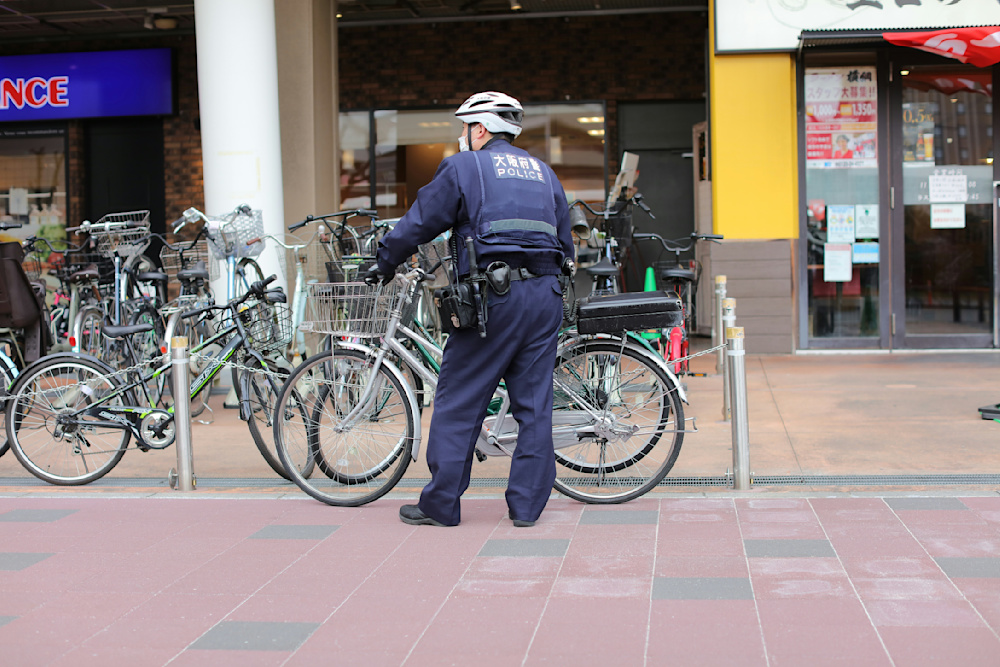
If your bicycle was stolen, here are the steps to get it back:
Report it: The sooner the better. Bring any form of identification and you’ll file a report at your nearest kōban (交番) or police box/station. They’ll take details about your bicycle color, size, registration number, time/place, etc.
Wait: Once the report is done, a nationwide database will be used by the police and the local municipal offices. When your bicycle is found, you’ll receive a postcard notifying you of its location.
Check with your local ward office or city hall: only if you did not receive any notifications after filing the report. These places manage impounded bicycle facilities.
If your bicycle was stolen, then the payment fee to get it back will be waived.
In closing
Owning and riding a bicycle in Japan adds convenience to your life, whether it’s for exploring where you live, commuting, or running errands.
I hope this ultimate bicycle guide in Japan answers any of your questions about buying, owning, riding, parking, and the overall bicycle rules in Japan.
Happy riding!


Tammy Dang
Tammy Dang is a writer in Japan who's been living here for 3 years and counting. She covers various topics so that you can be successful in Japan. In her free time, she likes to draw, do arts & crafts, and watch long-form YouTube videos.
- Quality Assurance Engineer (Embedded Systems)
- Mujin
- Tokyo
- ¥6M ~ ¥8M
- Product Manager (Hardware Lifecycle & Supply Chain)
- Mujin
- Tokyo
- ¥6M ~ ¥10M
- Senior Software Engineer — Platform (Atlas)
- MeetsMore
- Tokyo
- ¥7M ~ ¥11M
- Senior SRE
- MeetsMore
- Tokyo
- ¥7M ~ ¥11M
- Senior Security Engineer
- MeetsMore
- Tokyo
- ¥7M ~ ¥11M


Latest Tech Jobs 🇯🇵
Explore the top developer jobs in Japan for foreigners
- Quality Assurance Engineer (Embedded Systems)
- Mujin
- Tokyo
- ¥6M ~ ¥8M
- Product Manager (Hardware Lifecycle & Supply Chain)
- Mujin
- Tokyo
- ¥6M ~ ¥10M
- Senior Software Engineer — Platform (Atlas)
- MeetsMore
- Tokyo
- ¥7M ~ ¥11M
- Senior SRE
- MeetsMore
- Tokyo
- ¥7M ~ ¥11M
- Senior Security Engineer
- MeetsMore
- Tokyo
- ¥7M ~ ¥11M
- Robotics Data Engineer
- Omakase Robotics
- Tokyo
- Full Stack Engineer
- Omakase.ai
- Tokyo
- Machine Learning Manager, App SW
- Wayve AI
- Tokyo




Get Job Alerts
Sign up for our newsletter to get hand-picked tech jobs in Japan – straight to your inbox.

© 2026 Japan Dev. All rights reserved.
Proudly built in Tokyo.


Curated with 💙 in Tokyo
All our data is gathered from publicly available sources or contributed by users