



Updated June 26, 2026
Preventing Heat Stroke in Japan: Here's How to Stay Cool, Even in Summer
If you’ve spent even one summer in Japan, you already know how rough it can get.
The heat alone is bad enough, but it's the humidity that catches most people off guard. You can stand perfectly still in the shade and still feel your shirt sticking to your back in under a minute.
This is why heat stroke in Japan is such a serious problem. Every year, tens of thousands of people are taken to hospitals across the country, and a portion of those cases turn fatal. If you live in or plan to visit Japan during the warmer months, knowing how to prevent a heat stroke and what to do if it sneaks up on you is genuinely a life skill.
In this article, we explain all that, along with what makes Japan’s summer such a brutal environment, the difference between heat exhaustion and the more serious heat stroke, and what to do if you or someone near you starts showing symptoms.
In this article: 📝
The Perfect Backdrop for Heat Stroke Cases in Japan: Japan’s Summers
Japan isn’t the hottest country on Earth by raw temperature, but the numbers from recent years are pretty stark. The summer of 2025 was officially the hottest season ever recorded in Japan, with average temperatures 2.36°C higher than the historical norm.
But what makes the summers here so dangerous is the combination of high heat and suffocating humidity, and the fact that none of it really eases off after sunset.
Warm, moisture-loaded air rolls in from the Pacific during the summer, and the rainy season that precedes it leaves the air saturated. Relative humidity regularly sits between 70% and 90% during July and August, which severely limits your body's ability to cool itself through sweating.
On top of this, there’s almost no relief at night due to the urban heat island effect. Concrete, asphalt, and steel buildings absorb and generate heat throughout the day, then release it after dark.
Some nights, the temperature refuses to drop below 30°C, even at 2 a.m., and this is why heat stroke in Tokyo and other big cities is more prevalent than in rural areas.
To find out what to expect across the year, our guide to weather in Japan is a good place to start.
Heat Stroke Meaning in Japanese, The Causes, and The Symptoms
The term for heat stroke in Japanese is 熱中症 (necchuushou). The word covers a wide range of heat-related illnesses, from mild dehydration symptoms all the way to a true medical emergency.
What is a Heat Stroke
Your body keeps its core temperature within a narrow range by sweating and adjusting blood flow to the skin. In a hot, humid environment, you lose a lot of water and salt through sweat.
Failing to replace the water and minerals you lose quickly enough while continuing to stay in the heat causes your body’s temperature-regulation system to slowly break down. Blood circulation falters, your internal temperature starts to climb, and in the most severe stages, your brain and other organs begin to suffer. This cascade of growing symptoms is what we collectively call a heat stroke.
Heat Exhaustion vs. Heat Stroke
You’ll often see “heat exhaustion” and “heat stroke” used interchangeably, and in Japan, both get lumped under the necchuushou umbrella for everyday conversation. But these two terms are not the same thing.
Heat exhaustion is the earlier, less severe stage. It happens when you’ve lost too much water and salt, and your body is struggling but still mostly in control. Symptoms include heavy sweating, dizziness, a fast pulse, cramps, weakness, and nausea. Cool the person down and get fluids and electrolytes into them, and they usually recover.
Heat stroke occurs when the body’s cooling system fails, and the core temperature climbs toward 40°C or above. The skin may feel hot and dry, or still sweaty (the textbook “dry skin” sign isn’t always reliable), and the person’s mental state changes.
Confusion, slurred speech, unsteady walking, seizures, and loss of consciousness are the biggest warning signs of this stage, all of which can have serious consequences. Heat stroke can damage organs and can even be fatal if it isn’t treated quickly.
Heat Stroke Symptoms in Japan and the Three Severity Levels
The Japanese Association for Acute Medicine officially groups heat stroke into three severity levels, and Japanese health agencies use the same framework. Knowing roughly where someone falls can help you decide how to respond.
Level 1 (mild): Lightheadedness, dizziness, muscle cramps (especially in the legs), heavy sweating, a general “off” feeling, or pins and needles in hands and feet. It can usually be handled on the spot with rest, cooling, and rehydration.
Level 2 (moderate): Headache, nausea, vomiting, fatigue, and a feeling of weakness. The person may struggle to drink on their own. At this stage, a clinic or hospital visit is required instead of pushing through it.
Level 3 (severe): High body temperature, confusion or impaired consciousness, inability to walk in a straight line, seizures, and unresponsiveness. This is an emergency and needs an ambulance immediately.
One useful rule of thumb from Japanese health authorities: If a person can’t open a sealed plastic bottle, bring it to their mouth, or drink without choking, they need to go to the hospital. Do not try to force fluids into someone who can’t safely swallow.
The most vulnerable groups are the elderly (who tend to feel heat and thirst less acutely and often underuse air conditioning), young children (whose temperature regulation isn’t fully developed), and anyone exercising, working, or commuting outdoors at peak hours.
Honestly, in a Japanese summer, nobody is immune. Plenty of healthy adults in their 20s and 30s end up in ambulances every year, so be careful.
How to Prevent Heat Stroke in Japan
Knowing how to prevent heat stroke in Japan isn’t all that complicated. It’s a matter of stacking small habits and using the right gear, both of which the country has gotten very good at over the years.
Hydrate Before You’re Thirsty
This is the single most important habit. By the time you actually feel thirsty, you’re already behind on your water consumption.
Sip water or a sports drink steadily throughout the day, not just when you’re thirsty. Keep a bottle on your desk, in your bag, by the bed. A common guideline is around 1.2 liters of fluids a day for an average adult on top of what you get from food, but in a Japanese summer, you’ll probably need more.
Plain water alone isn’t enough when you’re sweating heavily, so combine it with electrolyte beverages.
Dress For The Climate
Wear loose, breathable, moisture-wicking clothing in light colors. Cotton is fine for casual wear, while quick-drying fabrics are better for commuting or outdoor activities. A wide-brimmed hat and UV-blocking sunglasses help too.
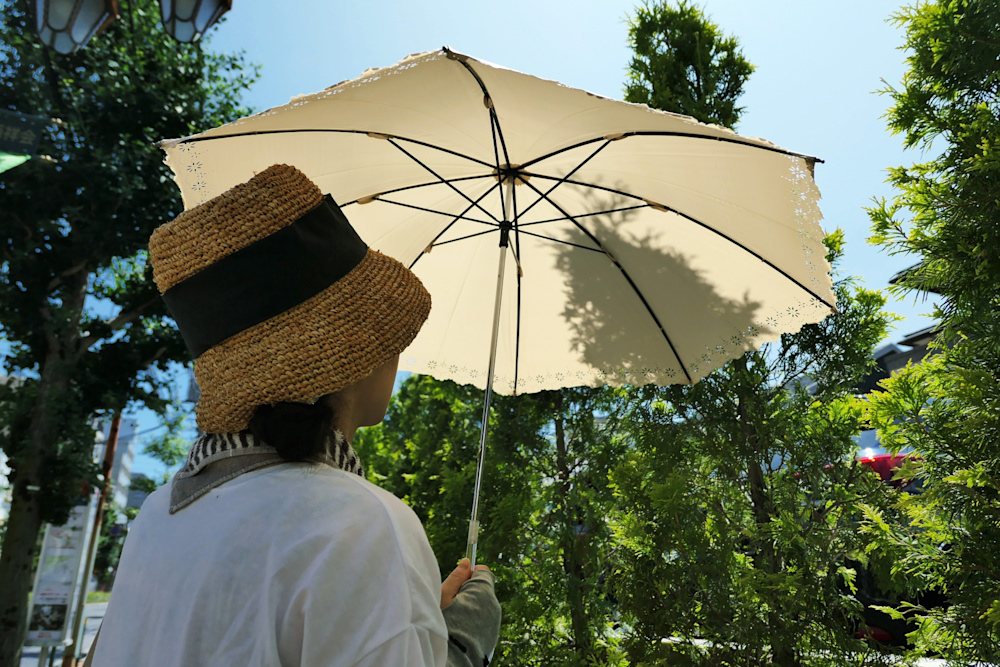
You can also embrace Japanese parasol culture by wearing sun umbrellas (日傘, higasa). Standing under a parasol can drop the perceived temperature by several degrees compared to standing in direct sunlight. They’re cheap, easy to find, and your future self will thank you.
Stock Up On Japan’s Summer Survival Kit
One of the more delightful things about summer here is the wide variety of anti-heat gadgets you can find in any drugstore or convenience store, such as the following:
Cooling body wipes (ase fuki shi-to): Menthol-soaked sheets that leave your skin feeling icy. Perfect after a sweaty commute.
Cooling sprays: Aerosol cans you spritz onto your clothes for an instant cold blast.
Neck coolers: PCM-gel rings you freeze and wear around your neck, or USB-powered electronic versions. They work well since large blood vessels run through the neck.
Portable fans: The small handheld or neck-mounted electric fans you’ll see everyone using on platforms and at festivals.
Salt candies (shio taburetto or enbun ame): Lemon or plum-flavored candies that replace some of the sodium you sweat out.
You don’t need all of these, but having a couple in your bag during July and August is certainly not a bad idea.
Shift Your Schedule to Earlier or Later
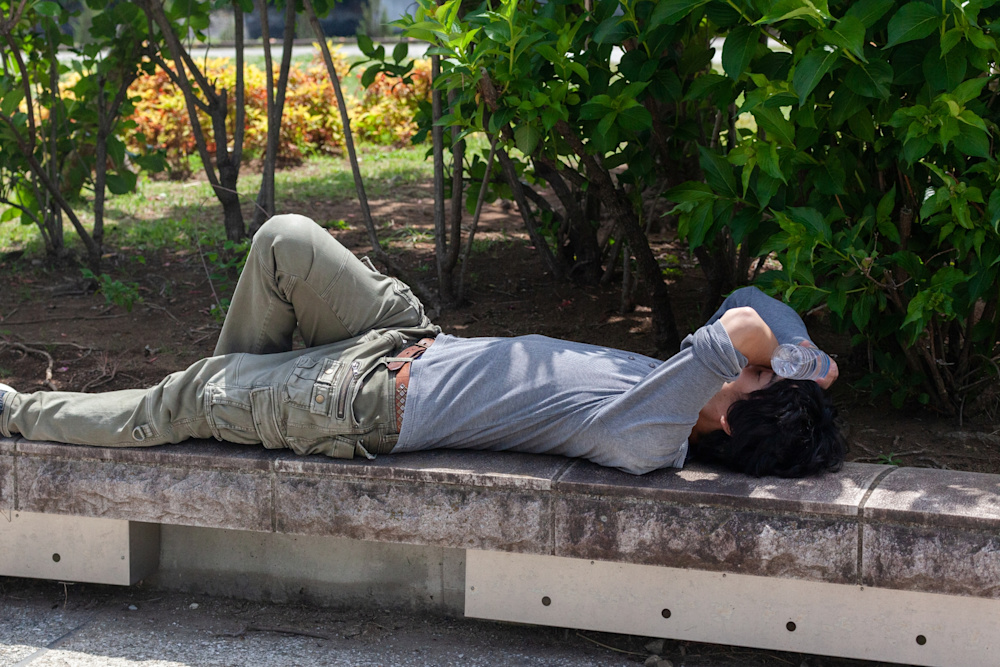
Runners and cyclists often shift to a 5 or 6 a.m. start in summer, or wait until after 9 p.m, as the air is far more tolerable during those windows.
If your job or schedule doesn’t allow that kind of flexibility, just try to spend the peak hours indoors with air conditioning whenever possible. The free reibou kuukan (cool zones) that some city governments designate during heatwaves are worth knowing about too.
Use Your Air Conditioner
Some heat stroke cases in Japan happen indoors when the AC isn’t on, especially among elderly people. The cultural reluctance to use cooling for energy or cost reasons is real, but during a heatwave, it can be really dangerous.
Just run the AC. Set it to a reasonable temperature (around 28 °C is the common recommendation), close the curtains during the day, and you’ll cut your heat stroke risk dramatically.
What to Do If You’re Having a Heat Stroke in Japan
Quick disclaimer first: We’re not medical professionals. The recommendations below are general guidance based on official Japanese health resources.
That said, the response depends heavily on how severe the symptoms are, so let’s walk through it stage by stage.
If The Symptoms Are Mild
If you feel dizzy, have a headache, your calves are cramping, and you’re sweating like a fountain, get out of the heat right away.
Find an air-conditioned space, a shaded spot with a breeze, or anywhere cooler than where you are now. A convenience store works in a pinch, and nobody will mind.
Loosen your clothes, anything tight around the neck or waist, especially. Try to cool your body externally, by putting a wet towel on the back of the neck, a cold drink against your forehead, or ice packs (if you have them) under your armpits, against the sides of your neck, and at the groin, where large blood vessels can transfer heat away from your core quickly.
In addition, sip on water or a sports drink. If you can find one, an oral rehydration solution like OS-1 is even better. Salt candies or a pinch of salt with your water help replace what you’ve lost through sweat.
Once you’ve cooled down, rest. Don’t try to shake it off and keep moving. Even after you feel better, take it easy for the rest of the day.
If The Symptoms Are Moderate Or Worsening
If the dizziness turns into vomiting, your headache won’t quit, you can’t keep fluids down, or you just feel like things are getting worse rather than better, get to a clinic or hospital ASAP.
Our post on how to get medical care in Japan covers all the basics, and for English-speaking doctors, check out our guide to English-speaking hospitals in Tokyo.
Not sure whether your situation calls for an ambulance or a regular doctor’s visit? Japan has a really useful service called #7119, a non-emergency medical consultation hotline. You dial it and speak with someone who can help you figure out the right level of care.
This service is available in major regions, including Tokyo, and increasingly in other prefectures. For other numbers you might need, check our guide to emergency contact numbers in Japan.
If The Symptoms Are Severe
If the person is unconscious, having a seizure, confused or unresponsive, can’t walk steadily, or can’t drink water without choking, call 119 right away.
This is the number for ambulances and fire services in Japan. A simple phrase you can use is “Kyuukyuusha wo yonde kudasai” (救急車を呼んでください), meaning “Please call an ambulance,” but you can also speak in English, and they’ll do their best to help.
When waiting for the ambulance, move the person to the coolest place available, loosen their clothing, and cool them aggressively in the neck, armpits, and groin area. Don’t try to make them drink if they’re not fully conscious. If they vomit, turn their head to the side so they don’t choke.
If they do end up being admitted, our hospitalization in Japan guide will walk you through what you can expect, and our Japanese emergency room article covers what arrival and navigating the place usually look like.
Recovering After a Heat Stroke and What to Eat and Drink
After the immediate crisis is over, your body will need time to recover.
You’ve lost a lot of fluids, salts, and key nutrients, and you’ve put your circulatory and nervous systems through a serious wringer. The next 24 to 48 hours matter the most.
What Drink Is Good For Heat Stroke In Japan
When it comes to what drink is good for heat stroke in Japan, the answer depends on how badly you were hit. The most common and effective options, all of which you can grab at any convenience store or drugstore, are these:
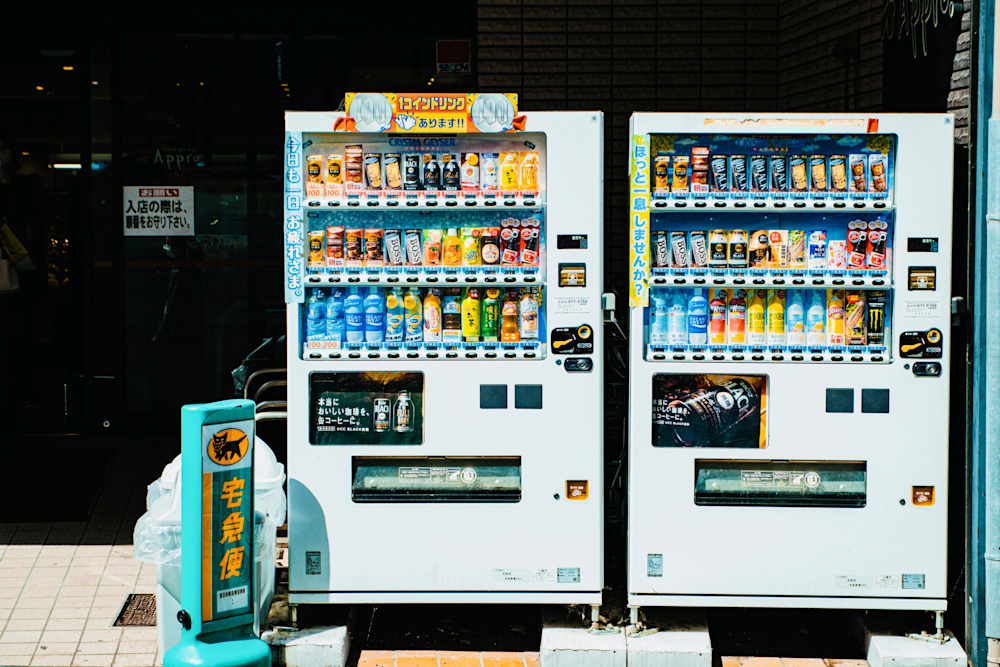
Pocari Sweat: The iconic blue-and-white “ion supply drink” from Otsuka Pharmaceutical. Its formula was inspired by IV rehydration solutions, and it’s designed to absorb quickly. It’s the default choice for general rehydration and a household name across Asia.
Aquarius: The Coca-Cola Japan rival, slightly sweeter and citric-acid forward, with added amino acids. Good for use during and after physical activity.
OS-1: Not a sports drink, but a medical-grade oral rehydration solution. It’s saltier and less sweet since it’s formulated to replace what your body lost during dehydration or illness. If symptoms were moderate or severe, this is the one to reach for.
Mugicha (barley tea): Caffeine-free, naturally mineral-rich, and a Japanese summer staple. A great everyday hydration option even on normal days.
Foods That Help You Bounce Back
Focus on easily digestible foods that replace the nutrients you’ve lost. Salty soup-based meals are great, which is why miso soup, umeboshi (pickled plums) on rice, and udon broth are go-to comfort foods after a hot day.
Fruits with high water content, like watermelon, melon, and pears, work well too. Watermelon, in particular, is a classic Japanese summer food for exactly this reason.
If you’re easing back into eating, the konbini is a goldmine. Onigiri (rice balls), especially salty umeboshi or sake (salmon) varieties, can replenish carbs and sodium. Cold udon or soba with a salty dipping sauce is hydrating, gentle, and easy to keep down.
Jelly drinks and pudding-style desserts are also surprisingly useful if your stomach is still touchy. To learn more about what’s worth grabbing at your local konbini, our convenience store foods in Japan guide is a fun and useful read.
Lastly, don’t go back to alcohol or strong coffee right away. Both of these are diuretics, meaning they’ll pull water back out of you, which is the last thing you need after a heat stroke episode. Give yourself at least a day before resuming any of that, and prioritize sleep.
Useful Resources for Heat Stroke Alert in Japan
A surprising number of resources exist for staying ahead of heat stroke risk, and the Japanese government does a really good job of issuing real-time warnings as well.
The best tool is the heat stroke alert in Japan, officially called the necchuushou keikai ara-to (熱中症警戒アラート), issued by the Ministry of the Environment. Alerts are based on the WBGT (Wet Bulb Globe Temperature) index, which combines temperature, humidity, and radiant heat to give a more honest read of how risky the conditions actually are.
Beyond the official channel, a few practical apps and sites are also worth knowing about:
Yahoo! Weather Japan: The weather app of choice for most people in Japan, with built-in heat stroke alerts.
NHK World News: Posts heat stroke warnings in English, which is great if you’re not fully confident in your Japanese yet.
Japan Meteorological Agency (JMA): Official forecasts and warnings, available in English.
City and ward government sites: Many local governments publish their own daily heat stroke guidance, plus the locations of designated cooling shelters.
Make checking one of these a small daily habit during summer, the same way you’d check tomorrow’s rain forecast. It takes ten seconds, and it can genuinely save your day.
Concluding Words on Heatstroke in Japan
Heat stroke in Japan is the kind of risk that’s easy to underestimate, especially if you’re new here and the summer hits you for the first time.
The temperature on the forecast might not look catastrophic, but the humidity, combined with the urban heat island effect, can make you feel like you’re experiencing hell on earth. People underestimate it every year, and the hospital numbers show this.
The good news is that almost all of it is preventable with a little awareness.
Drink water throughout the day, dress for the climate, and use the gadgets locals use. Stay indoors during the worst hours with the AC on, and if you start to feel symptoms, take them seriously the moment they appear.
Summers here can be magical too: The festivals, the fireworks, the cicadas, the cold beer at the end of a hot day… As long as you look after yourself and the people around you, you’ll enjoy the season for what it is.
Stay cool out there.


Japan Dev Team
This post was written by our Japan Dev editorial team.
- Quality Assurance Engineer (Embedded Systems)
- Mujin
- Tokyo
- ¥6M ~ ¥8M
- Product Manager (Hardware Lifecycle & Supply Chain)
- Mujin
- Tokyo
- ¥6M ~ ¥10M
- Senior Software Engineer — Platform (Atlas)
- MeetsMore
- Tokyo
- ¥7M ~ ¥11M
- Senior SRE
- MeetsMore
- Tokyo
- ¥7M ~ ¥11M
- Senior Security Engineer
- MeetsMore
- Tokyo
- ¥7M ~ ¥11M


Latest Tech Jobs 🇯🇵
Explore the top developer jobs in Japan for foreigners
- Quality Assurance Engineer (Embedded Systems)
- Mujin
- Tokyo
- ¥6M ~ ¥8M
- Product Manager (Hardware Lifecycle & Supply Chain)
- Mujin
- Tokyo
- ¥6M ~ ¥10M
- Senior Software Engineer — Platform (Atlas)
- MeetsMore
- Tokyo
- ¥7M ~ ¥11M
- Senior SRE
- MeetsMore
- Tokyo
- ¥7M ~ ¥11M
- Senior Security Engineer
- MeetsMore
- Tokyo
- ¥7M ~ ¥11M
- Robotics Data Engineer
- Omakase Robotics
- Tokyo
- Full Stack Engineer
- Omakase.ai
- Tokyo
- Machine Learning Manager, App SW
- Wayve AI
- Tokyo




Get Job Alerts
Sign up for our newsletter to get hand-picked tech jobs in Japan – straight to your inbox.

© 2026 Japan Dev. All rights reserved.
Proudly built in Tokyo.


Curated with 💙 in Tokyo by Eric Turner
All our data is gathered from publicly available sources or contributed by users